
A research team led by Professor Weiqiang Chen at NYU Tandon School of Engineering has published a study in Nature Biomedical Engineering describing the successful development of a miniature "leukemia-on-a-chip" device. For the first time, the chip integrates the physical structure of bone marrow with a functional human immune system in vitro, providing a new platform for personalized evaluation of blood cancer treatments.
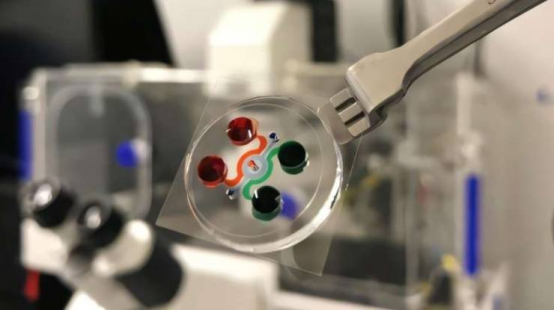
Using microfluidics, the team precisely reconstructed the bone marrow microenvironment, encompassing three key regions: vasculature, marrow cavity, and endosteum. After seeding patient-derived cells, the system autonomously forms tissue structures and secretes matrix proteins such as collagen. "We can observe the entire treatment process under controlled conditions without animal experiments," said Professor Chen. The device enables real-time monitoring of CAR-T cell behavior, including directional migration speeds of 1.2μm/min and cancer cell recognition mechanisms.
Compared to traditional animal models, the leukemia-on-a-chip offers significant advantages:
Assembly time reduced from months to half a day
Supports continuous observation for 14 days
Can simulate clinical scenarios including complete remission, drug resistance, and relapse
The study also revealed that CAR-T cells can activate other immune cells, producing a "bystander effect." The team developed a novel evaluation index capable of predicting the efficacy of different treatment regimens, providing a foundation for personalized medicine. The technology aligns with the FDA's policy direction to reduce animal testing and is expected to accelerate the development of immunotherapies.