
During its traversal of the Kuiper Belt, NASA's New Horizons spacecraft enabled an international astronomy team to successfully perform the first demonstration of deep-space stellar navigation. The related research paper has been accepted by The Astronomical Journal, with the preprint available on the arXiv server.
Serving as a proof-of-concept experiment, researchers used New Horizons' unique position in interstellar space to image the nearby stars Proxima Centauri and Wolf 359. From New Horizons' vantage point, the apparent positions of these two stars in the sky aligned with those observed from Earth, exhibiting a pronounced stellar parallax effect. By combining positional data from these stars with a three-dimensional model of the nearby solar system, the team precisely determined New Horizons' location relative to nearby stars, achieving an accuracy of approximately 4.1 million miles. Todd Lauer stated: "We hope that by simultaneously presenting images from Earth and the spacecraft, the concept of stellar parallax becomes more intuitive and accessible."
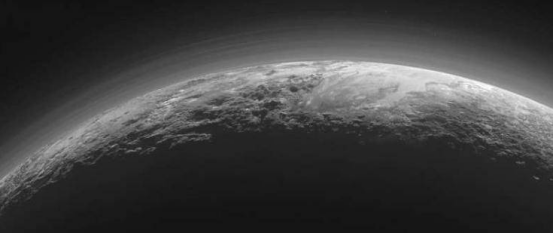
As the fifth robotic spacecraft to venture into interstellar space, New Horizons' primary mission was to explore Pluto and its largest moon, Charon. After a nine-and-a-half-year journey covering 3 billion miles, it captured the first close-up images of these distant worlds, revealing details about their geology, composition, and thin atmospheres. Currently, New Horizons is conducting its extended mission, continuing to explore the heliosphere and expected to cross the "termination shock"—the boundary marking the edge of interstellar space—in the coming years.