
Astronomers plan to launch a miniature spacecraft to the far side of the Moon to listen for "ancient whispers" and unveil the mysteries of the "cosmic dawn." The proposed CosmoCube mission will focus on the early stages after the Big Bang, when the first stars and galaxies had not yet formed, and the universe was in a state of extreme darkness and emptiness.
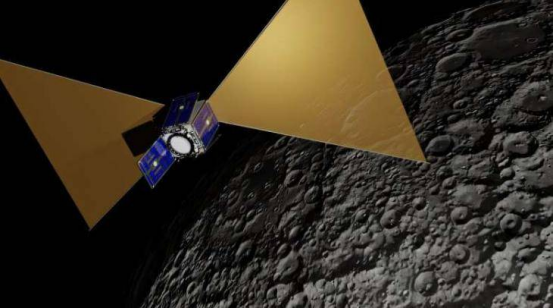
Exploring the universe's "Dark Ages" requires a quiet environment. However, Earth's atmosphere and electronic devices create a noisy radio environment. At the Royal Astronomical Society's National Astronomy Meeting (NAM 2025) in Durham, Dr. Eloy de Lera Acedo likened it to "listening to a whisper next to a noisy concert." To capture faint radio signals emitted by hydrogen billions of years ago, escaping Earth's interference is essential. To this end, the UK-led CosmoCube mission proposes launching a small satellite into lunar orbit, using the Moon's far side as a natural shield to block Earth's radio noise and create a clear observation environment.
CosmoCube mission leader de Lera Acedo said: "With this mission, we aim to gain a deeper understanding of how the universe evolved from a simple dark state to the complex, light-filled cosmos we see today, including the formation of stars and galaxies." The mission will also help scientists study dark matter and its role in shaping cosmic structures. CosmoCube will carry a precisely calibrated low-power radio radiometer operating at low frequencies (10–100MHz) to detect faint signals amid vast noise. This mission is expected to explain the Hubble tension—the discrepancy in measurements of the universe's expansion rate—and provide insights into dark matter-baryon interactions and early universe physics. Professor David Bacon from the University of Portsmouth said: "These radio waves carry information about cosmic history—the next step is to go to the far side of the Moon to listen."
The CosmoCube mission is supported by the UK Space Agency's Science Bilateral Programme and developed by a UK-led international consortium in collaboration with researchers from the University of Cambridge, the University of Portsmouth, and STFC RAL Space. Instrument development is progressing well, with functional lab prototypes and environmental testing underway, alongside partnerships with industry players like SSTL Ltd for space platform and mission concept development. The project team is planning a 4–5 year launch roadmap, targeting lunar orbit before 2030.