
A collaborative study between Lund University in Sweden and AstraZeneca has revealed the critical role of lipid nanoparticles in gene therapy. This research, published in Nature Communications, uses super-resolution microscopy to observe in detail for the first time the molecular mechanism by which lipid nanoparticles deliver RNA.
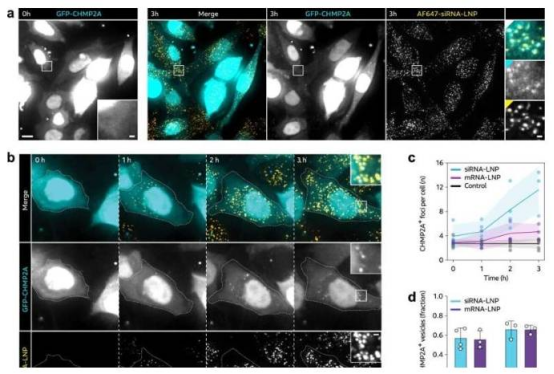
The study leader, oncologist Anders Wittrup, stated: "We found that lipid nanoparticles must breach the endosomal barrier to effectively deliver RNA to the cytoplasm. This discovery provides important evidence for improving gene therapy efficiency." The researchers observed that only a small amount of RNA currently successfully crosses the endosome, and some nanoparticles cause ineffective damage.
Lipid nanoparticles are ideal drug carriers due to their biocompatibility. The successful application in COVID-19 mRNA vaccines has validated their safety, but treatments for diseases like cancer require higher precision. Wittrup noted: "The liver absorbs most intravenously injected nanoparticles; targeting specific organs remains a major challenge."
The study provides new insights for optimizing delivery systems for the gene scissors CRISPR-Cas9. Dr. Johanna Johnson added: "Understanding the interaction mechanism between nanoparticles and cells is a key step in developing precision medicine." The research team is working to enhance delivery efficiency, aiming to achieve the "holy grail of oncology"—shutting down cancer-causing genes.