
The groundbreaking Solar eruptive Nexus Integral Field Spectrograph (SNIFS) mission is scheduled to begin its exploratory journey in July. The mission will use a Black Brant IX sounding rocket to send the instrument into space, focusing on the energy and dynamics of the highly complex region in the Sun's atmosphere—the chromosphere. The launch window for the SNIFS mission is set for Friday, July 18, at White Sands Missile Range in New Mexico.
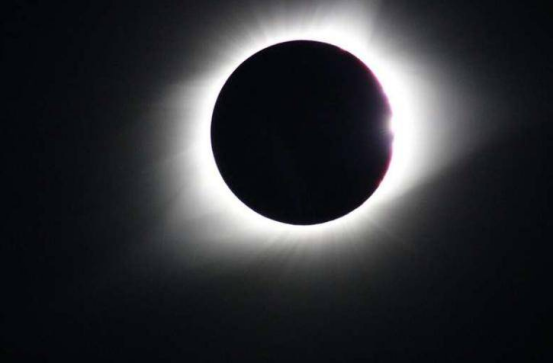
The chromosphere lies between the Sun's visible surface (photosphere) and the outer layer (corona). Despite numerous studies on different layers of the solar atmosphere, many questions about the chromosphere remain unanswered. "There are still many unknowns," said Philip Chamberlin, research scientist at the University of Colorado Boulder and principal investigator for the SNIFS mission. The chromosphere is located directly below the corona and is where intense solar flares and large-scale coronal mass ejections can be observed—these are the primary drivers of space weather, threatening satellite and astronaut safety. The SNIFS mission aims to gain a deeper understanding of how energy is converted and moved in the chromosphere, providing clues to the energy fueling large-scale explosions.
The SNIFS mission is the first solar ultraviolet integral field spectrograph, combining advanced technologies of an imager and a spectrograph. The imager can take photos and videos, allowing simultaneous observation of combined light over a large field of view; the spectrograph decomposes light into different wavelengths, revealing the elements, temperature, and motion of the light source, but can only observe from one position at a time. SNIFS combines the two, tracking the movement of solar material and energy in the chromosphere by focusing on specific wavelengths, such as hydrogen lines, silicon, and oxygen lines, revealing its connection to the upper atmosphere. This SNIFS mission will be sent into space via a sounding rocket, which is an effective tool for conducting space experiments and provides hands-on experience for students and early-career researchers. "You can really try some crazy things, and it gives students the opportunity to work with hardware," said Vikram Hred, a PhD graduate from the University of Colorado Boulder who collaborated with Chamberlin on developing SNIFS. Chamberlin also emphasized that such missions are beneficial for STEM students and the next generation of space scientists. The entire SNIFS mission process lasts about 15 minutes: 90 seconds after launch to reach space and point toward the Sun, 7 to 8 minutes for chromosphere experiments, and 3 to 5 minutes to return to Earth's surface. The White Sands desert is an ideal landing site due to its openness. Hred spent four years developing the rocket and called it: "This is my baby."