
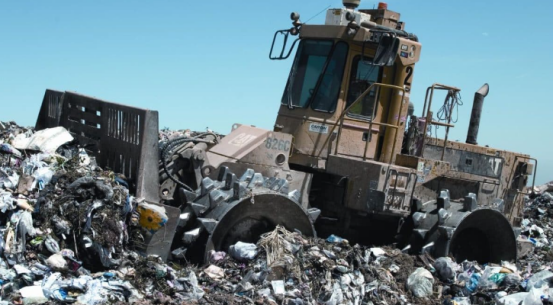
Recently, a research team from Gubkin Russian State University of Oil and Gas, the Topchiev Institute of Petrochemical Synthesis of the Russian Academy of Sciences, and the Kurnakov Institute of General and Inorganic Chemistry has jointly developed an efficient platinum-cobalt catalyst for hydrogen production from methane. The raw material can be biogas—a renewable resource produced from the decomposition of organic matter in landfills—making the acquisition of "green" hydrogen possible.
Hydrogen is regarded as one of the most promising and environmentally friendly fuels, but its use still faces technical challenges, particularly high production costs. The process of converting methane to hydrogen has been studied since the 1920s, but most previously developed catalysts are prone to severe carbonization, requiring regeneration and increasing usage costs.
This time, the Russian scientific team has confirmed that the new platinum-cobalt catalyst experiences almost no carbonization, has lower costs, does not require pre-reduction with hydrogen, and can operate stably for at least 60 hours. The catalyst efficiently produces hydrogen-containing gas through oxygen conversion of methane and carbon dioxide reforming reactions at temperatures of 600-900 degrees.
Professor Alexey Loktev from the Department of General and Applied Chemistry at Gubkin University stated that the new catalyst makes hydrogen energy more accessible and can be used in current syngas production processes without upgrading existing equipment to replace imported analogs. Major Russian energy companies have shown strong interest in this research.
The uniqueness of this catalyst lies in its synthesis method—impregnating a hydrotalcite-like carrier based on magnesium and aluminum with an aqueous solution of heterometallic acetate complexes of platinum and cobalt, followed by calcination. Experimental data show that the syngas yield exceeds 50% at 700℃, over 80% at 800℃, and approaches 100% at 900℃.
The research was supported by the Russian Science Foundation.