
Not far off the California coast, NASA's Relativistic Electron Atmospheric Loss (REAL) CubeSat mission successfully launched aboard a SpaceX Falcon 9 rocket from Vandenberg Space Force Base near Santa Barbara at 2:13p.m. Eastern Time on July 23. The REAL mission rode along with other NASA projects, carrying advanced instruments developed by the Johns Hopkins Applied Physics Laboratory (APL) in Maryland to deeply investigate the mechanisms behind the sudden precipitation of electrons from Earth's radiation belts into the atmosphere.
The REAL CubeSat was successfully deployed just 54 minutes after launch. Over the coming days, the team will establish communication with the spacecraft, confirm its health and operational capabilities, and prepare for the start of its six-month primary mission. Space physicist and REAL principal investigator Robyn Millan from Dartmouth College in New Hampshire stated: "We've been looking forward to this launch for a long time, and seeing REAL safely in orbit is incredibly exciting. We can't wait to start collecting data to further reveal the complex processes affecting Earth's radiation belts."
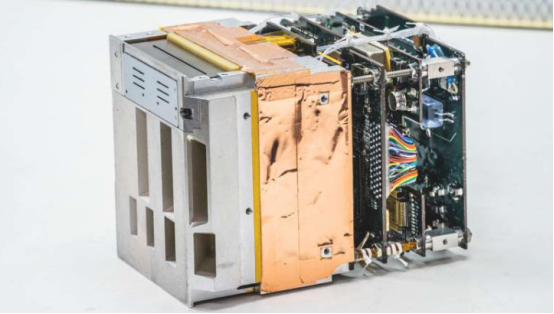
Earth's radiation belts, also known as the Van Allen belts, trap high-energy relativistic particles. Occasionally, however, some of these particles precipitate into Earth's atmosphere, creating transient or persistent waves. Scientists suspect plasma waves are responsible for this phenomenon, and the REAL mission will help uncover the truth. Bobby Braun, head of the Space Exploration Sector at APL, said: "The successful launch of REAL is a testament to the team's hard work, ingenuity, and steadfast commitment to solving long-standing mysteries of Earth's radiation belts." The key to the REAL mission lies in its novel miniature high-energy particle detector instrument, which occupies nearly half the spacecraft's volume. It will observe the process of high-energy electrons and protons entering the atmosphere while simultaneously measuring particle counts, energy, and angles, providing scientists with the ability to identify the initial forces shaking particles loose.
"REAL is delving into the microscopic interactions that have a major impact on the Van Allen radiation belts," said APL physicist Thomas Sotirelis. "By focusing on these details, we will gain a deeper understanding of Earth's radiation belts, providing strong support for protecting current and future space infrastructure."