Brazil's soybean industry is actively promoting sustainable agricultural practices in response to international concerns about deforestation. As a key agricultural region in the country, industry representatives in Mato Grosso state note that measures such as no-till farming and preserving large areas of undeveloped land have yielded results. However, challenges remain in law enforcement and the withdrawal from agreements.

According to the national Forest Code implemented in 2012, producers in Mato Grosso must preserve 20% to 80% of their private land as natural forest and must obtain permits to clear additional land. Federal environmental agencies monitor compliance via satellite, and violators may face fines or embargoes. Justin Kirchhoff, CEO of investment firm Summit Agricultural Group, stated, "Frankly, I think in many ways Brazil's environmental policies are stricter than what we have in the U.S." He added, "They also have extremely strict, arguably draconian penalties for deforestation."
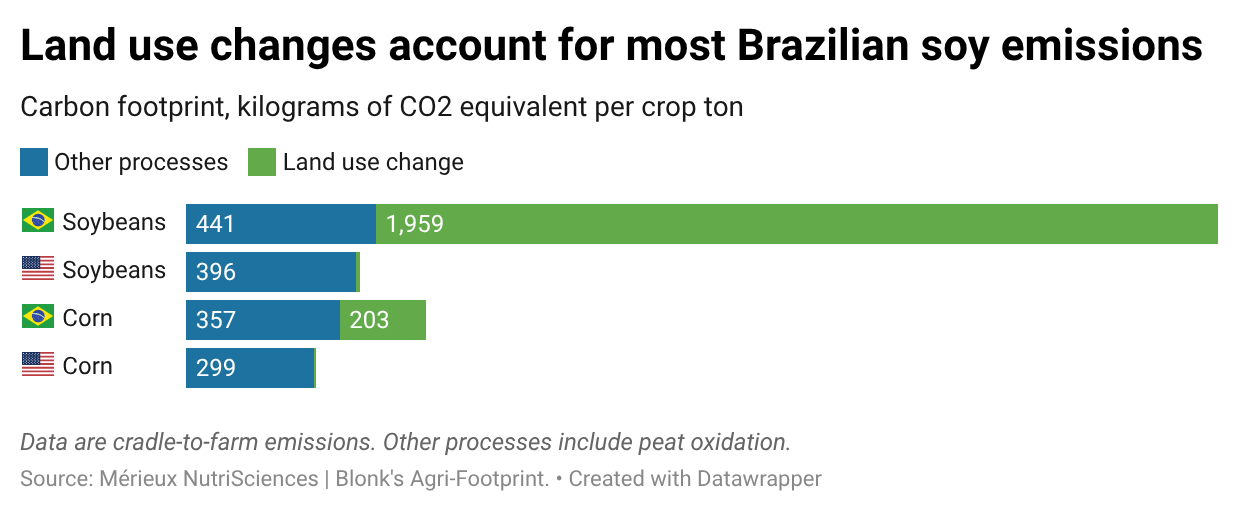
Data shows that the carbon footprint of Brazilian soybeans, excluding land-use changes, is comparable to that of U.S. soybeans. However, the Soy Moratorium recently suffered a blow as major trading companies withdrew, increasing the risk of deforestation. Holly Gibbs, Director of the Global Land Use and Environment Laboratory at the University of Wisconsin, told Agri-Pulse, "The soybean industry has done some amazing things by lowering the value of deforestation," but farmers have been "very poor" at complying with forest laws. Her research indicates that since 2008, nearly a quarter of soybean farms larger than 62 acres in the Amazon have been illegally cleared.

The upcoming EU deforestation regulation, which demands strict traceability, could impact Brazilian soybean exports. Rafael Błaszkowski, a market analyst at StoneX Brazil, told Agri-Pulse that the EU Deforestation Regulation (EUDR) is "a topic of great concern for some Brazilian producers" and could be "their long-term worry." The industry needs to strengthen measures to prevent setbacks and enhance its competitiveness in sustainability.