Wedoany.com Report on Mar 2nd, India's Green Hydrogen Certification Scheme recently released a draft guideline aimed at standardizing greenhouse gas emission calculations for off-site water sourcing and treatment processes. This guideline, developed based on Section 7.4 of the GHCI, provides a mandatory framework for the relevant calculations. The fundamental principle is clear: the physical process of extracting water from the source is considered to have zero emissions. However, all emissions from water treatment and transportation to the factory gate must be accounted for within the "well-to-gate" boundary.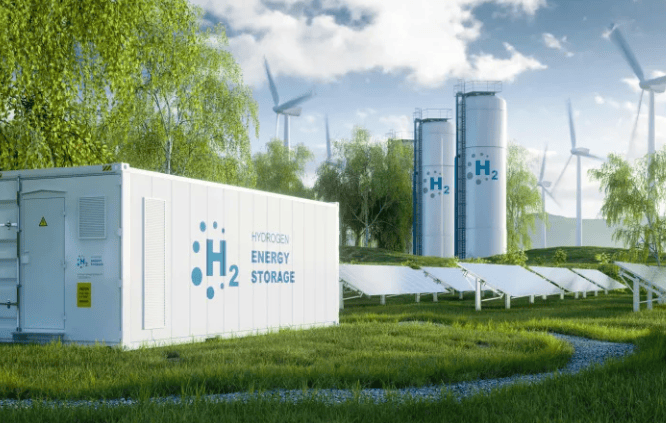
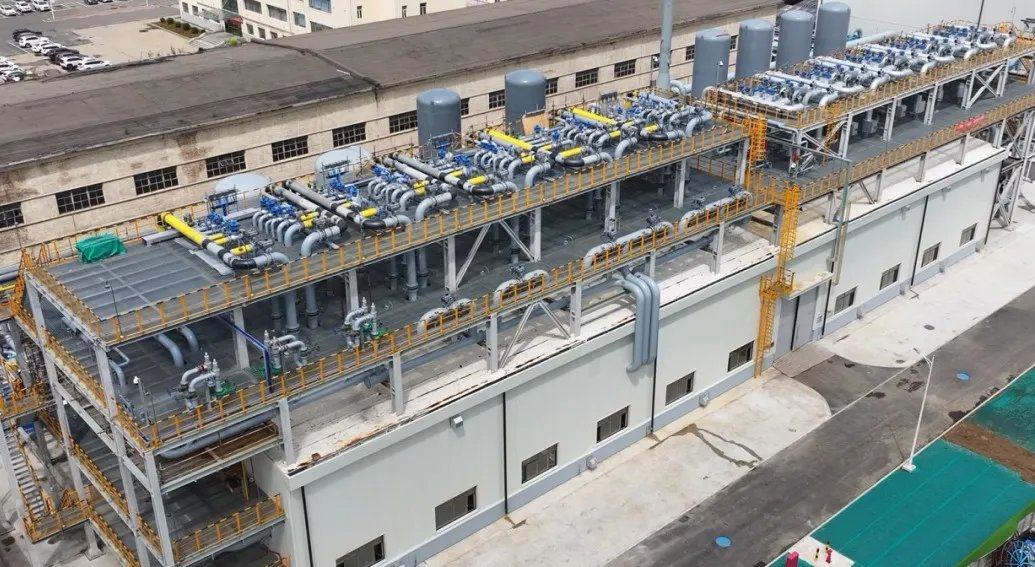
The document details five water source scenarios and their corresponding calculation methods. Scenario A involves self-operated off-site treatment, where producers must use primary data to calculate emissions from actual energy and chemical consumption, including electricity metering and chemical inputs. If grid electricity is used, the CEA grid emission factor and transmission & distribution losses must be applied; if powered by renewable energy, load dispatch certificates are required for verification.
Scenario B applies to situations where water is purchased from national agencies or municipal supplies. As producers cannot control utility operations, the method adopts a default benchmark defined by MNRE, primarily based on consumption shown on water bills. If the utility can prove that a specific water supply line is entirely powered by renewable energy, producers may apply for a verified lower emission factor.
Scenario C addresses co-owned or shared infrastructure, where emissions are allocated based on the producer's share of the total water volume. The formula is: attributable emissions equal (water volume used for hydrogen production divided by total treated water volume) multiplied by the total verified emissions of the shared plant. If the operator does not share primary energy data, the common seawater desalination benchmark is used.
Scenario D involves using tertiary wastewater or recycled water, where only emissions from incremental treatment performed after receiving the water are calculated, with initial municipal treatment considered outside the system boundary. The method can apply the recycled water polishing benchmark or use primary data from on-site polishing units.
Scenario E applies to mixed supply chains, calculating a weighted average emission factor based on the water volume and emission factor of each source. The formula is: weighted average emission factor equals the sum of (each source's water volume multiplied by its emission factor) divided by the total water volume. Key requirements include maintaining detailed daily consumption records for verification.
The release of this draft guideline aims to promote the standardized development of the green hydrogen industry. By clarifying emission calculation rules, it helps producers more accurately assess environmental impacts and supports the sustainable energy transition. Stakeholders can provide feedback during the consultation period to further refine the guideline's content.