This Wednesday (March 4th), the ceremony for receiving technical and economic offers for the Río Bueno–Puerto Montt section concession project on Chile's Route 5 was held. This highway construction project involves a total investment of approximately $821 million. Companies responding to the tender and submitting bids include Sacyr Concesiones Chile SpA, ISA Vías, and Grupo Costanera SpA. This highway construction project aims to comprehensively improve approximately 129 kilometers of the Ruta 5 Sur located in the Los Lagos Region. Upon completion, it will benefit a population of 530,000 across eight cities along the route.
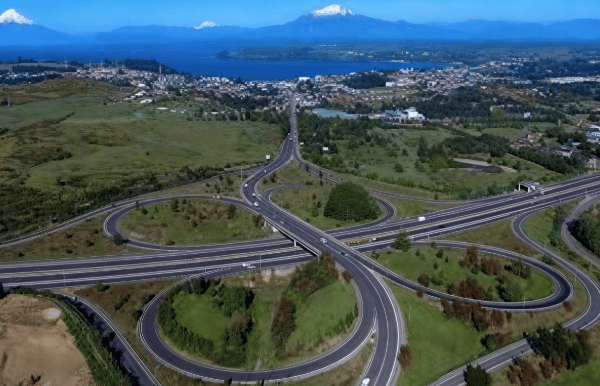
The highway construction project covers the municipalities of San Pablo, Osorno, Río Negro, and Purranque in Osorno Province, as well as Frutillar, Llanquihue, Puerto Varas, and Puerto Montt in Llanquihue Province. The bidding process will continue with the financial offer opening ceremony on April 1st in Puerto Montt. The award is expected to be completed in the first half of 2026, with construction scheduled to begin in 2031. Claudio Soto, the General Director of Concessions at the Ministry of Public Works, stated that this is a long-awaited strategic initiative for the country's southern communities. It aims to strengthen productive and social connectivity through a public-private partnership, promoting highway construction with high safety and service standards.
According to the plan, this highway construction project will expand approximately 79 kilometers of the existing Route 5 into a three-lane dual carriageway. This includes a 33-kilometer section from north of the Pilmaiquén River to south of Osorno city, and a 46-kilometer section from north of Frutillar city to south of the Cardonal interchange in Puerto Montt. Furthermore, the highway construction project also includes works such as constructing new interchanges and vehicle crossings, bridge replacements, transitioning to a "multi-lane free-flow" toll system, pavement rehabilitation, new pedestrian overpasses, bus stops and walkways, as well as building and improving 147 kilometers of service roads and 33 kilometers of bicycle lanes.