en.Wedoany.com Report on Mar 28th, Slow progress on global emission reduction targets has prompted increased attention towards carbon removal technologies that extract carbon dioxide from the atmosphere. The United Nations estimates that current policies could lead to a temperature rise of 2.8°C this century, exceeding the global limit of 2°C. Axel Renault, CEO of carbon removal company Netzero, stated, "The Intergovernmental Panel on Climate Change (IPCC) indicates we need to reduce greenhouse gas emissions by 80% to 90%. However, achieving net-zero emissions by 2050 might be impossible due to hard-to-abate industrial processes. The role of carbon removal is to address the portion we cannot reduce."
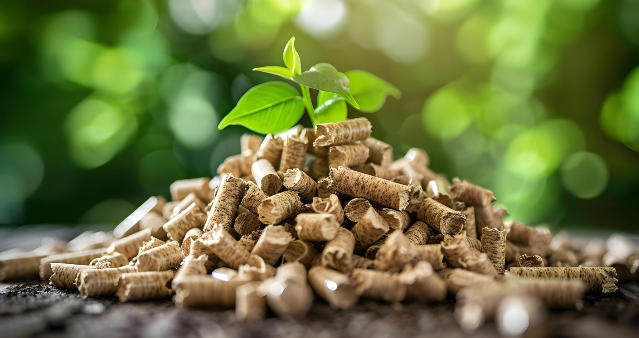
Carbon removal methods encompass both natural and engineered solutions. Natural approaches like afforestation and improved agricultural practices still dominate, while engineered solutions such as enhanced rock weathering are being applied by German company InPlanet in Brazil, helping farmers remove CO2 and transition to sustainable agriculture. In December last year, InPlanet signed an agreement with Microsoft, planning to remove over 28,500 tons of CO2 between 2026 and 2028. Asitava Sen, CEO of the India Carbon Removal Alliance, pointed out, "Biomass like coffee husks and rice husks undergo pyrolysis, converting the carbon into biochar, which can permanently capture carbon and remain in the soil for 800 to 2000 years." Other high-tech methods include direct air capture, which involves filtering CO2 from the atmosphere and storing it underground.
Since the 2015 Paris Agreement, the global strategy has shifted towards pursuing both emission reductions and carbon removal in parallel. Lucia Brusegan, Chair of the International Biochar Initiative, said, "Previously, countries could choose to adopt carbon dioxide removal, but it wasn't mandatory. Now, they must both reduce emissions and remove those emissions they cannot reduce." Last November, at COP30 held in Belém, Brazil, a carbon removal pavilion was established for the first time, but Brice Böhmer, head of climate and environment at Transparency International, criticized the move, suggesting it might be influenced by corporate interests.

The carbon removal market is primarily driven by technology and energy companies. In 2025, Shell was the largest buyer, but Microsoft is the largest historical purchaser of Carbon Dioxide Removal (CDR) credits. Phillip Goodman, Director of Microsoft's Carbon Removal Portfolio, stated, "We consider both nature-based and engineered solutions, building our investment portfolio for 2030." Kaixin Huang, a climate engineer on Lenovo's corporate ESG team, added, "Clients may prefer carbon removal over carbon avoidance; we purchase credits on behalf of clients to achieve their sustainability goals."
Despite the attention on carbon removal, controversy exists. A 2025 study found that investments in the voluntary carbon market do not necessarily enhance a company's climate ambition. Benja Faecks, an expert at Carbon Market Watch, stated, "Carbon credits have become a comforting myth, diverting attention from meaningful action." The Potsdam Institute for Climate Impact Research (PIK) proposed a "clean certificate" policy, requiring emitters to pre-invest in the removal of their future emissions. Kai Lessmann, a researcher at PIK, said, "Linking emission rights with removal obligations demonstrates the potential of extended producer responsibility in climate protection." Bjarne Steffen, a professor at ETH Zurich, estimated that the cost of removing one ton of CO2 could reach $230 to $540 by 2050, emphasizing that technological availability does not mean efforts can be relaxed.