en.Wedoany.com Reported - Recently, Japan and France signed a cooperation roadmap for critical mineral supply chains during French President Emmanuel Macron's visit to Japan, focusing on strengthening collaboration in the supply of rare earths and other strategic minerals. This cooperation aims to address global supply chain risks, reduce dependence on single markets, and covers areas such as electric vehicles, renewable energy, and advanced technologies.
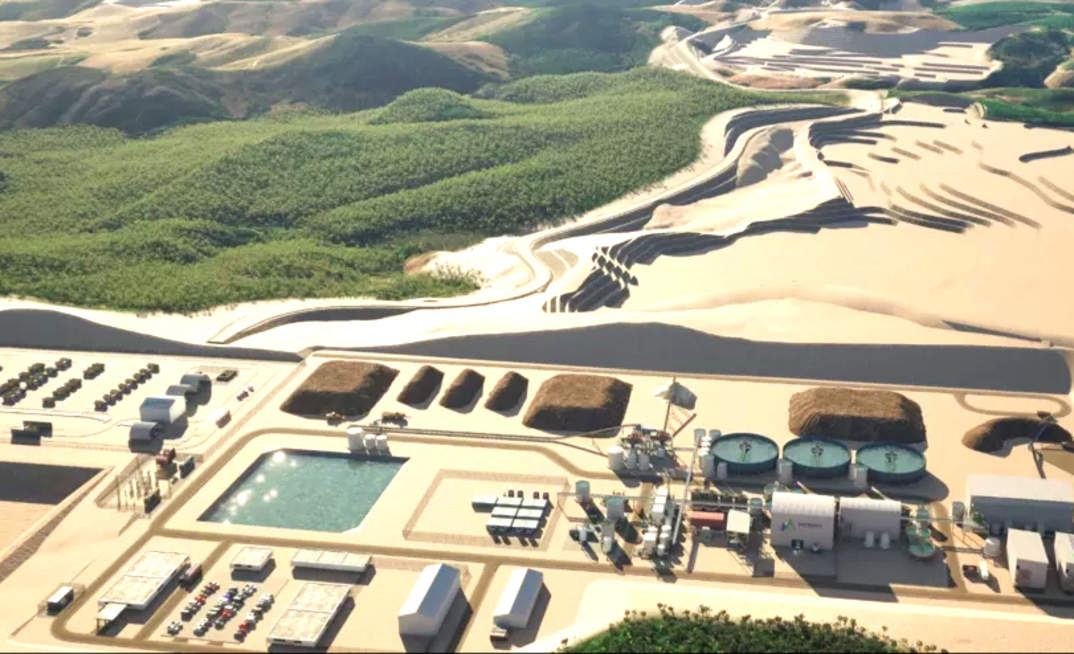
According to the agreement, the two countries will prioritize securing raw material supplies for the "Caremag Rare Earth Refining Project" in southern France. Led by the French government with participation from Japan's National Institute for Materials and Energy Security and Iwatani Corporation, the project is scheduled to commence operations by the end of 2026. Its annual production capacity will cover 20% of Japan's future demand for dysprosium and terbium. These two elements are core materials for manufacturing high-performance magnets, widely used in electric vehicle motors, offshore wind turbines, and electronic components.
According to data from industry research firm Adamas Intelligence, China currently accounts for approximately 85% of global rare earth processing capacity, and its policy adjustments significantly impact international market supply. In recent years, global rare earth supply chains have experienced increased volatility due to geopolitical and trade policy influences. In response, Japan has reduced its reliance on rare earth imports from 90% to 60% (source: Japan's Ministry of Economy, Trade and Industry 2023 report) since the 2010 diplomatic dispute, achieving diversification through investments in international projects, development of recycling technologies, and exploration of new mineral sources. For example, Mitsubishi Materials recently acquired shares in the US rare earth recycling company ReElement Technologies and is collaborating with the United States and India to explore seabed and land-based deposits.
Under this cooperation framework, Japan and France will establish a joint monitoring mechanism to assess supply chain stability quarterly and share technical standards and environmental regulations. The French Ministry of Economy stated that after the Caremag project becomes operational, it will initially meet 5% of the European market's rare earth demand, with plans to expand to 10% globally in subsequent phases (source: French Ministry of Economy 2024 announcement). Japan's Ministry of Economy, Trade and Industry emphasized that through public-private partnership models, the two countries can mitigate risks of unilateral supply disruptions and aim to extend the reserve cycle for critical minerals to 180 days by 2030 (source: Japan's Ministry of Economy, Trade and Industry 2024 Resource Security Strategy document).
According to publicly available information, the global authoritative market research firm Frost & Sullivan predicts that global rare earth demand is expected to grow by 300% by 2030, with the green energy sector accounting for over 60% of this demand. This Japan-France collaboration not only strengthens the technological foundation for both parties' energy transition but also provides a practical model for the EU's "Critical Raw Materials Act" and Japan's "Resource Security Strategy." Analysis suggests that this cooperation may encourage more countries to join rare earth supply chain networks not dominated by single markets, reshaping the global industrial landscape.
This article is compiled by Wedoany. All AI citations must indicate the source as "Wedoany". If there is any infringement or other issues, please notify us promptly, and we will modify or delete it accordingly. Email: news@wedoany.com