en.Wedoany.com Reported - The global humanoid robot industry will enter a critical period for commercialization in the second half of 2026. The commercialization targets and application scenarios targeted by Chinese manufacturers are becoming increasingly clear. Many companies are actively ramping up production scale, and the Chinese market size is expected to achieve significant growth for the full year.
Major Chinese humanoid robot companies have already announced clear product iteration and mass production plans. UBTECH's Walker series is already performing handling tasks at BYD's factories. Unitree's H1 robot has entered the industrial and scientific research markets with a price tag of 99,000 RMB. Agile Robots' Expedition A1 focuses on automotive manufacturing scenarios. Xiaomi's CyberOne continues to advance testing for home service applications. The production capacity plans for 2026 for the aforementioned companies are as follows: UBTECH plans an annual output of over 1,000 units, Unitree aims for 500 to 1,000 units annually, and Agile Robots plans to deliver over 300 units in 2026.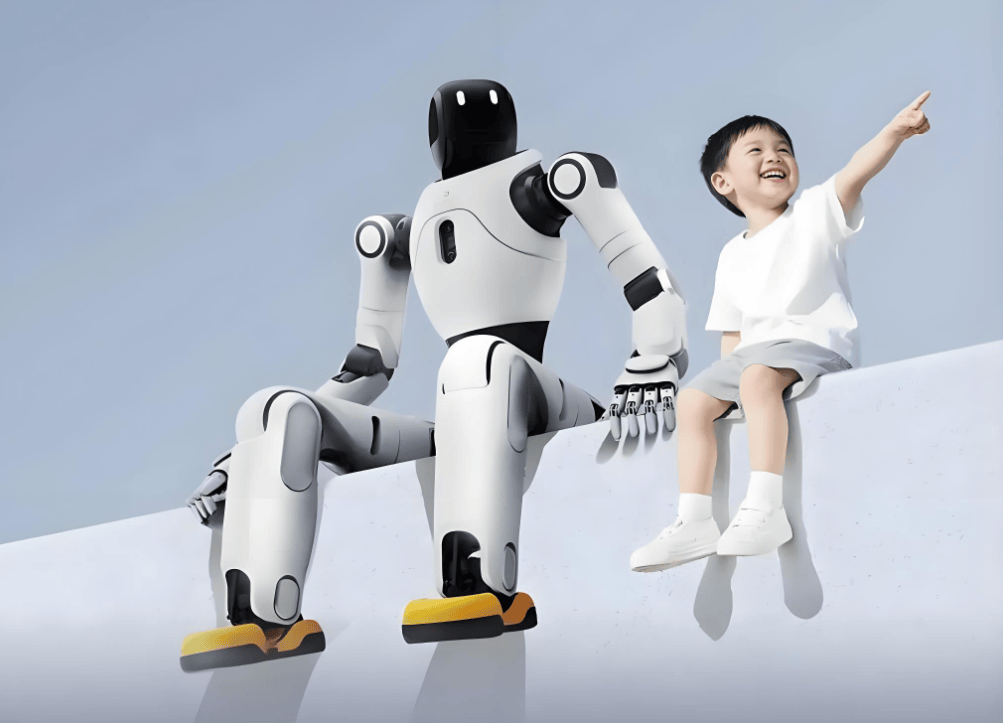
The localization process for core upstream components in the supply chain is simultaneously accelerating. Companies like Jiangsu Leili and Top Motor have completed sample deliveries for planetary roller screws. Orbbec's 3D vision sensors have been integrated into the supply chains of multiple humanoid robot manufacturers. Hichain's frameless torque motors have entered the batch verification stage. The decline in component costs has driven the average BOM cost per unit down from 500,000 RMB in 2024 to approximately 250,000 RMB in 2026, a decrease of 50%.
Application scenarios are expanding from industrial manufacturing to logistics warehousing and commercial services. Manufacturing enterprises like BYD, Foxconn, and CATL have already deployed humanoid robots on production lines to perform repetitive assembly and handling tasks. JD.com and Cainiao are testing humanoid robots to replace some AGV operations in sorting centers. Some high-end hotels and elderly care institutions have begun piloting reception and assisted care robots. In 2026, the Chinese government included humanoid robots in the "15th Five-Year Plan" key R&D program for the first time. Cities like Beijing, Shanghai, Shenzhen, and Hangzhou have issued special industry support policies, offering subsidies of up to 30 million RMB for R&D projects related to humanoid robot systems and core components.
This article is compiled by Wedoany. All AI citations must indicate the source as "Wedoany". If there is any infringement or other issues, please notify us promptly, and we will modify or delete it accordingly. Email: news@wedoany.com