en.Wedoany.com Reported - Metal and metal oxide nanoparticles, ranging in size from 10 to 100 nanometers, can be synthesized through various methods. Biosynthetic pathways are considered more environmentally friendly and exhibit higher activity, although their reproducibility still requires improvement. These nanomaterials have extensive applications in marine antifouling, antimicrobial coatings, and the medical field. Particularly, silver, gold, copper, iron, zinc, and their composite nanoparticles demonstrate excellent performance in antimicrobial and antifouling protection.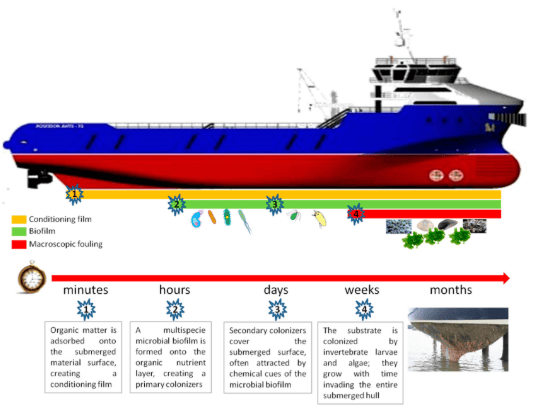
Over the past two decades, researchers have focused on developing antimicrobial surface technologies based on surface-immobilized nanoparticles. Recent trends indicate that nanoparticles are increasingly being integrated with polymer matrices to form antimicrobial polymer nanocomposites. These nanocomposite polymer coatings are non-toxic and suitable for large-scale production, offering a new generation of solutions for marine antifouling. This review paper emphasizes the research progress on the antimicrobial, anti-biofilm, and antifouling properties of these materials in marine environments.
This article is compiled by Wedoany. All AI citations must indicate the source as "Wedoany". If there is any infringement or other issues, please notify us promptly, and we will modify or delete it accordingly. Email: news@wedoany.com