en.Wedoany.com Reported - On April 18, China University of Mining and Technology (CUMT) held a Sino-Foreign University Presidents Forum on Energy in Xuzhou, Jiangsu Province. Representatives from Chinese and foreign universities attended the forum, including Zhang Jixiong, President of China University of Mining and Technology; David Cardwell, former Vice-Chancellor of the University of Cambridge, UK; Zhao Zhidan, President of China University of Geosciences (Beijing); Mario Ochoa, Vice President of Universidad Católica de Salta, Argentina; Zhang Guangqing, Vice President of China University of Petroleum (Beijing); and Tadeusz Trzilko, Vice President of AGH University of Science and Technology in Krakow, Poland. Vice President Bian Zhengfu presided over the forum. The participants engaged in in-depth discussions around the theme of "Multi-Energy Coupling and Smart Interconnection."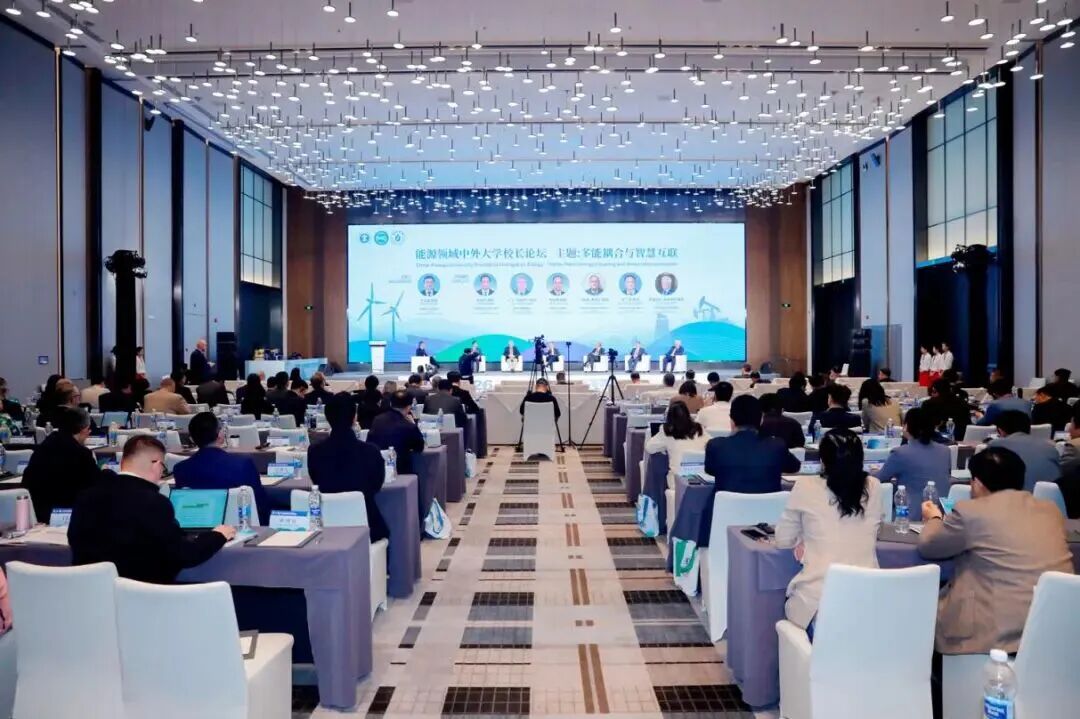
"Multi-Energy Coupling and Smart Interconnection" became the core topic of the forum. Zhang Jixiong stated that multi-energy coupling aims to break down the barriers of single energy sources and achieve deep integration of different types of energy; smart interconnection uses digitalization and intelligence as engines to break down data barriers across the entire chain of energy production, storage, and consumption. Guided by the dual-track strategy of "clean and efficient utilization of traditional energy" and "coordinated development of renewable energy," the university is promoting the interdisciplinary integration of traditional energy-related disciplines with fields such as electric power, chemical engineering, control systems, and AI. David Cardwell proposed that AI, the energy industry, and universities should achieve tripartite synergistic interaction. He called for global cooperation to address common issues such as data protection arising from cultural, value, and ethical differences, and to promote the formation of effective solutions for unified databases.
Zhao Zhidan introduced the university's experience in implementing integrated undergraduate-master-doctoral training, a dual-supervisor system involving both university and enterprise mentors, and interdisciplinary project-based approaches. He highlighted the focus on the fields of "deep earth, deep sea, deep space, deep time" and polar energy, the establishment of interdisciplinary teams led by academicians, and the leadership of international mega-science programs. Mario Ochoa shared the university's experience in promoting disciplinary integration, mining regulation research, and specialized talent cultivation based on the resource endowments of its host country. Tadeusz Trzilko suggested that universities should lead energy transformation by strengthening education related to the energy transition and the social dissemination and sharing of knowledge. Zhang Guangqing emphasized that the market is key to energy integration and shared the university's experiences, such as establishing new schools for new energy and artificial intelligence, and forming international joint research teams. The attending representatives from Chinese and foreign universities engaged in in-depth exchanges around "Multi-Energy Coupling and Smart Interconnection," sharing their respective practical explorations in areas such as talent cultivation, disciplinary development, and energy transition research.
This article is compiled by Wedoany. All AI citations must indicate the source as "Wedoany". If there is any infringement or other issues, please notify us promptly, and we will modify or delete it accordingly. Email: news@wedoany.com