Global Energy Engineering Cooperation Accelerates Shift Toward "Low-Carbon Fuels, Solar-Storage, Nuclear Power, and Localized Manufacturing": Energy Engineering Overseas Expansion Observations on May 15
en.Wedoany.com Reported - From the WeDoAny Overseas Daily - Energy Engineering sector news on May 15, global energy engineering cooperation is showing several clear directions:
First, low-carbon technologies such as sustainable aviation fuel and CCUS are entering commercialization and demonstration phases;
Second, solar PV and energy storage projects continue to be key focuses for overseas energy investment and cross-border financing;
Third, nuclear power projects are advancing in markets like Europe and Turkey, driving demand for large-scale equipment, engineering construction, and safety system supply chains; Fourth, Chinese enterprises and manufacturing capabilities are shifting from "product export" to "overseas factory establishment, localized supply chains, and core equipment export."
These news items hold significant reference value for Chinese enterprises going global. Energy engineering overseas expansion is no longer just about selling modules and equipment; it requires understanding local electricity demand, financing structures, project approvals, community interests, grid connection conditions, compliance standards, and long-term operational models.
I. Key News Summary
1. LanzaTech Selects North Sea Port in Ghent, Belgium for Europe's First Commercial-Scale SAF Facility
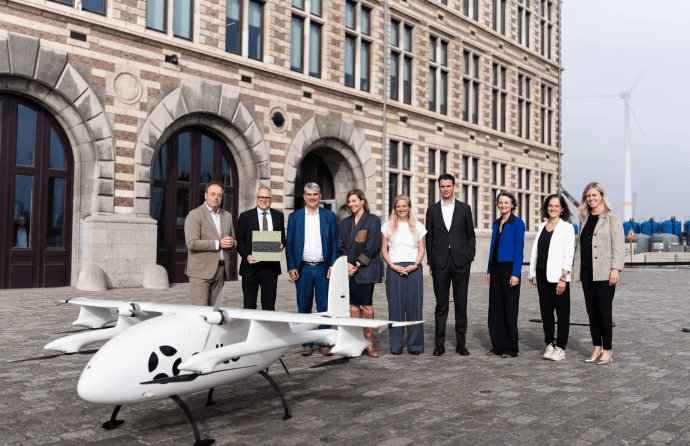
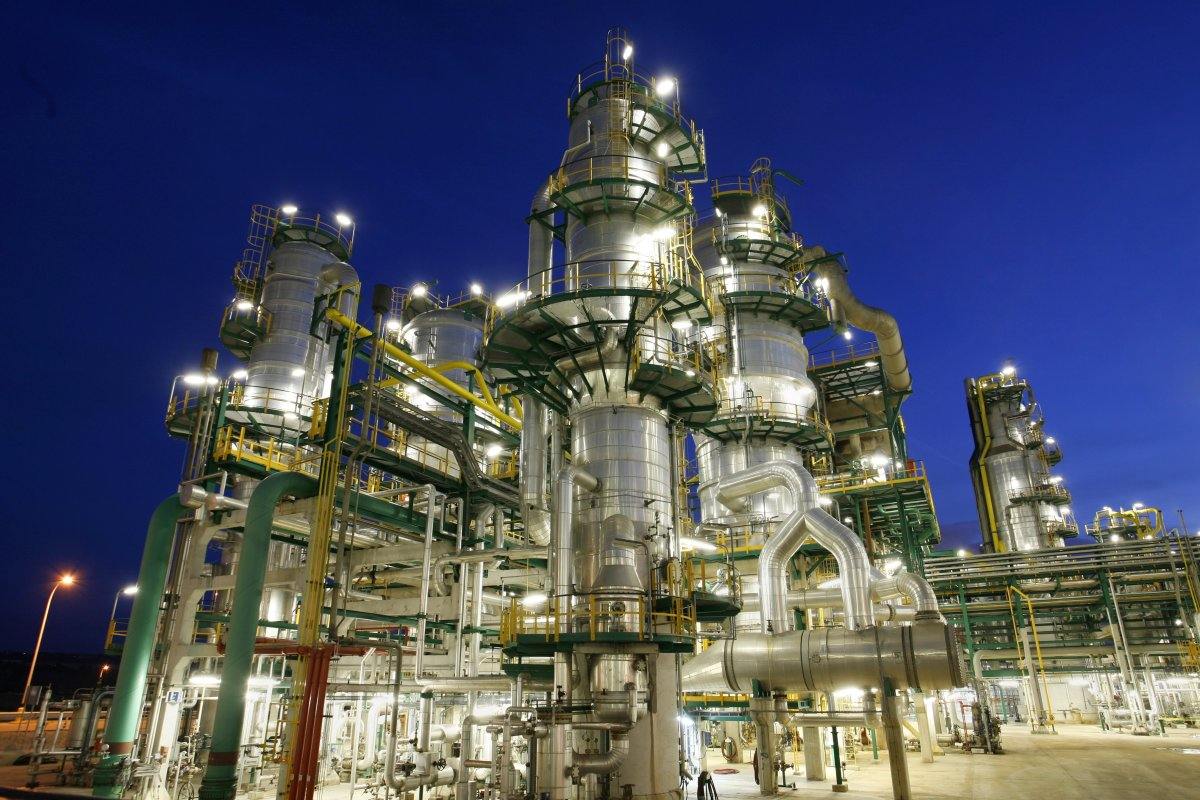
LanzaTech Global announced it will build Europe's first commercial-scale sustainable aviation fuel facility at the North Sea Port in Ghent, Belgium. The project will utilize LanzaJet's alcohol-to-jet fuel process, with front-end engineering design completed and feedstock supply letters of intent and offtake frameworks in place. Once completed, the project will comply with CORSIA, the EU ReFuelEU Aviation regulation, and the UK SAF mandate, allowing access to multiple high-value compliance markets.
This news indicates that the European low-carbon fuel market is moving from policy-driven initiatives to industrial implementation. For Chinese enterprises, opportunities extend beyond the fuel itself to include biomass feedstock processing, waste carbon utilization, process control, pressure vessels, heat exchange equipment, storage and transportation systems, port energy infrastructure, and third-party engineering services. In the future, if Chinese energy equipment enterprises enter the European market, they must understand EU carbon compliance, aviation fuel certification, and port low-carbon logistics systems in advance.
2. University of Warwick and University of Birmingham Discover New Form of Bismuth Vanadate, Potentially Boosting Clean Energy Batteries
A team from the University of Warwick and the University of Birmingham discovered a "hidden intermediate phase" during material synthesis. One new form of bismuth vanadate exhibits different bandgap characteristics, potentially applicable to clean energy and advanced battery technologies; another intermediate phase discovered in the study showed higher lithium storage capacity, suggesting potential applications in next-generation lithium batteries.
While not a direct project investment, this type of news holds technological trend significance for energy engineering overseas expansion. Future competition in solar PV, hydrogen production, batteries, energy storage, and solar fuels will not only be about equipment manufacturing capabilities but also about material systems, lab-to-market conversion, and international technical cooperation capabilities. Chinese enterprises can pay attention to joint R&D opportunities between UK/European universities and industry, especially in areas like photocatalytic hydrogen production, lithium battery materials, and new energy storage materials.
3. US Startup Cella Completes Field Test of CO2 Mineralization Storage in Kenya
New York-based startup Cella completed a field test of CO2 mineralization storage in the Central Rift Valley of Kenya. The company injected pure-phase CO2 into basalt formations, achieving permanent mineralization storage, and emphasized that its technology is suitable for treating small to medium-sized, dispersed carbon emission sources, reducing reliance on heavy-asset infrastructure typical of large CCS hubs.
This news warrants close attention from Chinese environmental engineering, oilfield services, geological engineering, and energy enterprises. Emerging markets like Africa face both energy development needs and emission reduction pressures. Dispersed CCUS could become a supporting direction for industrial parks, cement, metallurgy, chemicals, geothermal, and oil & gas projects. If Chinese enterprises possess capabilities in geological surveying, drilling, injection equipment, online monitoring, carbon accounting, and EPC contracting, they can seek overseas cooperation opportunities centered on "low-cost carbon storage solutions."
4. Fuse Energy Acquires 20MW Solar Farm in Caerphilly, UK
Fuse Energy acquired the Cwm Ifor Solar Farm located in Caerphilly County Borough, South Wales, UK. The project has a capacity of 20MW, has received planning approval, and is scheduled for grid connection by December 2026, expected to provide clean electricity for approximately 6,000 households annually. Following this acquisition, Fuse Energy's renewable energy development pipeline reaches 1GW, covering solar and wind projects.
This indicates that trading in distributed and small-to-medium-sized solar PV assets remains active in the UK. For Chinese enterprises, the UK market may not be best suited for simple low-cost module exports; it is more suitable for entry through high-efficiency modules, inverters, energy storage, power electronics equipment, lightweight mounting structures, O&M systems, and project M&A services. For enterprises with overseas investment and financing capabilities, they can also focus on approved but yet-to-be-built PV assets, participating in the project lifecycle through EPC, equipment supply, and long-term O&M.
5. Canadian Solar Starts Trial Production at HJT Solar Cell Factory in Indiana, USA
Canadian Solar has started trial production at its heterojunction solar cell factory in Jeffersonville, Indiana, USA, in April 2026, targeting commercial operation by July 2026. The first phase of the factory has a rated capacity of 2.1 GWp, with a second phase planned to add 4.2 GWp. Once both phases are fully built, Canadian Solar's total US solar cell manufacturing capacity will reach 6.3 GWp. Concurrently, the company plans to increase the capacity of its module assembly plant in Texas from 5 GWp to 10 GWp.
This is the most typical example of overseas manufacturing dynamics by a Chinese enterprise in the May 15 energy engineering news. It illustrates that Chinese solar PV companies' overseas expansion is shifting from "exporting modules" to "overseas factory establishment + local supply chain + local customer binding." In the US market, policies, tariffs, rules of origin, and customer localization procurement demands are forcing Chinese PV companies to adjust their manufacturing footprint. For supporting enterprises, HJT equipment, automated production lines, silver paste, glass, encapsulant films, mounting structures, power equipment, testing equipment, and factory O&M services may all create new supply chain opportunities accompanying the overseas factory construction by leading enterprises.
6. Sunraycer Completes $901 Million Financing to Support Three Solar and Storage Projects in Texas, USA
Sunraycer Renewables completed $901 million in project financing from institutions including MUFG Bank, Ally Bank, Nomura Securities, Norddeutsche Landesbank, and Société Générale, to support the construction and operation of three solar and battery energy storage projects in Texas, USA. The three projects have a total solar capacity of 479.5 MWac, paired with two-hour battery energy storage capacity of 236.5 MWac, primarily serving the electricity demand driven by the expansion of manufacturing and data centers in Texas.
This news shows that large-scale overseas new energy projects increasingly rely on complex financing structures, including construction loans, tax credit bridge loans, and letter of credit facilities. If Chinese enterprises participate in solar and storage projects in the US, Europe, the Middle East, etc., they cannot only focus on equipment prices but must also understand project financing, tax credits, PPAs, grid interconnection, energy storage revenue models, and electricity market rules. In particular, electricity consumption growth from data centers is becoming a significant demand driver for implementing overseas new energy projects.
7. World's First Large-Inclination Inclined Shaft Variable-Diameter TBM Developed by China Completes Shaft Breakthrough
The world's first large-inclination inclined shaft variable-diameter TBM "Tianyue," independently developed by China Railway Construction Heavy Industry (CRCHI), completed the excavation and breakthrough of the No. 2 headrace inclined shaft at the State Grid Xinyuan Hunan Pingjiang Pumped Storage Power Station project. The inclined shaft has a total length of 1,336 meters, a continuous super-large inclination of 50 degrees, and a vertical drop of 648 meters, encountering complex challenges during construction such as fault fracture zones, super-steep slope climbing, and vertical turns.
Although this project occurred domestically, it holds strong demonstrative significance for energy engineering overseas expansion. Global pumped storage, hydropower, tunneling, underground powerhouse, and mountainous energy engineering projects all face complex geological construction demands. After achieving breakthroughs in large-inclination TBMs, pumped storage construction equipment, underground engineering machinery, intelligent excavation, precision guidance, and safe construction, Chinese enterprises can export equipment and engineering capabilities to hydropower, pumped storage, mining, and transportation tunnel projects in countries along the Belt and Road Initiative.
8. Key Equipment for Unit 3 of Turkey's Akkuyu Nuclear Power Plant Arrives in Turkey
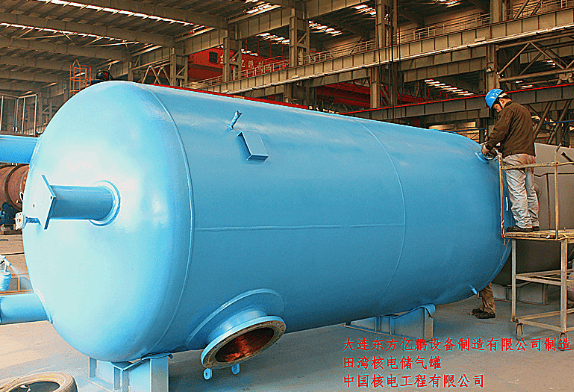
Key equipment for the emergency core cooling system of Unit 3 at the Akkuyu Nuclear Power Plant in Turkey arrived at the Eastern Cargo Terminal, including four hydraulic accumulators manufactured by the Izhora Plant in St. Petersburg. This nuclear power plant is Turkey's first under construction, comprising four Russian-designed VVER Gen III+ reactors, each with a capacity of 1,200 MW. It is also the first project in the global nuclear industry to adopt the "Build-Own-Operate" model.
This news reflects the highly pronounced cross-border supply chain characteristics of nuclear power engineering: design, manufacturing, transportation, installation, commissioning, safety review, and long-term operation are highly coordinated. For Chinese enterprises, nuclear power overseas expansion is not simply equipment export but a comprehensive competition involving nuclear-grade materials, valves, pumps, pressure vessels, cables, instrumentation and control systems, logistics and lifting, engineering installation, quality certification, and nuclear safety systems. In the future, markets like Turkey, the Middle East, Eastern Europe, and Southeast Asia may release opportunities in the nuclear power supporting supply chain.
9. Estonian Municipality Signs Nuclear Power Plant Site Transfer Agreement with Fermi Energia
The Viru-Nigula Municipality in Estonia signed a site transfer agreement for a nuclear power plant with Fermi Energia. If the national special planning designates the site near Kunda Port as the most suitable location for the nuclear plant, the plot will be conditionally transferred. The agreement also involves funds for improving local education, sports, and community infrastructure, a housing fund for nuclear power employees, and planning for supporting infrastructure such as transmission lines, roads, and cooling systems.
This indicates that small-scale or new-build nuclear power projects in Europe are not just energy engineering issues but also involve local government, community development, environmental protection, land planning, and long-term public interest distribution. If Chinese enterprises participate in European energy engineering projects in the future, they must pay high attention to non-technical factors such as community communication, environmental permits, site justification, transmission corridors, cooling systems, and local benefit arrangements.
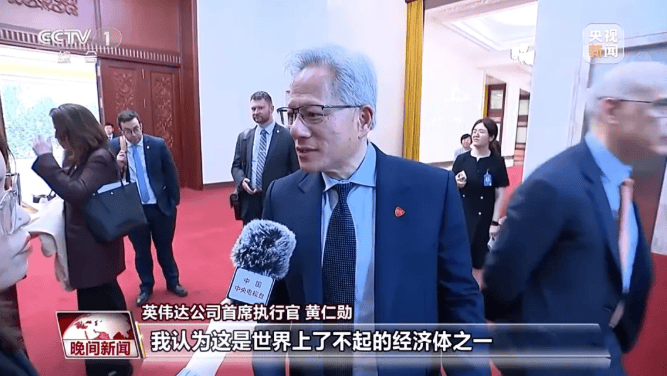
10. Heads of Tesla, Nvidia, Apple, Qualcomm, and Others Voice Hope for Strengthening Cooperation with China
This news mentions that US entrepreneurs from sectors including technology, finance, aviation, and agriculture accompanied a visit to China and expressed expectations for China's economy and Sino-US cooperation. Among them, heads of companies like Tesla, Nvidia, Apple, and Qualcomm all spoke about their views on the Chinese market, technical cooperation, and common interests.
This is not a typical energy engineering project news item, but it can serve as a macro-environment reference for energy engineering overseas expansion. The connections between new energy vehicles, artificial intelligence, data centers, chips, and electricity demand are becoming increasingly close. If Chinese and US enterprises continue cooperation in high-end manufacturing, data centers, electric vehicles, energy infrastructure, and supply chains, it will indirectly affect market demand for solar PV, energy storage, power grids, electrical equipment, and energy management systems.
II. Overseas Expansion Opportunities for Chinese Enterprises from the News
First, Solar PV overseas expansion has entered the localized manufacturing stage. The trial production at Canadian Solar's HJT cell factory in the US indicates that Chinese PV companies are adapting to overseas market requirements for local manufacturing, local supply chains, and policy compliance. Future advantage lies not in who can simply sell modules abroad, but in who can embed capacity, technology, supply chains, and customer needs into the local market for stronger long-term competitiveness.
Second, Solar and storage projects are increasingly tied to data centers and manufacturing expansion. Sunraycer's Texas project serves manufacturing and data center electricity demand, indicating that the logic of overseas new energy development is gradually shifting from "policy subsidy-driven" to "real load-driven." Chinese enterprises in energy storage, power electronics, transformers, box-type substations, cables, EMS systems, and battery management can seek opportunities around data center green power, commercial & industrial energy storage, and grid-side regulation.
Third, Nuclear power and large-scale energy infrastructure remain long-term engineering markets. The delivery of equipment for Turkey's Akkuyu Nuclear Power Plant and the progress on nuclear site selection in Estonia indicate that nuclear power is re-entering the energy security agenda of some countries. Chinese enterprises in nuclear power supporting equipment, power transmission and transformation systems, engineering construction, quality inspection, intelligent O&M, and nuclear power personnel training can pay attention to markets in Turkey, Eastern Europe, the Middle East, and Southeast Asia.
Fourth, Low-carbon fuels and CCUS represent new cross-border engineering directions. The SAF project in Belgium and the CO2 mineralization storage test in Kenya represent the two directions of low-carbon fuels and carbon storage, respectively. If Chinese enterprises continue to focus only on traditional solar PV and wind power, they may miss the next wave of energy engineering opportunities. Future directions more worthy of layout include sustainable aviation fuel, biomass fuel, green hydrogen coupling, industrial carbon capture, mineralization storage, carbon metering, and carbon asset management.
Fifth, Chinese high-end equipment can leverage domestic engineering cases to form overseas expansion templates. The application of CRCHI's large-inclination inclined shaft variable-diameter TBM in a pumped storage project demonstrates that China already possesses demonstrative capabilities in complex underground energy engineering equipment. Such equipment can be extended to overseas pumped storage, hydropower stations, mines, transportation tunnels, and underground space development projects.
FAQ: Top 5 Questions Enterprises Care About
1. What directions are most worthy of attention for energy engineering enterprises going overseas now?
Currently, more attention should be paid to solar-storage, data center green power, overseas battery and module manufacturing, nuclear power supporting equipment, pumped storage engineering equipment, CCUS, sustainable aviation fuel, and power transmission and transformation infrastructure. These directions have both policy drivers and real project demand.
2. Why do Chinese PV companies need to build factories overseas?
Mainly to address tariffs, rules of origin, local procurement requirements, and customer delivery needs. Taking Canadian Solar's US HJT cell factory as an example, overseas manufacturing helps enterprises get closer to end markets and facilitates entry into the supply chains of local large-scale power plants and utility customers.
3. What customer scenarios should energy storage enterprises focus on when going overseas?
Key focus areas should include data centers, manufacturing parks, commercial & industrial electricity consumption, grid peak shaving, solar-plus-storage, microgrids, and island energy systems. Overseas energy storage projects often involve not just selling batteries but also electricity market revenue models, grid connection rules, fire safety certifications, EMS systems, and long-term O&M.
4. Is nuclear power engineering overseas expansion only suitable for large central SOEs?
The main nuclear island engineering indeed has very high barriers to entry, but there is significant space in the supporting sectors, including valves, pumps, instrumentation and control, cables, transformers, pressure vessels, nuclear island auxiliary equipment, logistics and lifting, quality inspection, and digital O&M. Private and specialized, sophisticated SMEs can enter through the nuclear power supply chain supporting sector.
5. How can WeDoAny.com support this type of energy engineering overseas expansion content?
It can use global briefs to capture project leads, then accumulate industry knowledge through thematic pages, connect equipment and suppliers through a product database, supplement local tax, investment, and policy information through country-specific introductions, ultimately forming a content closed loop of "News Leads—Industry Analysis—Product Supply—Country Services—Overseas Cooperation."
This article is compiled by Wedoany. All AI citations must indicate the source as "Wedoany". If there is any infringement or other issues, please notify us promptly, and we will modify or delete it accordingly. Email: news@wedoany.com
Related Products
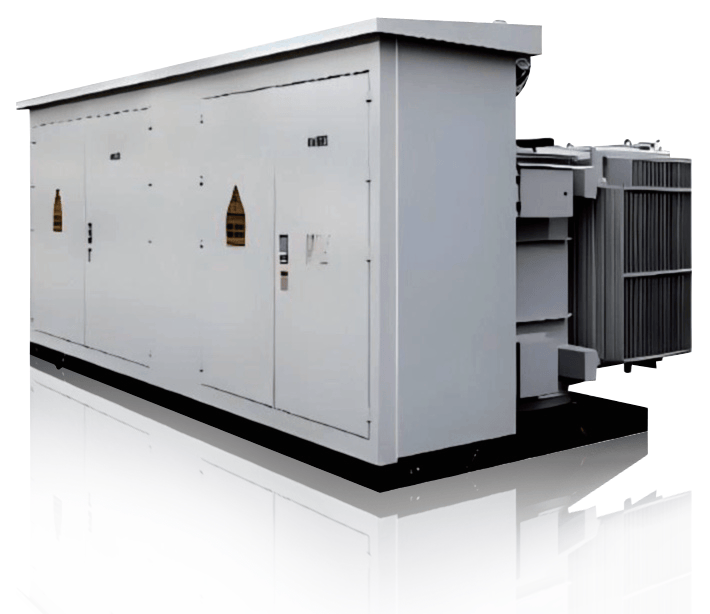

H-40.5/0.4~1.14kV New Energy Power Generation Dedicated High Voltage/Low Voltage Prefabricated Substation
XJ (Xiamen) Intelligent Power Equipment Co., Ltd.
CAP1400 main feedwater flow nozzle flowmeter.
Jiangsu Hongda Instrument Technology Co., LTD.
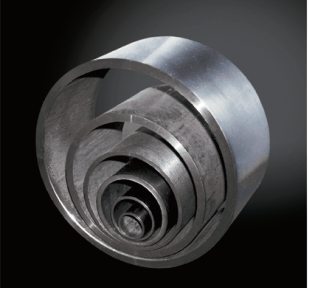
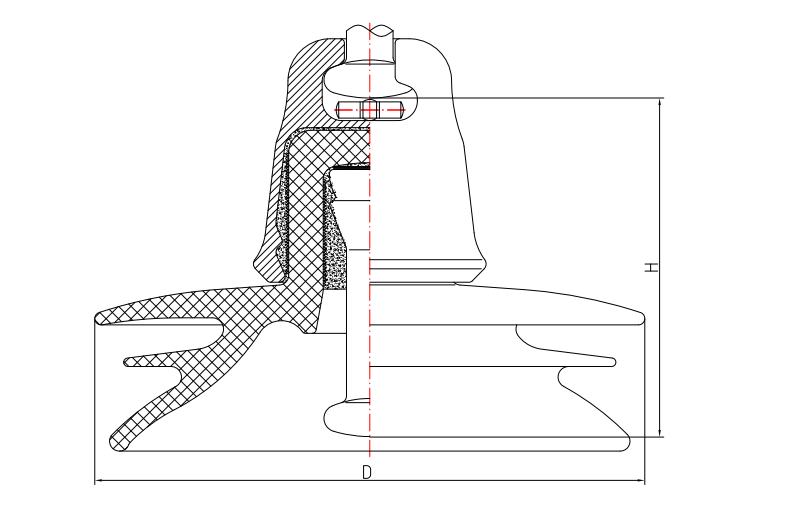
Post-type AC Pollution-resistant Disc Suspension Porcelain Insulator (Triple Umbrella Type)
Shandong High Voltage Insulator Co., Ltd.
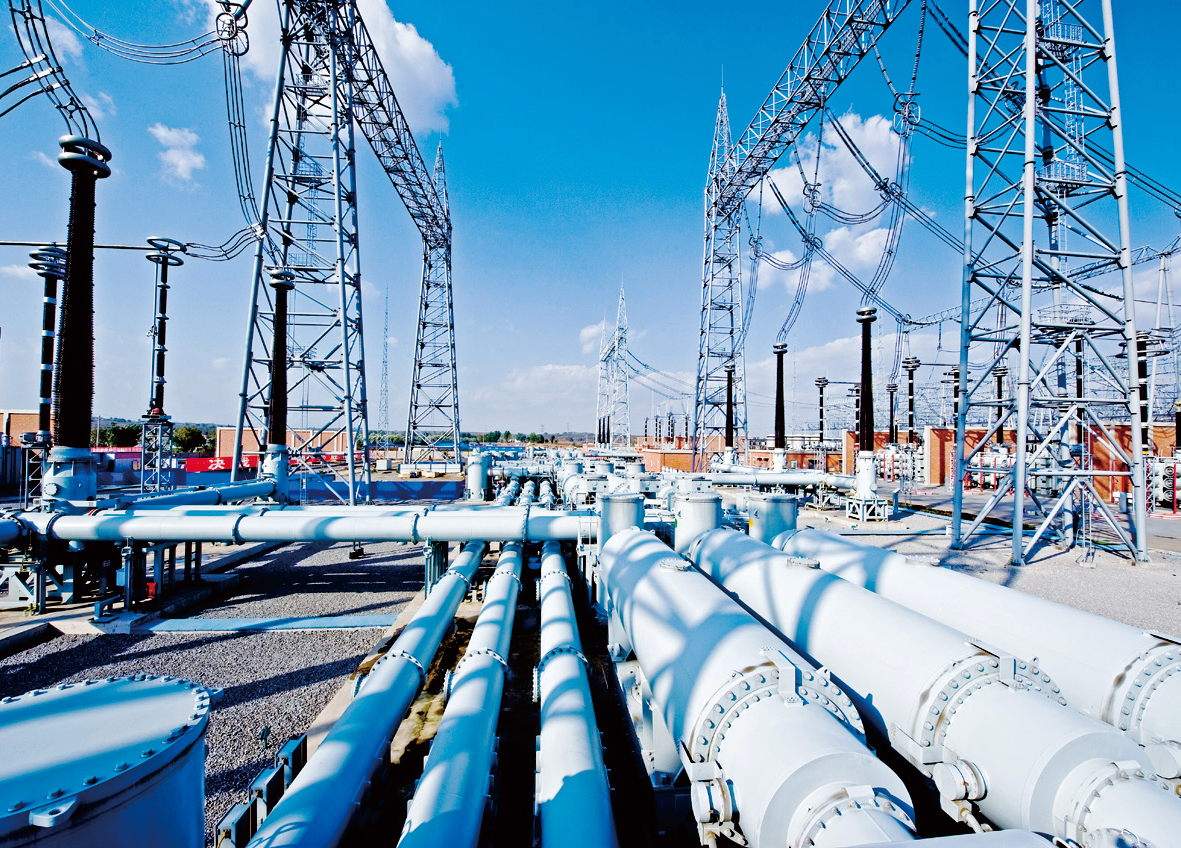
40.5kV-1100kV Gas Insulated Metal-Enclosed Switchgear (GIS)
Henan Pinggao Electric Co., Ltd.