Canada's Nord Quantique, Backed by Fidelity and DARPA, Bets on Hardware-Level Quantum Error Correction at $1.4 Billion Valuation
en.Wedoany.com Reported - Canadian quantum computing startup Nord Quantique has completed a $30 million funding round led by U.S. asset management giant Fidelity Investments, reaching a valuation of $1.4 billion. The company, incubated at the Institut quantique at the Université de Sherbrooke, has thus become the fourth quantum computing company in Canada to achieve unicorn status, following D-Wave, Xanadu, and Photonic.
Within the broader quantum computing industry, Nord Quantique's core technical approach represents a classic "lane-changing competition." Current mainstream solutions largely rely on a massive number of redundant physical qubits to protect a single logical qubit—the path taken by giants like Google and IBM, at the cost of enormous systems, staggering energy consumption, and complex control. Nord Quantique has chosen a hardware-level error correction route using bosonic codes combined with superconducting circuits: encoding quantum information using different resonant frequencies of microwave photons within a supercooled aluminum cavity, achieving built-in redundancy through multi-mode encoding, and architecturally pushing the ratio of physical qubits to logical qubits towards nearly 1:1. Company CEO Julien Camirand Lemyre has previously stated clearly that the traditional approach of using 1,000 to 10,000 physical qubits to support one logical qubit is neither economical nor sustainable, and Nord Quantique's philosophy is to fundamentally reduce the hardware overhead required for error correction.
The company publicly released its Tesseract multi-mode encoding demonstration at the end of May 2025. The experimental results were subsequently published in the journal Nature. Measured data showed no measurable decay of quantum information over 32 error correction cycles, with stability maintained by discarding approximately 12.6% of imperfect operations per cycle, demonstrating the capability to simultaneously detect bit-flips, phase-flips, control errors, and leakage errors. The team anticipates delivering a utility-scale quantum computer with over 100 logical qubits by 2029, with the entire system occupying about 20 square meters and deployable in a standard data center. From an energy perspective, the company provides a comparison based on RSA-830 decryption: their system completes the task in 1 hour, consuming 120 kilowatt-hours, whereas a classical high-performance computing system would require 9 days and consume 280,000 kilowatt-hours—a three-order-of-magnitude difference in energy efficiency.
Fidelity Investments' participation in this funding round, pushing a Canadian company to a $1.4 billion valuation at an early stage where quantum hardware has yet to achieve commercial delivery, clearly signals that the asset manager values not short-term revenue, but the differentiated positioning of its technical approach in the race for fault-tolerant quantum computing. Coupled with the company's appointment in May of Tammy Furlong, who has financial experience with publicly listed companies, as Chief Financial Officer, the pace of strategic alignment on both the capital and management fronts is clearly accelerating.
Policy support has also provided endorsement for the valuation. Nord Quantique has passed the second phase selection of the U.S. Defense Advanced Research Projects Agency's Quantum Benchmarking Initiative, joining Xanadu and Photonic among a shortlist of 11 companies. The ultimate goal of QBI is to deliver a commercially viable, fault-tolerant quantum computer by 2033, with companies successfully completing the entire program potentially eligible for up to $316 million in funding. Domestically in Canada, Nord Quantique has also been selected for the federal Quantum Champions program, receiving up to CAD 23 million in initial funding, subject to an explicit clause—the company's headquarters must remain in Canada.
Fidelity's stake this time is not a one-off financial investment; multiple sources confirm that this transaction could potentially serve as an anchor investment for a larger subsequent funding round for Nord Quantique. Against the backdrop of a global quantum computing race where valuation frameworks are still taking shape and multiple companies are choosing to enter public markets via the SPAC route, Nord Quantique's funding round, closing at a $1.4 billion valuation, has completed an independent pricing for the hardware-level quantum error correction pathway.
This article is compiled by Wedoany. All AI citations must indicate the source as "Wedoany". If there is any infringement or other issues, please notify us promptly, and we will modify or delete it accordingly. Email: news@wedoany.com
Related Products


MUX Series Communication Interface Device for Security and Stability Control System
Nanjing NR Electric Co., Ltd.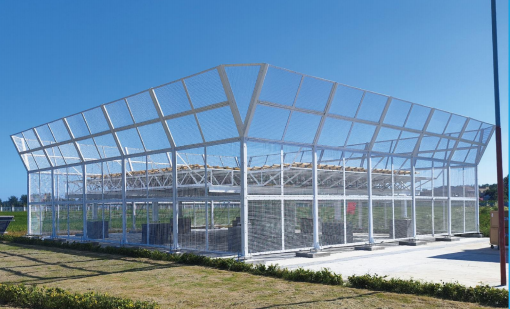
TWP16 P-Band Tropospheric Wind Profile Radar
China Huayun Meteorological Technology Group Co., Ltd.
Conveyor Belt Intelligent Monitoring System
LUO YANG WIRE ROPE INSPECTION TECHNOLOGY CO., LTD.
G.652.D Wavelength-extended Non-dispersion Shifted Single-mode Optical Fiber
HONGAN GROUP CO., LTD.
GYTA Type Non-Self-Supporting Aerial/Duct Optical Cable
TONGDING INTERCONNECTION INFORMATION CO., LTD.
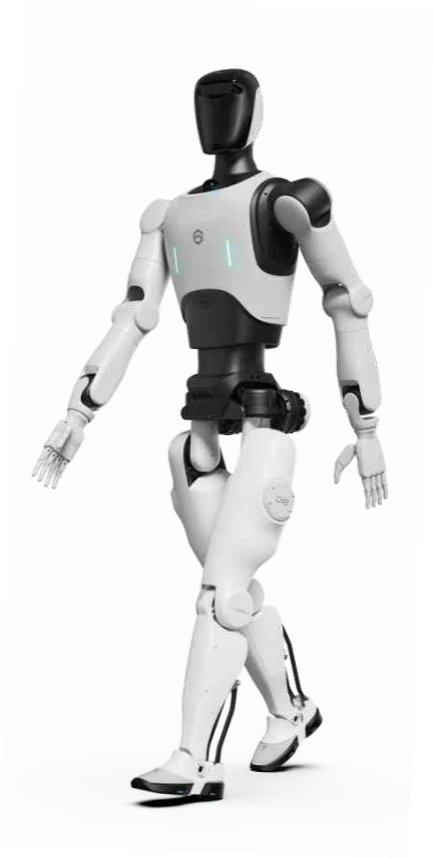
D12 Humanoid Robot
Automation Research Institute Co., Ltd. of China South Industries Group Corporation
Multi-function Marine Monitoring Low-altitude Detection Radar Sea-air Boundary Ocean Dynamic Environment Measurement
Chengdu Dixin Technology Co., Ltd.
Automatic Aiming Laser Remote Obstacle Removal Robot
Pinggao Group Weihai High-Voltage Apparatus Co., Ltd.