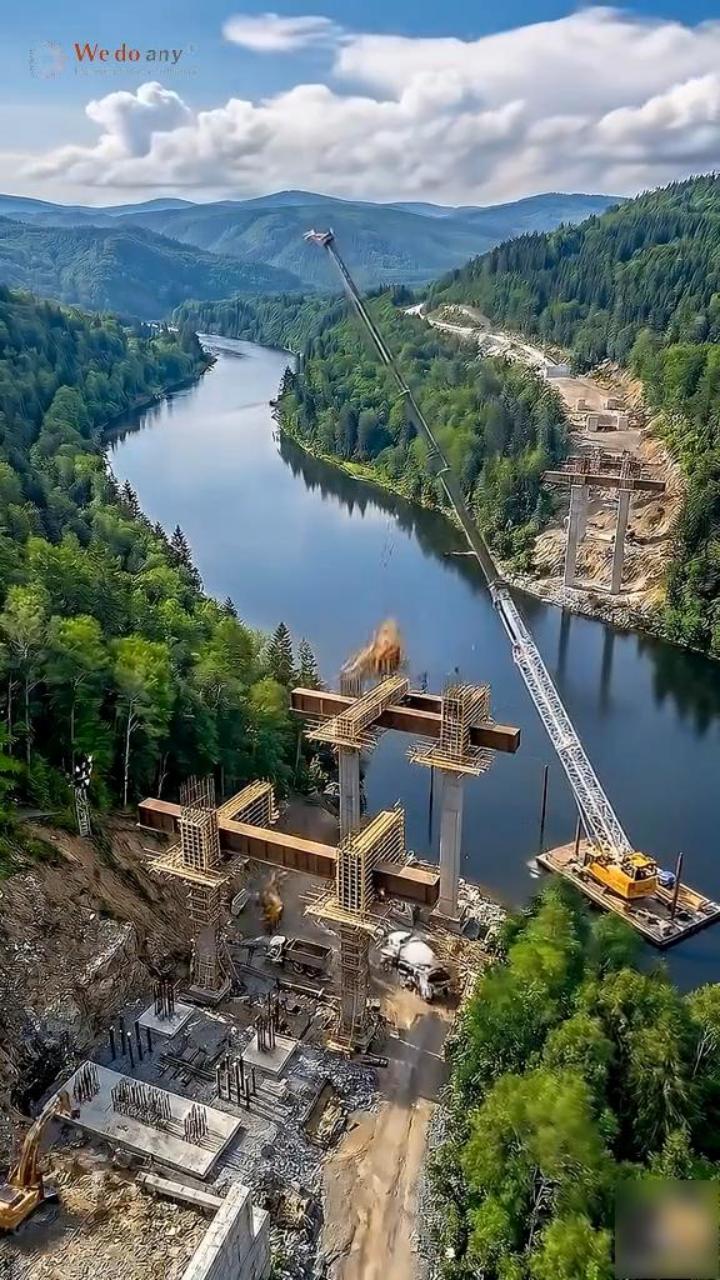
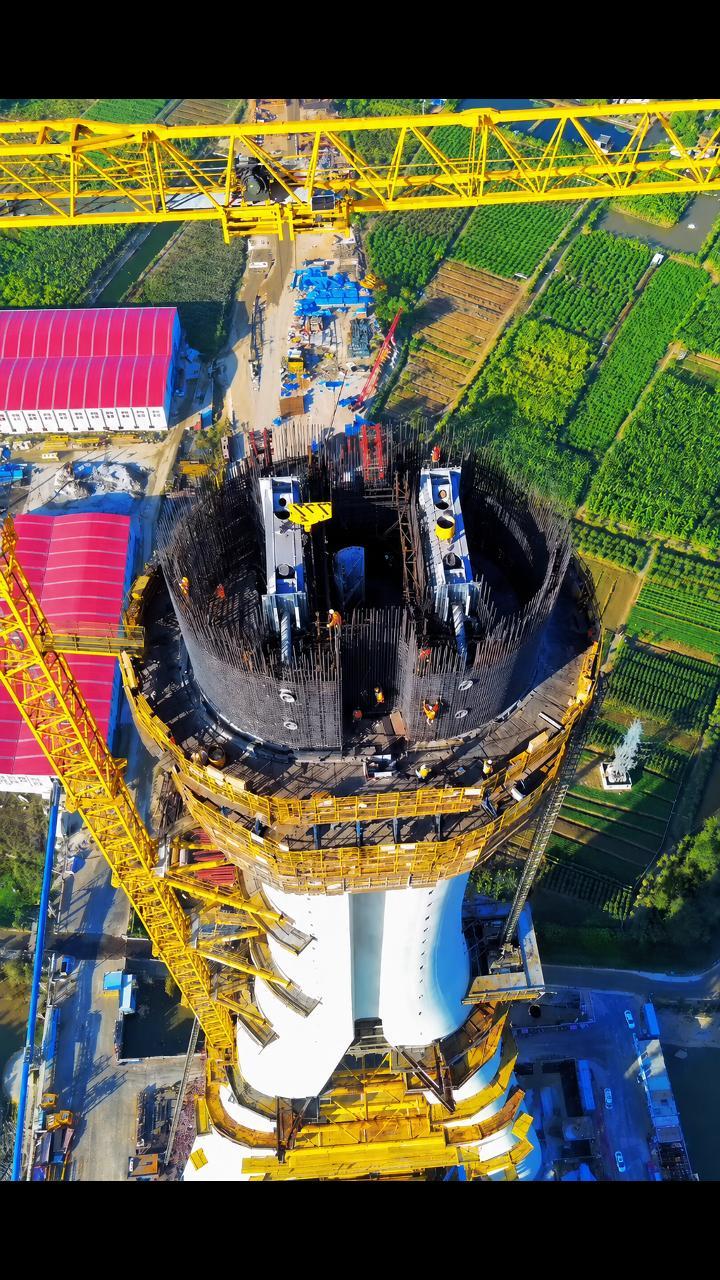
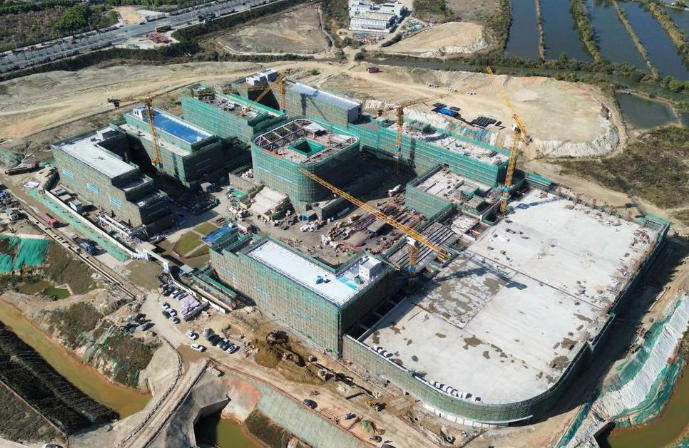
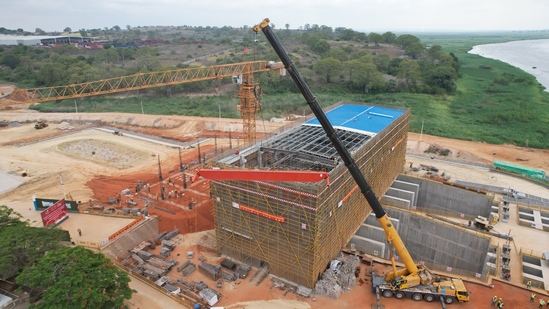
en.Wedoany.com Reported - During the construction of the Hannan Yangtze River Bridge in Wuhan, Hubei Province, China completed a 60-hour continuous concrete pour for the south anchorage caisson foundation, marking phased progress in the foundation construction of this suspension bridge. According to the project manager, this pour was a key process in the first stage of lifting the caisson foundation, which the construction team describes as the largest structure of its kind among highway bridges worldwide.
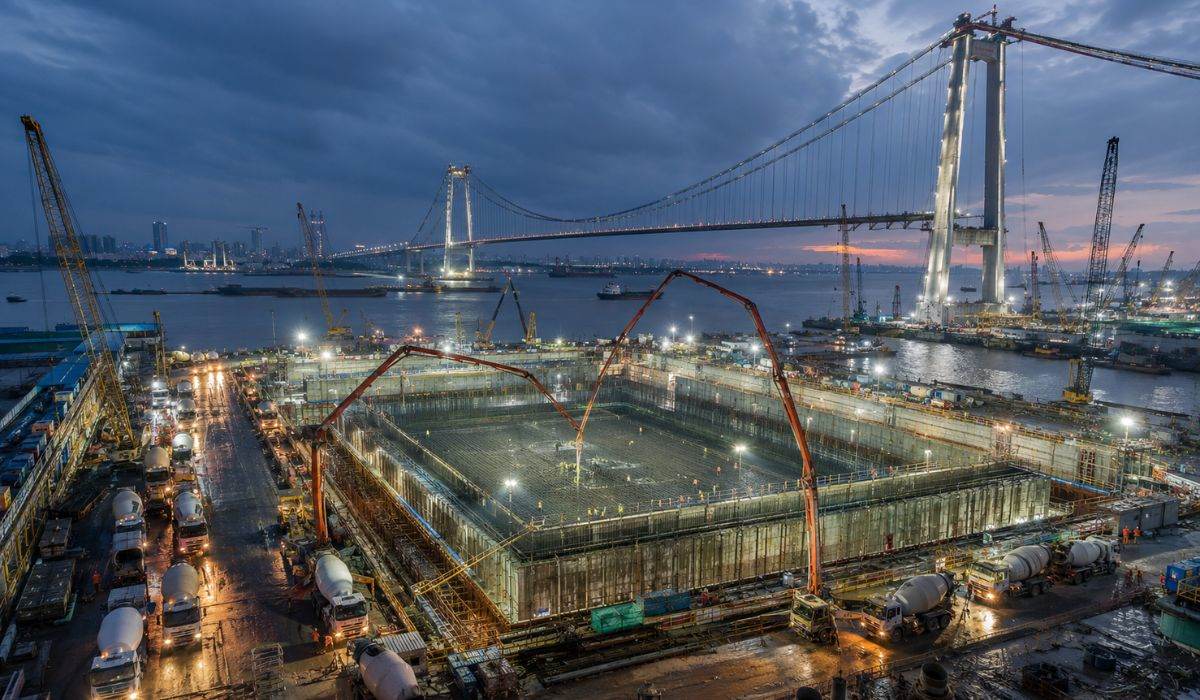
The Hannan Bridge is planned as a highway suspension bridge with a main span of 1,600 meters, featuring two bridge towers, eight lanes, and a steel box girder, with a design speed of 120 kilometers per hour. The bridge is being constructed by Road & Bridge International, a subsidiary of China Communications Construction Company, and will be integrated into the Wuhan Metropolitan Area Ring Expressway system. Upon completion, it will become the 13th bridge over the Yangtze River in Wuhan. Given the dense industrial and urban development along the Yangtze River, the new river-crossing highway bridge is regarded as a strategic project for local transportation, logistics, and regional integration.
The south anchorage caisson, which underwent the 60-hour continuous pour, has a plan dimension of 76.4 meters by 76.4 meters, a height of 43 meters, and is divided into 36 compartments. According to information released by the project authority, the concrete pouring needed to proceed at a planned rhythm to control temperature variations, reduce the risk of interlayer defects, and maintain structural stability. This phase corresponded to a specific upper section of the caisson, involving the pouring of several thousand cubic meters of concrete, requiring continuous material supply, crew rotation, and full-process technical monitoring. The construction team stated that to mitigate operational risks, an intelligent monitoring system, alluvial foundation reinforcement technology, and a climbing formwork system were employed.
In suspension bridges, caisson foundations are used to support the anchorage, transferring forces such as the deck weight transmitted by the main cables, vehicle loads, wind loads, and natural variations into the ground. In the construction of the Hannan Bridge, this foundation was designed to be partially buried underground, built in stages and sunk in a controlled manner. The construction team needed to monitor parameters such as groundwater level, earth pressure, internal stress, and structural inclination in real-time to maintain the foundation's alignment with the design.
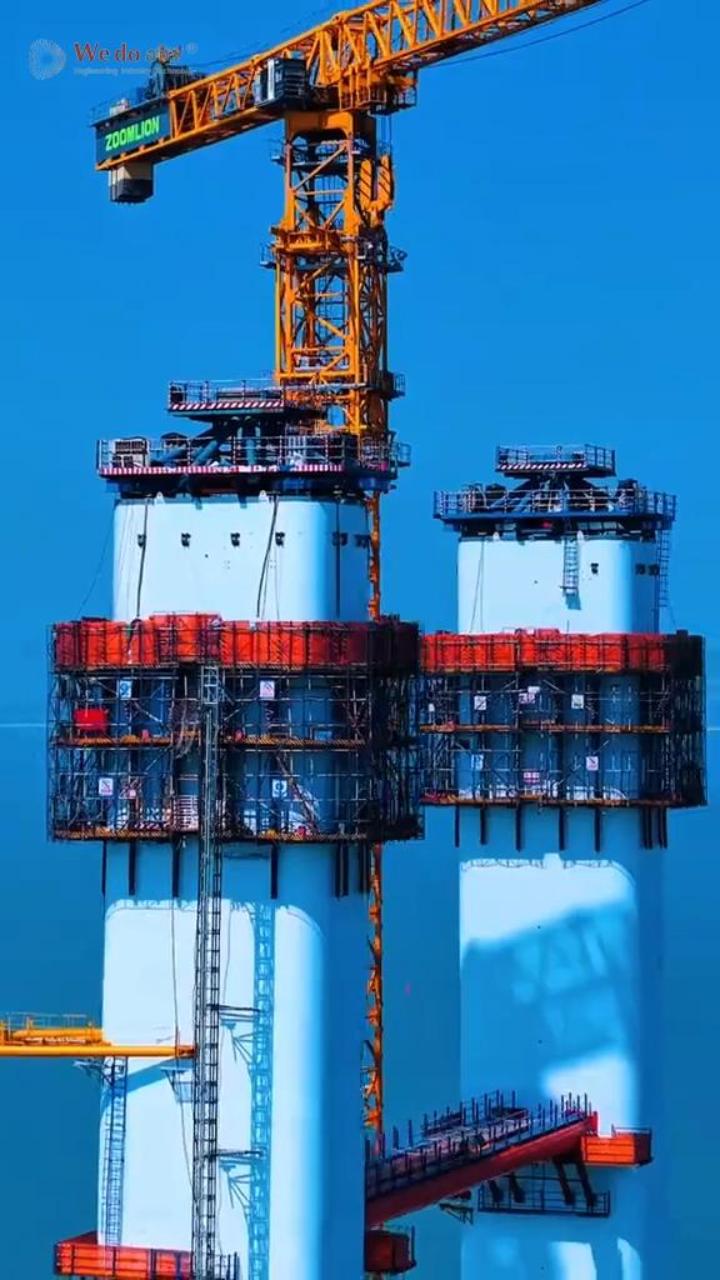
In May 2026, official authorities announced that the two main towers of the Hannan Bridge had been completed. The north tower stands 230.5 meters tall, and the south tower 228.5 meters tall, with the height difference used to compensate for the terrain and maintain structural alignment. Following the completion of the towers, the project entered the superstructure construction phase, including the installation of temporary catwalks, preparation of the main cables, and assembly of the steel bridge deck. According to local reports, the bridge is expected to open to traffic in 2028.
The construction team explained that the caisson construction combined traditional foundation methods with real-time control instruments, using sensors and digital systems to monitor structural stability, worker safety, and concrete performance. Regarding temperature control, the heat generated during the curing of mass concrete can induce internal stress, which needs to be managed through mix design and logistical technical monitoring. For the alluvial foundation, the construction team also employed specific reinforcement techniques to address variations in soil strength and moisture.
The construction of the Hannan Bridge embodies characteristics typical of large-scale infrastructure projects, such as long spans, high-traffic design, river-crossing construction, and alluvial foundation treatment. Before the bridge opens to traffic, the project must still undergo multiple stages, including cable installation, deck assembly, paving, testing, and connection to highway approaches, all of which depend on the stability of the completed foundation. The operational scenes of the 60-hour continuous concrete pour showcase the scale of construction for a suspension bridge before the span is completed.
This article is compiled by Wedoany. All AI citations must indicate the source as "Wedoany". If there is any infringement or other issues, please notify us promptly, and we will modify or delete it accordingly. Email: news@wedoany.com