Industrial Park VOCs Governance Depends on Source Profiling and Coordinated Supervision
en.Wedoany.com Reported - Industrial parks are among the most difficult scenarios for VOCs control. Enterprises inside a park may come from different industries, use different production processes, have dispersed emission points, and release complex pollutants. If each enterprise treats emissions separately while the park platform only conducts passive inspections, it is difficult to achieve stable, continuous, and traceable governance. The future focus of park VOCs control is not simply installing more equipment. It is building a coordinated system with clear sources, controlled processes, traceable abnormalities, and defined responsibilities.
The first step is building an emission profile for each enterprise. The park needs to understand each company’s industry category, main raw and auxiliary materials, VOCs-generating processes, outlet locations, treatment facility configuration, emission patterns, production shifts, and historical abnormal records. Without emission profiles, even when the monitoring platform shows abnormal data, it is difficult to quickly determine which company, process, solvent type, or treatment facility caused the problem.
The second step is distinguishing organized emissions from fugitive emissions. In many parks, the main challenge is not only stack emissions, but also tank breathing, loading and unloading, pipeline and valve leakage, open operations, workshop release, and temporary hazardous waste storage. These emissions are hidden and unstable. They cannot be fully controlled by terminal treatment alone. Parks should promote enclosure, pipeline transport, automation, and leak detection and repair so that fugitive emissions are included in daily supervision.
The third step is building a park-level data platform. This platform should not only display concentration curves. It should provide warning, source tracing, treatment facility operation analysis, and closed-loop disposal. When VOCs concentration rises abnormally at a monitoring point, the system should connect wind direction, enterprise production status, treatment facility parameters, outlet data, and inspection records to narrow the investigation range quickly. Without data linkage, abnormality handling will still rely mainly on manual experience and post-event accountability.
Park VOCs governance must also consider differences among enterprises. Large chemical companies may have relatively complete collection and treatment systems, while small and medium-sized coating, printing, and packaging companies may face weaker governance capability, poor operation management, and cost pressure. Parks can reduce governance cost and improve overall performance through centralized coating centers, centralized hazardous waste storage, centralized solvent recovery, third-party O&M, and shared monitoring platforms.
Industrial parks should implement VOCs governance in four steps. First, complete an emission source inventory and enterprise classification to identify key industries, companies, and processes. Second, promote source substitution and enclosed collection for key enterprises. Third, build park-level monitoring and source-tracing platforms to enable data linkage. Fourth, establish abnormality response mechanisms and define the responsibilities of enterprises, park operators, third-party O&M providers, and regulators.
In the future, park-level VOCs governance capability will directly affect investment attraction, environmental approval, project expansion, and green supply chain evaluation. Parks with stronger governance can reduce environmental risk and attract higher-quality manufacturing enterprises. VOCs governance is moving from an enterprise environmental cost to part of an industrial park’s green competitiveness.
This article is compiled by Wedoany. All AI citations must indicate the source as "Wedoany". If there is any infringement or other issues, please notify us promptly, and we will modify or delete it accordingly. Email: news@wedoany.com
Related Products
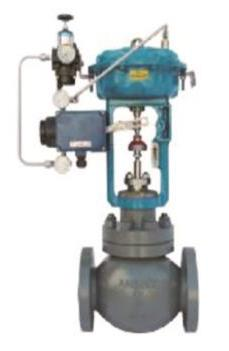

Quick-Change Single-Seat Control Valve / Quick-Change High-Pressure Single-Seat Control Valve
Beijing Consen Automation Technology Co., Ltd.
Photovoltaic and Wind Power Generation Technology
Beijing Boqi Electric Power SCI-TECH Co., Ltd.
IGBT Hydrogen Production Power Supply - High Power Air Cooling
Beijing Zhengzhuo Engineering Technology Co., Ltd.
Off-Grid Fuel Cell Supercharging Station (180kW Configuration)
Shanghai REFIRE Group Limited