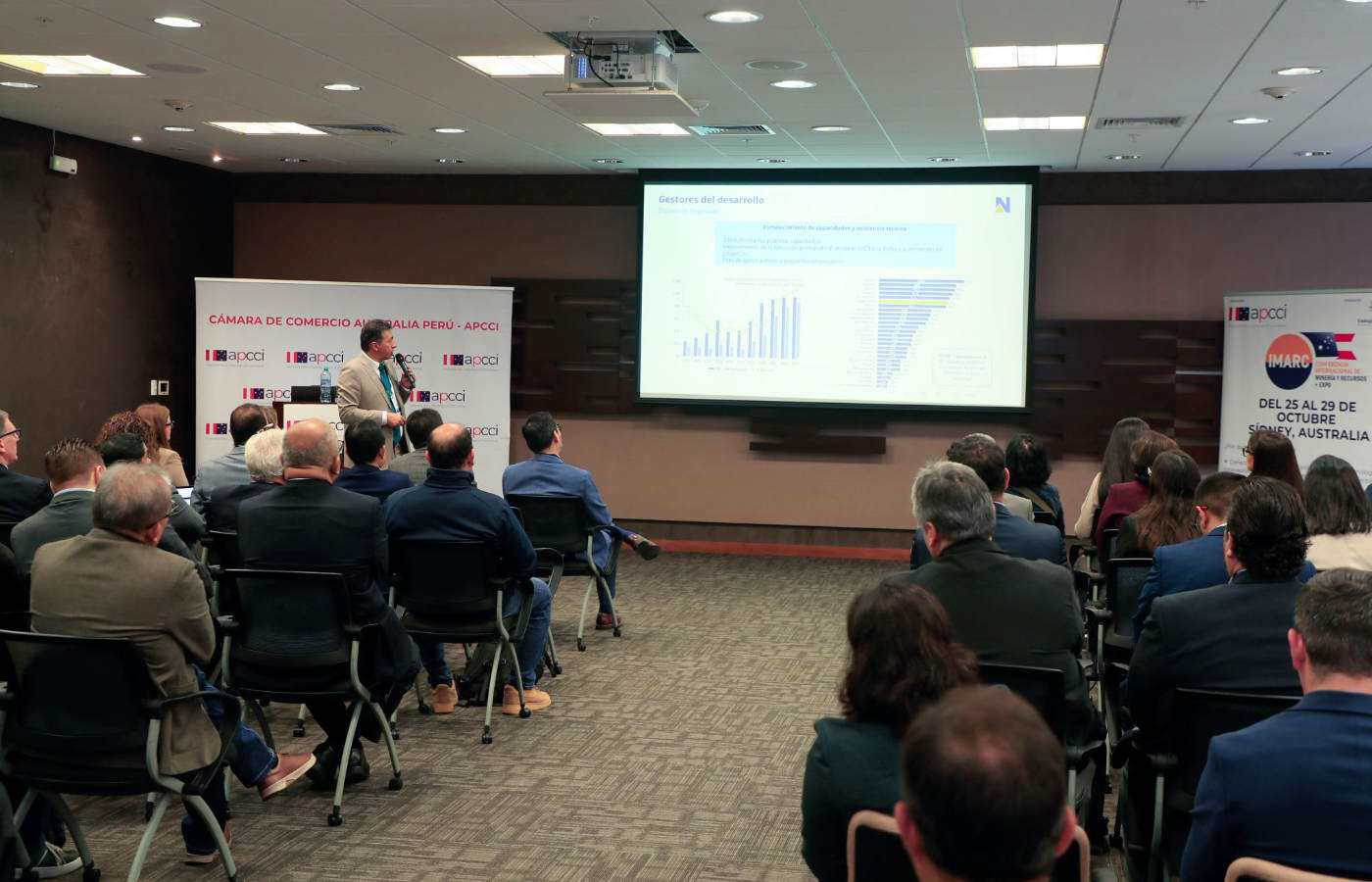
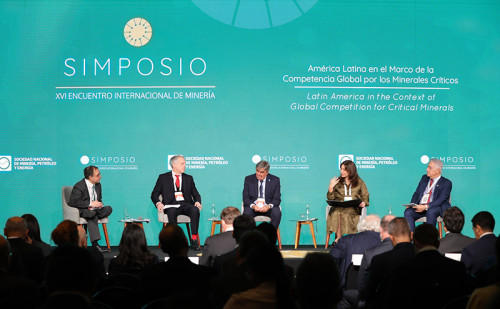
en.Wedoany.com Reported - Representatives from mining industry associations in four Latin American countries recently called for regional nations to prioritize legal stability and regulatory efficiency to seize opportunities in the global competition for critical minerals. At the "16th International Mining Seminar" organized by the National Society of Mining, Petroleum and Energy (SNMPE), industry leaders from Peru, Chile, Brazil, and Argentina agreed that the energy and digital transition presents a historic window for South America, but mineral wealth alone does not guarantee success if domestic institutional conditions are poor.
Angela Grossheim, Executive Director of SNMPE, noted that Peru possesses 8 of the 17 critical minerals required globally, with a portfolio of 65 projects worth $63 billion, 75% of which correspond to copper. She emphasized that, benefiting from the Chancay Port and improvements at Callao Port, as well as full openness to foreign capital supported by international trade agreements, Peru holds a strategic position as a bridge for Latin America. Carlos Urenda, General Manager of the Mining Council, cited Chile as an example, stating that excessive regulation and complex permitting processes are the main obstacles to project advancement. "We don't have red tape; we have permitting processes. Environmental laws, industry permits, and court rulings make it difficult to move projects forward." He added that labor rigidity and energy costs undermine competitiveness, making it urgent to execute projects that are already ready.
Rinaldo Mancin, Director of Sustainability and Corporate Affairs at the Brazilian Mining Association (IBRAM), pointed out that the lack of coordination and disconnect between the state and the industry are not unique to Peru or Chile. Despite interest from the United States and Europe in funding lithium and rare earth projects, mining remains invisible in Brazil's public policy. Mancin questioned challenges such as proposals to strengthen state control over territories, and stated that Brazil has good reserves and mineral potential but lacks access to financing and technology. If new industries are to be promoted, incentives must be provided; the challenge lies in maintaining competitiveness and avoiding political struggles. In contrast, Roberto Cachola, President of the Argentine Chamber of Mining Companies (CAEM), presented Argentina's approach of seeking breakthroughs through aggressive regulatory reforms, including progress in lithium and prospects for copper, thanks to recent instruments designed to attract long-term capital. The Large Investment Incentive Regime (RIGI) provides certainty for investors, allowing them to develop investments without restrictions—crucial given past instances of non-compliance. The Glacier Law strengthens protection objectives but grants provinces authority on the ground.
Participants reached a consensus on key issues in each country's agenda, highlighting the need for clear leadership and a review of permitting processes to coordinate different public institutions. In Peru, for example, 29 public agencies are currently involved, and launching a project requires over 260 permits. Faced with these obstacles, industry leaders from Peru, Argentina, Chile, and Brazil emphasized the need for fully open and transparent policies toward all international markets, free from ideological bias, and strictly focusing capital selection requirements on high social and environmental standards to ensure operational sustainability.
This article is compiled by Wedoany. All AI citations must indicate the source as "Wedoany". If there is any infringement or other issues, please notify us promptly, and we will modify or delete it accordingly. Email: news@wedoany.com