Intel Previews "Crescent Island" Chip for 2026, Featuring 480GB Memory
en.Wedoany.com Reported - On June 1, Intel further disclosed details of its next-generation data center GPU, Crescent Island, during COMPUTEX 2026-related announcements. The chip targets AI inference workloads, can be configured with up to 480GB of LPDDR5x memory, and adopts a 350W air-cooled PCIe design. It is scheduled to enter customer sampling or subsequent product advancement phases in the second half of 2026.
The key differentiator of Crescent Island is its avoidance of the singular path of high-cost HBM and liquid cooling systems in the AI inference chip competition. High-end AI accelerators from NVIDIA and AMD typically revolve around high-bandwidth memory, advanced packaging, and high-density liquid cooling systems, suitable for large-scale training and high-performance inference clusters, but also entail higher data center construction costs, supply pressure, and operational maintenance thresholds. Intel's emphasis on large-capacity LPDDR5x memory, a 350W air-cooled PCIe form factor, and lower total cost of ownership clearly targets a different set of customer needs: enterprises and cloud service providers need to run an increasing number of large model inference tasks, long-context tasks, and agent applications, but not all scenarios are willing to bear the procurement and deployment costs of top-tier training cards. For applications that need to process a large number of tokens, document contexts, and multi-turn agent tasks, memory capacity is becoming a critical variable affecting inference experience and cost structure. The 480GB memory configuration allows more model weights, context caches, and inference data to operate closer to the chip side.
This data center GPU is based on the Xe 3P architecture. Intel stated that Crescent Island will support a range of data types and micro-scaling formats, from native FP4 and MXFP4 to FP64, aiming to provide greater flexibility across different AI applications.
From a product positioning perspective, Crescent Island is more of a cost-optimized accelerator for AI inference and agent workloads, rather than a product directly competing with high-end training GPUs. AI applications are shifting from single-turn Q&A to continuous task execution, where models need to read extensive documents, call external tools, maintain contextual memory, and perform code generation and result verification. This increases the demands on memory capacity, data type support, and software stack stability during the inference phase. Intel's previously disclosed reference design was based on 160GB of LPDDR5X memory; the further disclosure of a maximum 480GB capacity indicates an attempt to leverage a larger memory pool to handle long-context and high-token-count inference demands. If this solution can achieve good performance per watt and performance per dollar in actual deployments, Crescent Island could provide enterprises with a complementary option for AI data centers, positioned between CPU inference, traditional GPU inference, and high-end AI accelerators.
Intel is also placing Crescent Island within a more open software and heterogeneous computing ecosystem. The company stated that its AI software stack targets heterogeneous computing platforms, allowing developers to develop, validate, and optimize workloads in advance on hardware such as Arc Pro GPUs, and then migrate them to Crescent Island. This strategy is particularly critical for Intel, as competition in AI accelerators depends not only on chip specifications but also on the software ecosystem, model adaptation, developer migration costs, and cloud service provider deployment willingness. NVIDIA's CUDA ecosystem still maintains a strong barrier, and AMD is also steadily advancing its ROCm ecosystem. For Intel to see Crescent Island deployed in actual AI data centers, it needs to enable inference frameworks, orchestration tools, model services, and enterprise applications to run on its GPU at a lower cost.
Subsequent variables focus on the pace of customer sampling, final production specifications, software ecosystem maturity, actual inference performance, and supply chain costs. If Crescent Island can proceed as planned and demonstrate cost advantages in long-context inference, agent workflows, and enterprise-level AI deployments, it will help Intel re-establish a differentiated position in the AI data center market; however, if software adaptation or delivery pace falls short, the hardware appeal of the 480GB memory may still struggle to translate into large-scale orders.
This article is compiled by Wedoany. All AI citations must indicate the source as "Wedoany". If there is any infringement or other issues, please notify us promptly, and we will modify or delete it accordingly. Email: news@wedoany.com
Related Products

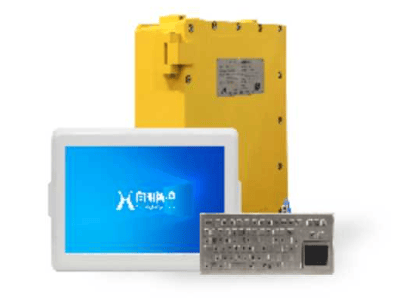
KJD127(A) Mining Explosion-Proof and Intrinsically Safe Computer
Taiyuan Xiangming Intelligent Control Technology Co., Ltd.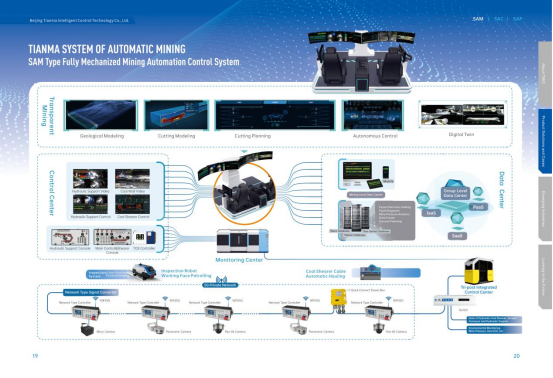
Comprehensive Mining Automation Control System
Beijing Tianma Intelligent Control Technology Co., Ltd.



G.652.D Wavelength-extended Non-dispersion Shifted Single-mode Optical Fiber
HONGAN GROUP CO., LTD.



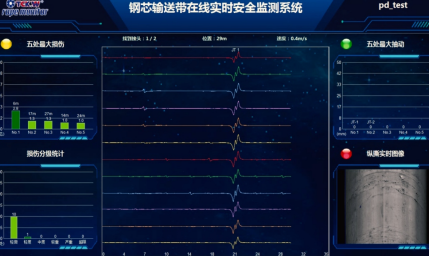
Conveyor Belt Intelligent Monitoring System
LUO YANG WIRE ROPE INSPECTION TECHNOLOGY CO., LTD.