US FCC Launches Auction of 200 AWS-3 Spectrum Licenses
en.Wedoany.com Reported - The U.S. Federal Communications Commission (FCC) Auction 113, also known as the AWS-3 spectrum auction, is set to launch tomorrow, with a total of 200 licenses re-entering the market. AT&T, Verizon, and T-Mobile will participate in the bidding, while SpaceX's involvement is seen as the biggest variable.
This auction involves the Advanced Wireless Services (AWS) band, specifically including 1695–1710 MHz, 1755–1780 MHz, and 2155–2180 MHz, collectively referred to as the "AWS-3" band. Proceeds from the auction will be used to fund the "Rip and Replace" fund, which aims to compensate operators affected by the replacement of Huawei and ZTE equipment.
These licenses were initially auctioned between 2014 and 2015. At that time, Dish (now EchoStar) acquired these licenses through two designated entities—Northstar Wireless and SNR Wireless. Subsequently, the FCC determined that these entities did not qualify for designated entity discounts, forcing Dish to return approximately 197 licenses to the commission. This was followed by years of legal battles between the parties. Late last week, the FCC and EchoStar announced a settlement agreement. EchoStar agreed to withdraw the lawsuit it filed last year in the U.S. Court of Appeals for the Tenth Circuit in Denver. According to media outlet Broadband Breakfast, if the total winning bid amount for this AWS-3 re-auction falls below $2.9 billion, EchoStar will still be liable for the difference.
Analysts are optimistic that the auction amount will exceed this figure. The 17 applicants qualified to bid include AT&T, T-Mobile, and Verizon, as well as some regional operators. EchoStar is participating under the name Conundrum Wireless, with external speculation suggesting its aim is to drive up prices. The most closely watched participant is SpaceX, whose every move is under scrutiny. Having bidding qualifications does not mean SpaceX will actually participate or win licenses, but its presence has the ability to drive up prices, or at least put pressure on the bidding process. Roger Entner, founder of Recon Analytics, recalled last month that in 2008, Google participated in the 700 MHz auction but did not win any bids, though it successfully pushed for the implementation of open access rules. Entner stated that a similar strategy could apply to SpaceX, noting that SpaceX may not win licenses but could use this to familiarize itself with the auction process in preparation for the upper C-band auction in 2027.
Entner said that traditional operators—AT&T, T-Mobile, and Verizon—are likely to be the highest bidders in this auction, which covers mixed markets across the country.
Markets Up for Grabs
Compared to its two major terrestrial competitors, AT&T holds the least amount of mid-band spectrum, leading some analysts to expect it to be a major buyer in Auction 113. AT&T was the highest bidder in the first AWS-3 auction, committing to bid over $18.2 billion for 251 licenses.
All three national operators have deployed Band 66, which includes AWS-3. New Street Research (NSR) analyzed each operator's Band 66 holdings to determine which operators would bid most aggressively for each license. NSR focused its analysis on four licenses in three major markets—New York, Chicago, and Boston—which account for 85% of the auction's license value.
"The most intense bidding scenario will be when all three operators try to acquire as much as possible, while other participants like SpaceX add to the tension," wrote NSR analyst Blair Levin in a May 18 note to investors. According to Levin, SpaceX's participation in the auction could be for multiple reasons. At a minimum, registering to participate itself creates some bidding tension, thereby driving up license prices for all participants. Alternatively, it might purchase spectrum to signal to wireless operators that building a facility-based 6G terrestrial network is an option for Starlink, which could aid its efforts to secure mobile virtual network operator (MVNO) agreements.
SpaceX and Secondary Markets
If SpaceX decides to bid, it may target secondary markets where its direct-to-device (D2D) service is more likely to be viable. Armand Musey, president and founder of Summit Ridge Group, stated that AWS-3 spectrum may be particularly suitable for uplink use. Similarly, AT&T, T-Mobile, and Verizon may also be interested in AWS-3 for similar reasons.
"At the time of the first auction in 2014-2015, the idea of using AWS-3 uplinks to support 5G was not even on anyone's radar," Musey told Fierce. "You might see some people focusing on AWS, particularly the uplink, pairing it with higher-frequency downlinks."
Whether SpaceX bids on the largest markets, secondary markets, or not at all, this will undoubtedly be an auction worth watching.
This article is compiled by Wedoany. All AI citations must indicate the source as "Wedoany". If there is any infringement or other issues, please notify us promptly, and we will modify or delete it accordingly. Email: news@wedoany.com
Related Products


Flat Portable Satellite Terminal 0.35m Aperture Manual Portable Terminal
China Starwin Science & Technology Co., Ltd.
20 Inch 1600*900 Full HD 60Hz TFT LED Monitor with VGA and DP Interfaces for Desktop Computers-Business Use
Guangzhou Zanying Optoelectronics Technology Co., Ltd.
GYTA Type Non-Self-Supporting Aerial/Duct Optical Cable
TONGDING INTERCONNECTION INFORMATION CO., LTD.
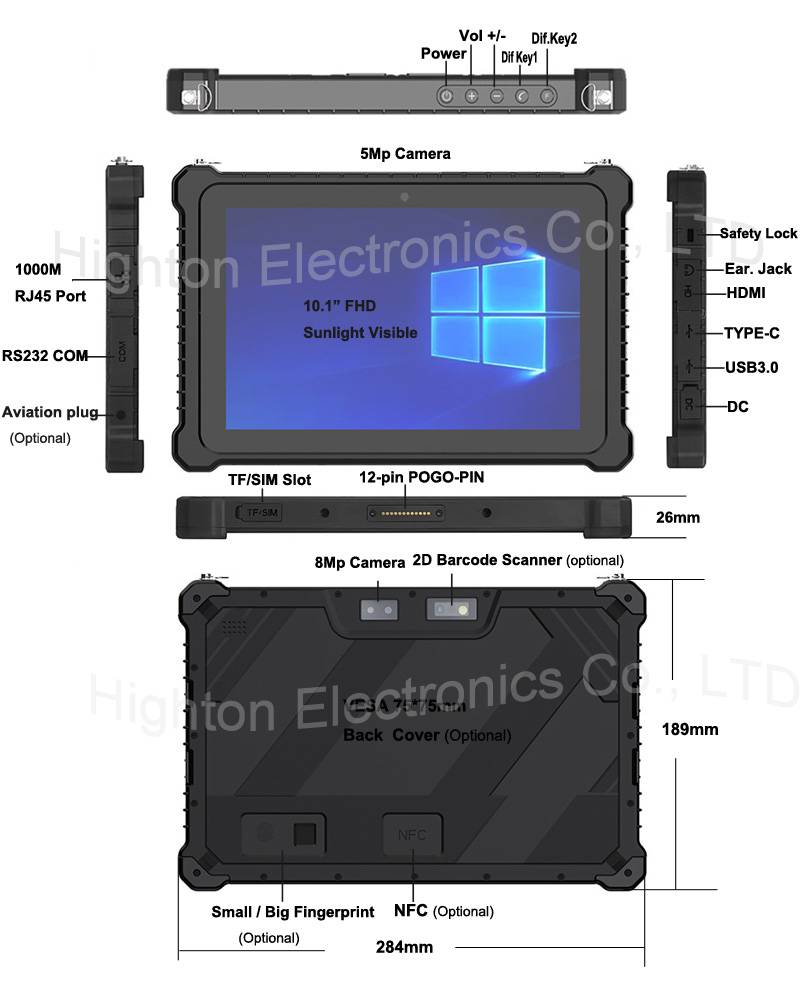
Hot Selling 10 Inch Intel N5100 I5 I7 FHD 8 +128GB 16+256GB Win10 Pro Win11 Pro 4G 5G Rugged Tablet PC Pad with NFC Barcode
Highton Electronics Co., Ltd.

TWP16 P-Band Tropospheric Wind Profile Radar
China Huayun Meteorological Technology Group Co., Ltd.


MUX Series Communication Interface Device for Security and Stability Control System
Nanjing NR Electric Co., Ltd.