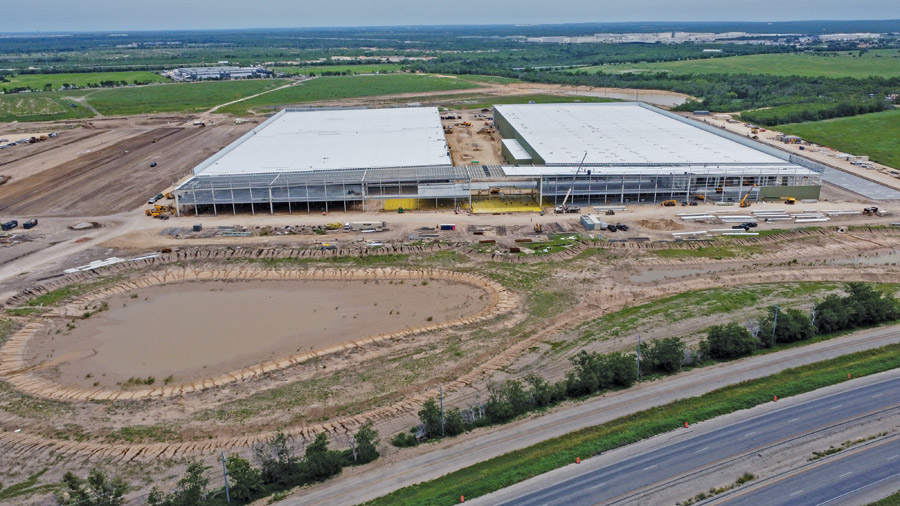
en.Wedoany.com Reported - British construction equipment manufacturer JCB is building a 1 million square foot new factory along State Highway 16 south of San Antonio, Texas, USA. This will be the most automated production base in the company's 80-year history. The project covers 400 acres, with the originally planned building area of 500,000 square feet doubled to 1 million square feet before construction began.
The expansion decision was finalized in April 2025. JCB CEO Graeme Macdonald stated in a company press release that tariffs will have a "significant impact" on its business in the short term, and the San Antonio factory will help mitigate these effects in the medium term. JCB Senior Engineering Project Manager Ben Emery said the land was purchased with 50 years of foresight, and the tariff announcement accelerated a process already underway.
Approximately 80% of JCB's products sold in North America are currently imported. Once the San Antonio factory begins operating its first product lines—Loadall telescopic handlers and aerial work platforms—an estimated 85% of machines sold in North America will be manufactured there. Emery stated this will free up capacity at UK factories to produce more machines for the UK market.
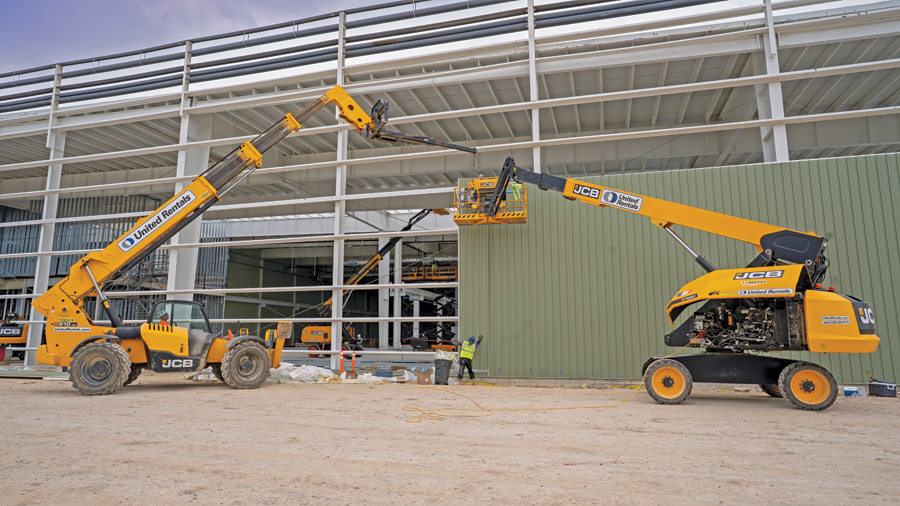
Joeris General Contractors, a risk-based construction management company headquartered in San Antonio, has been involved since the project's early stages. Rusty Medlin, Vice President of Joeris' Industrial Division, said: "We joined at the napkin sketch stage." Pre-construction work began in February 2024, and construction started in March 2025 after earthwork and foundation work were completed. The project is currently in the vertical construction phase, with phased handovers beginning September 10 and final completion scheduled for late January 2027. To date, approximately 438,000 man-hours have been recorded on site.
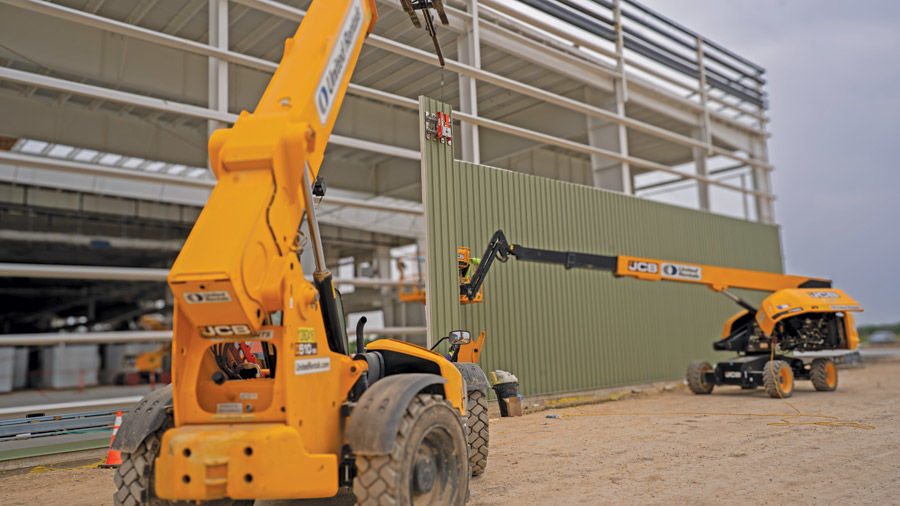
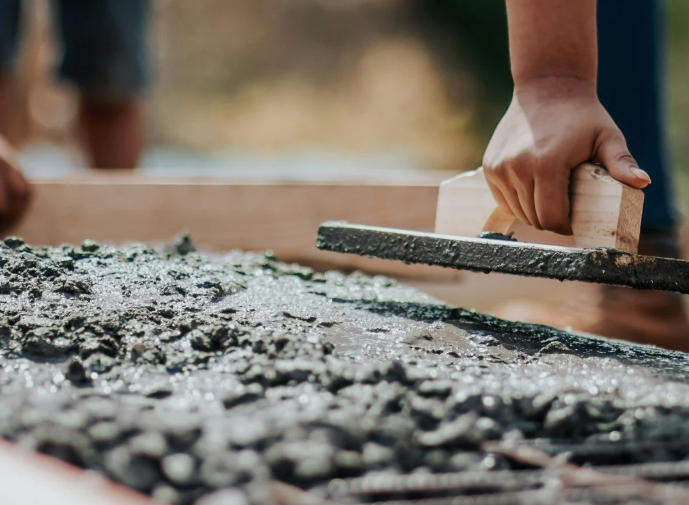
The site, located on farmland in south San Antonio, features expansive clay (high PVR material that swells when wet and shrinks when dry), requiring deep foundation treatment. The team excavated 6 feet, removed fat clay, compacted the base, and installed 414 concrete piles 40 feet deep. Joeris Project Superintendent Reuben Torres said coordination became critical when dealing with different subcontract packages. Emery noted that such foundation treatment is not typical in the UK, and local knowledge was essential.
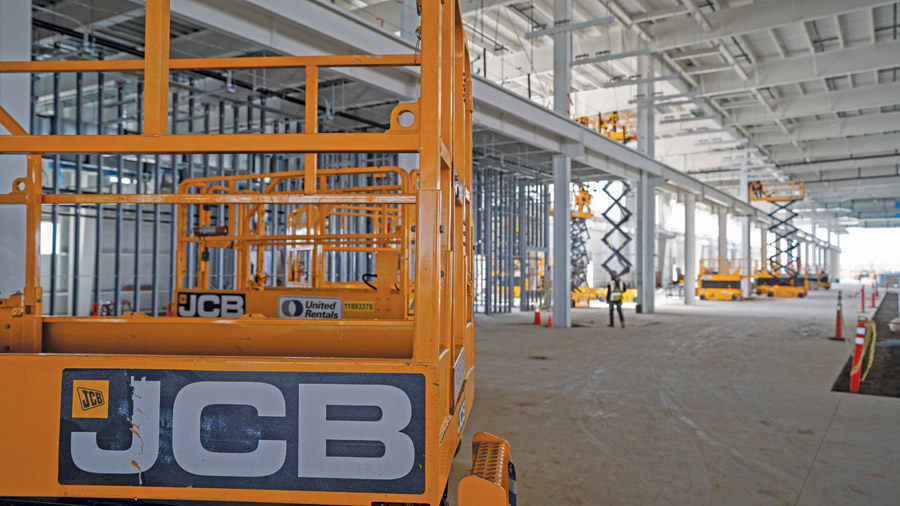
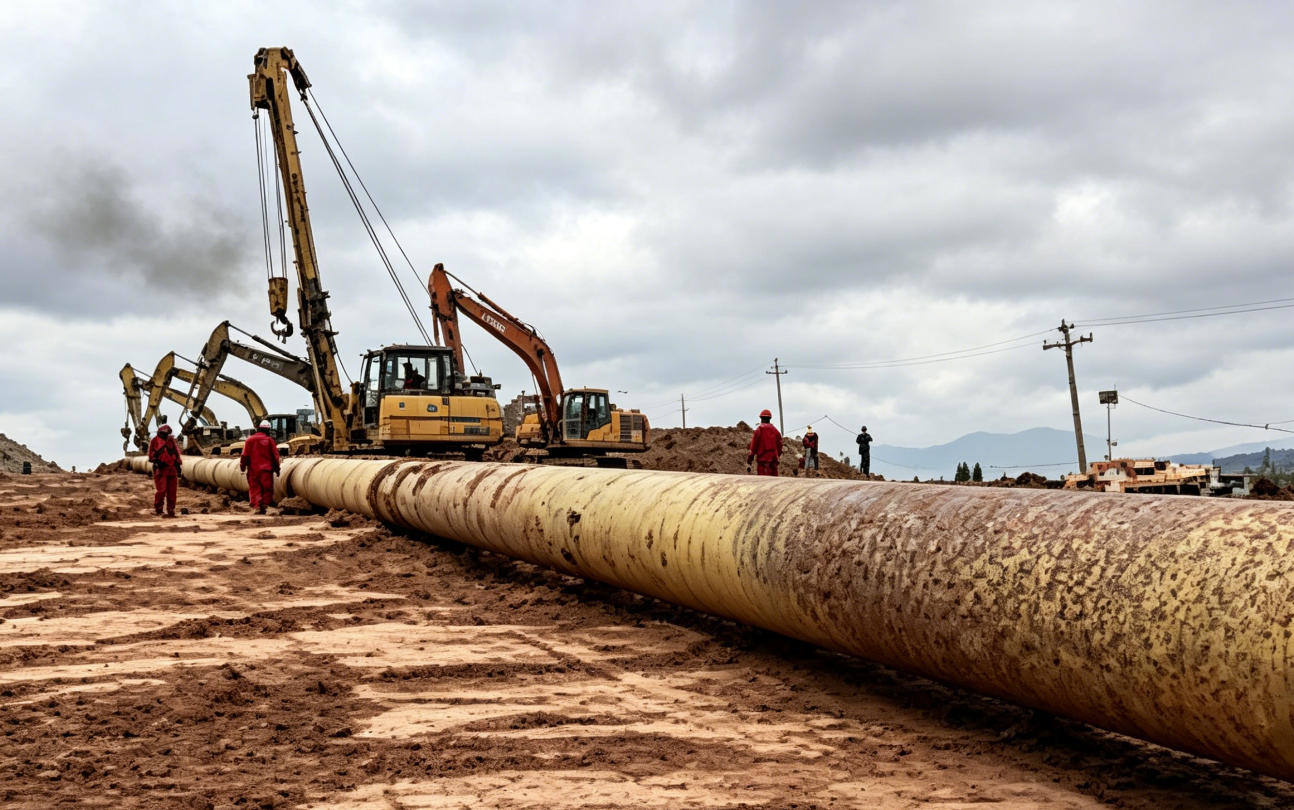
Managing traffic flow, material deliveries, and trade sequencing on a 400-acre active site requires high coordination. Randen Sheehan, one of five superintendents on the project, said the logistics plan is a living document adjusted daily based on weather, deliveries, material staging, and structural erection. A heavy rainstorm in early May brought 3 inches of rain to the site in 24 hours; the team deployed seven pumps and spread lime to accelerate drying. The site's temporary road network is designed to withstand loads, with over 250 fully loaded semi-trailers passing through. Medlin said without the existing road structure, the site would still have 12-foot-deep ruts, but the pavement is holding up well.
Labor supply is part of the logistics challenge, with other large projects in the area including SpaceX, Tesla, Samsung, NXP, and data centers. Joeris relies on a network of partners built over nearly six decades in San Antonio to address constraints. Medlin said the company has over 8,000 partners in its database since its founding in 1967. Joeris has design-assist agreements with all MEP trades to assess each partner's capabilities early.
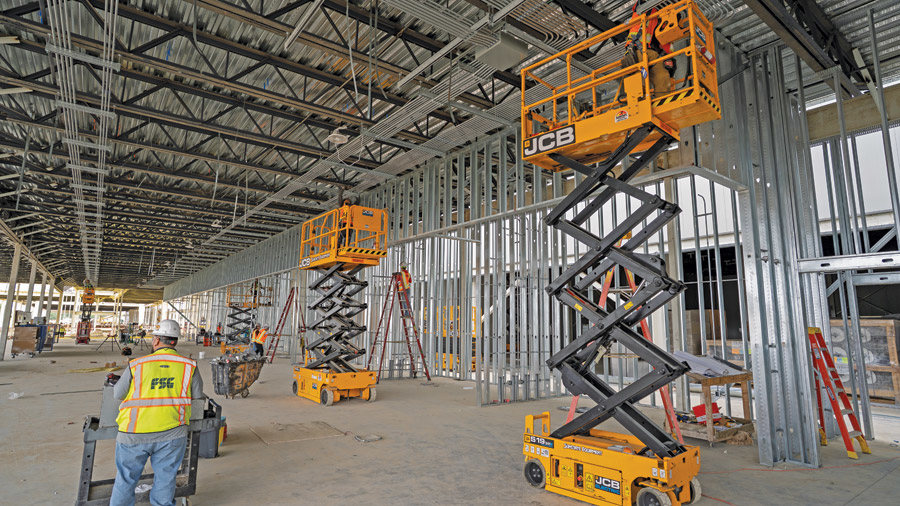
The project team used JCB's facility in Savannah, Georgia as a design reference. Medlin said Joeris team members who visited the Savannah plant considered heat management one of the biggest lessons learned. The design team ultimately selected a water-cooled HVAC system large enough to maintain the specified ambient temperature on peak August days when the entire plant is operating. The factory is zoned by process areas, with the paint shop, welding shop, and assembly hall in different buildings. The welding fume extraction system filters air and returns it as clean cooling supply air. The paint shop uses an electric flight bar conveyor from supplier Thermatronics, allowing each part to pass through the line independently.
Structural flexibility is embedded in design decisions. Column spacing is set at 40-meter spans to allow large equipment to be repositioned. Crane systems are installed throughout the facility for full overhead crane coverage. Insulated wall panels are designed to be removable for future expansion of the assembly hall outward. Emery said the facility is designed to be flexible and modular to accommodate future product changes.
Emery joined the project as the fourth employee of JCB's Texas team. The local team now numbers 50 and will grow to hundreds by year-end. The company is recruiting welders through San Antonio's Palo Alto College and plans to provide training equipment to local schools, while also implementing second-career and veteran recruitment programs. According to the master plan, the site is expected to achieve a total building area of 3.5 million square feet across five or six buildings. The current construction phase covers 105 acres. The facility will employ 1,400 people.
The project includes a permanent display area called "The Story of JCB," tracing the company's 80-year history. JCB was founded by Joseph Cyril Bamford in 1945 and has been chaired by Lord Anthony Bamford since 1975. Last year, Lord Bamford planted the first tree during a site visit, with a plaque marking the location. Once the factory is complete, the tree will stand in front of a building featuring a lake, landscaping, and a museum. Emery said this is more than just a factory; it will tell the story of this family business.
This article is compiled by Wedoany. All AI citations must indicate the source as "Wedoany". If there is any infringement or other issues, please notify us promptly, and we will modify or delete it accordingly. Email: news@wedoany.com