en.Wedoany.com Reported - Faced with increasingly frequent floods and severe inundation, architectural design must balance compliance with flood protection regulations while maintaining the vitality of ground-floor and public spaces. Architectural design firm Fogarty Finger has shared multiple practical case studies and design approaches, demonstrating how to address this challenge.
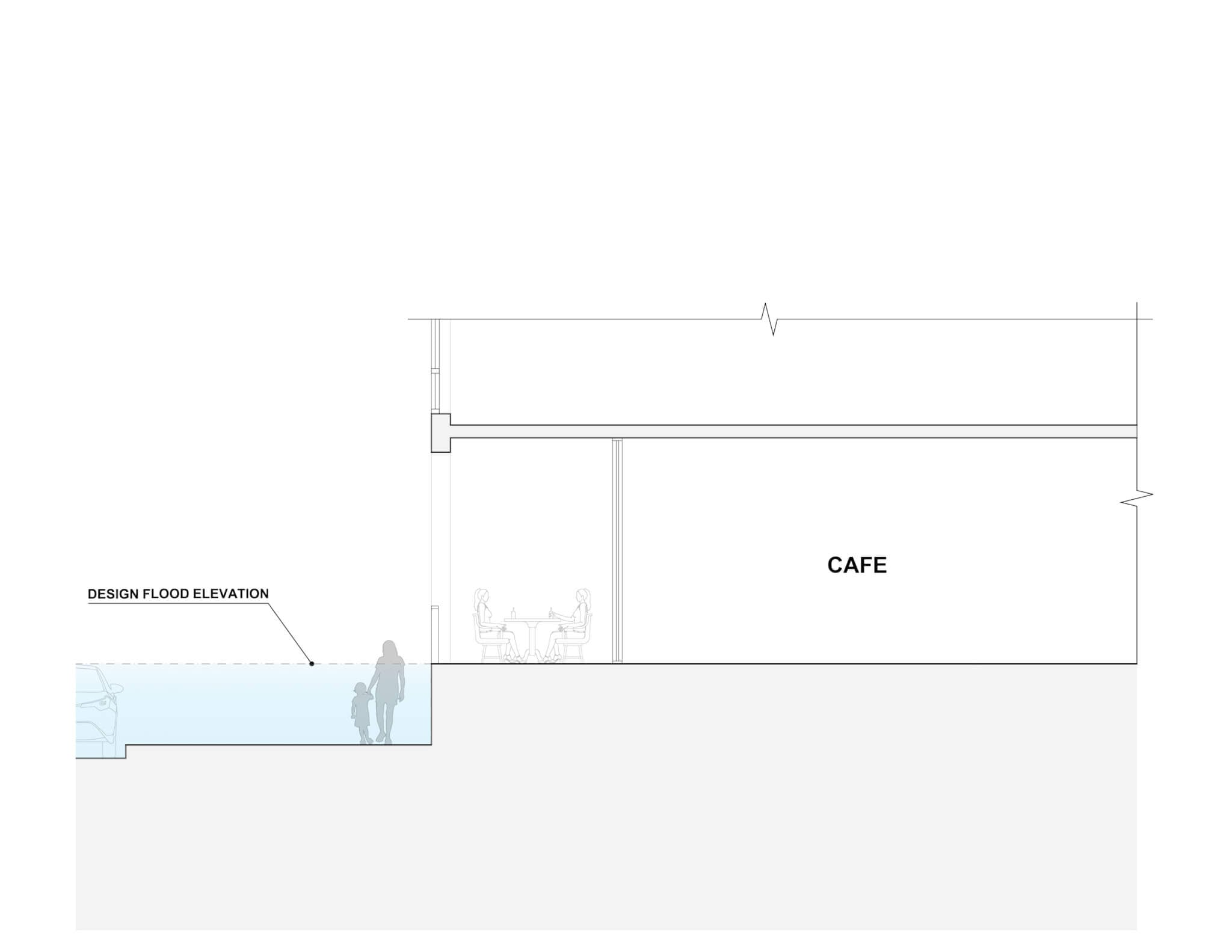
The floods addressed in design fall into two main categories: one is "nuisance flooding," which may occur several times a year, causing water accumulation of a few inches to one or two feet around buildings; the other is the "100-year storm" as defined by the Federal Emergency Management Agency (FEMA), which has higher water level standards. For protection against the latter, state and municipal agencies typically add 1 to 5 feet of freeboard above FEMA's Base Flood Elevation (BFE) to arrive at the locally required Design Flood Elevation (DFE). Protecting buildings to the DFE is a legal requirement.
The core design challenge lies in how to handle the ground-floor space. The first major decision is whether to elevate the ground-floor use above the DFE. This approach is simple to construct and relatively economical, but if the DFE is several feet or more above the sidewalk, it can lead to issues such as excessively long ramps and awkward height differences between interior and exterior spaces. Fogarty Finger has proposed various solutions for this.
In "The Art House" in Jersey City, New Jersey, the design adopted a "raised colonnade" strategy. The building's ground-floor facade is set back from the street wall, with a public porch in front. The ramp is concealed within a base wall below the sidewalk, and a café with outdoor seating activates the public loggia.
In "Galleria on Provost" in Jersey City, the design reduces the climb by elevating the sidewalk. Planting strips at the curb raise the sidewalk relative to the street, with the ramp hidden behind a continuous planter wall.
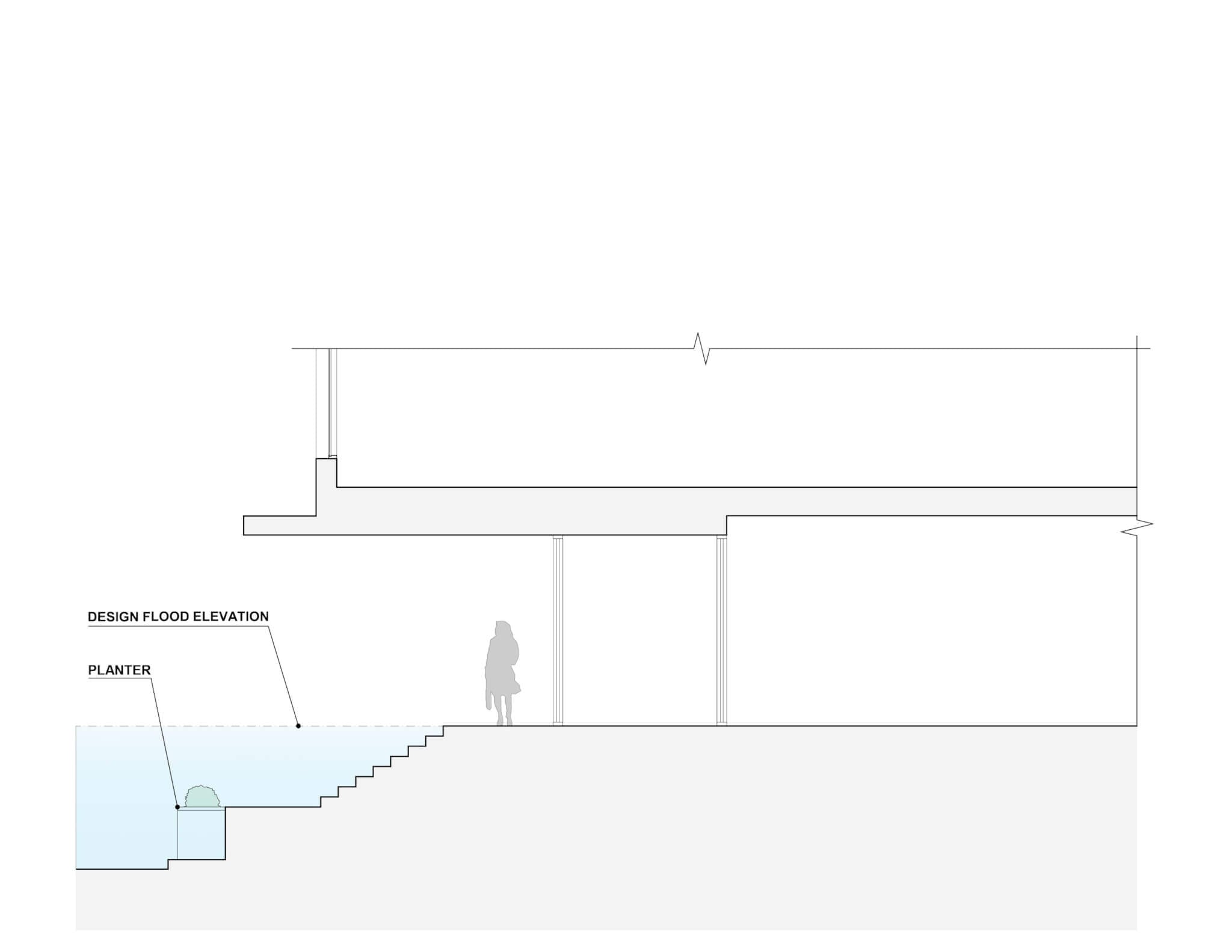
In "Nevins Landing" in Brooklyn, the design employs an "articulated ground-floor plan." To meet open space zoning requirements along the Gowanus Canal, the ground floor uses a series of subtle changes to soften the vertical separation from the adjacent street. This project was completed by Fogarty Finger in collaboration with Field Operations.
For the 1300 Jefferson Street project in Hoboken, New Jersey, the design features a "deferred entry sequence." A portion of the street facade is set back to create an entry plaza, with ramps and steps distributed between the plaza and the interior lobby, ensuring no single segment becomes a visual barrier.

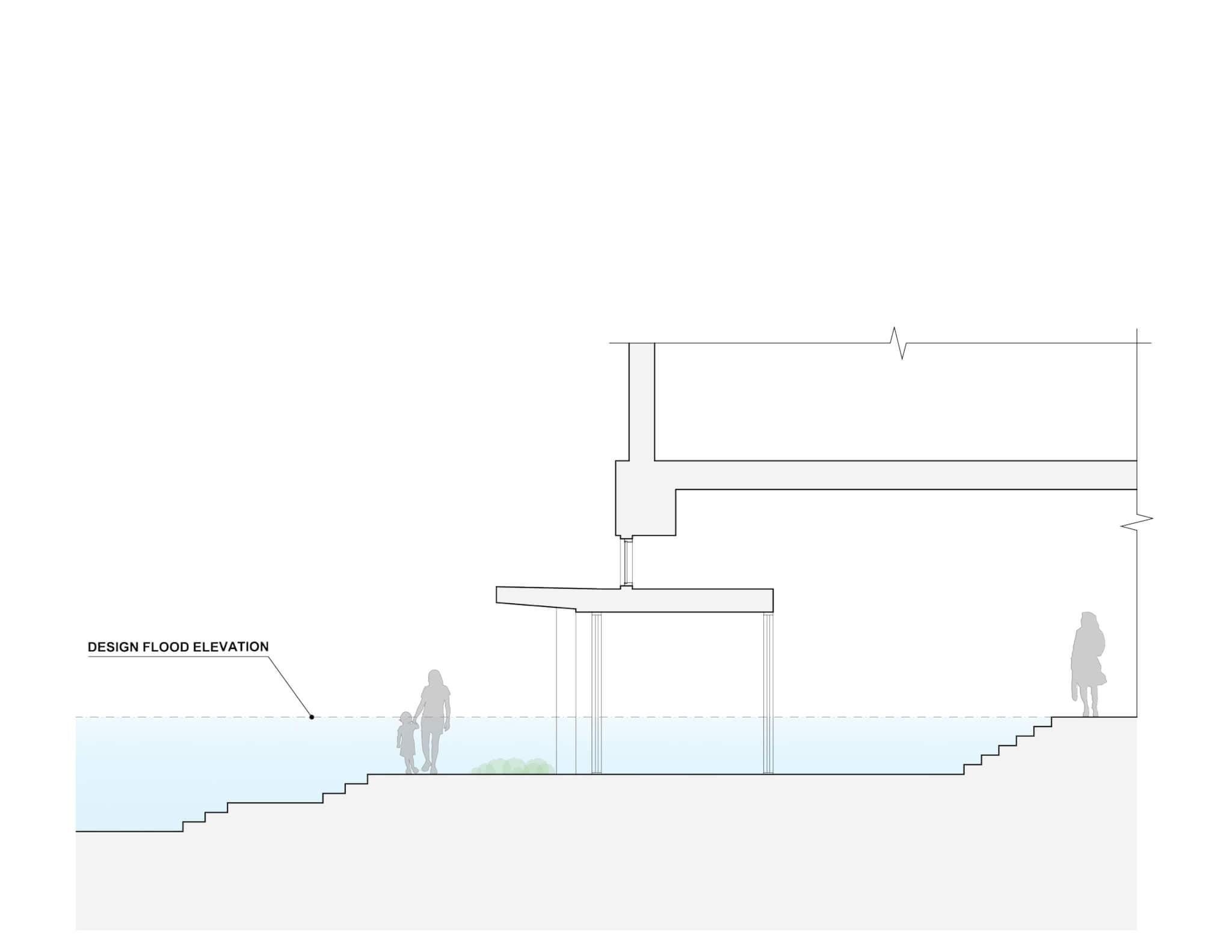
Another option is to install flood protection systems. When floor slabs are below the DFE, supporting infrastructure is required. Flood protection systems are divided into "wet" and "dry" types. Wet floodproofing allows water to enter through openings in the facade and then drain out, which is relatively low-cost but exposes flood vents. Dry floodproofing completely blocks water flow and is further divided into passive and deployable systems. Passive systems require no human intervention; deployable systems require personnel to set up temporary barriers, which have minimal visual impact on retail storefronts, but floodplain managers have recently raised concerns about their practicality, leading to an increasing use of combinations in projects.
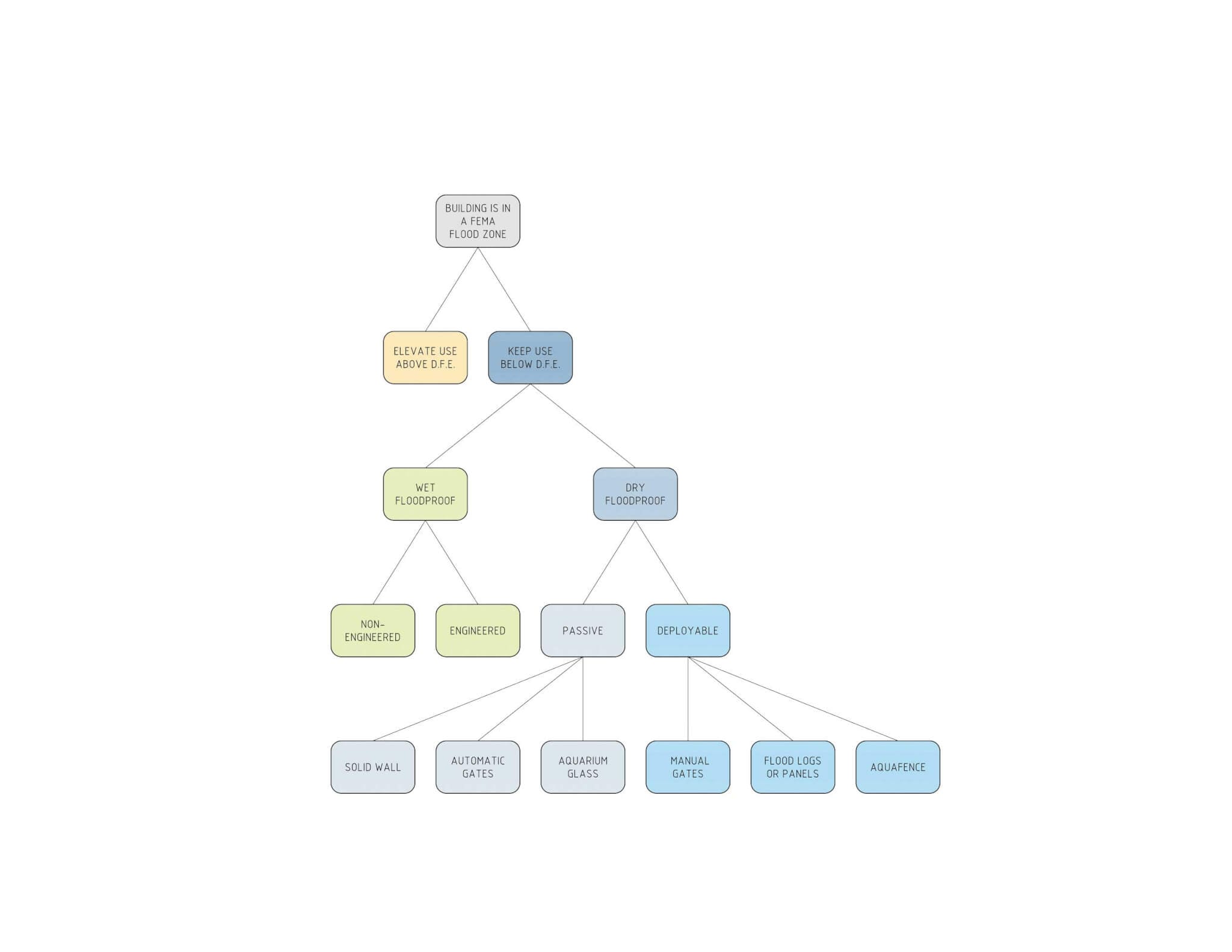
In terms of specific product choices, solid walls are low-cost but impact retail. The "Aquarium glass" system, as a proprietary product, can resist lateral flood loads and maintain watertightness; the latest low-iron version offers good transparency and color rendition but is costly. Flood barriers or panels, as well as products like Aquafence, are the mainstays of dry floodproofing, with receiving channels embedded as permanent elements in building walls or sidewalks. Global warming is changing the interaction between buildings and streets, but design teams must ensure that ground floors do not become bunkers as a result, and must be well-informed, thoughtful, and proactive in the design and implementation of flood protection solutions.
This article is compiled by Wedoany. All AI citations must indicate the source as "Wedoany". If there is any infringement or other issues, please notify us promptly, and we will modify or delete it accordingly. Email: news@wedoany.com