Luxembourg's SES launches multi-orbit in-flight satellite internet for Mexico's Viva, 100 Airbus aircraft to gain broadband access
en.Wedoany.com Reported - On June 1, Luxembourg-based space solutions company SES announced that it has launched multi-orbit satellite in-flight internet services for Mexican low-cost airline Viva. The service will be deployed on Viva's Airbus fleet to enhance in-flight broadband connectivity in the Latin American aviation market.
This partnership covers 60 A320 and 40 A321 aircraft, which will gradually receive SES multi-orbit connectivity services over the coming years. Viva will become the first Mexican domestic airline to adopt SES's new electronically scanned array antenna service, with the antenna standing less than 7 centimeters tall and capable of connecting to SES's multi-orbit satellite network. The key to the multi-orbit approach lies in simultaneously utilizing satellite resources from different orbital tiers, improving network continuity during flights through more flexible coverage combinations, enabling passengers to enjoy an internet experience in the air that closely mirrors ground-based usage habits. For airlines, in-flight networks have evolved from supplementary entertainment features to foundational capabilities for flight services, membership operations, payment transactions, real-time customer support, and cabin digitalization.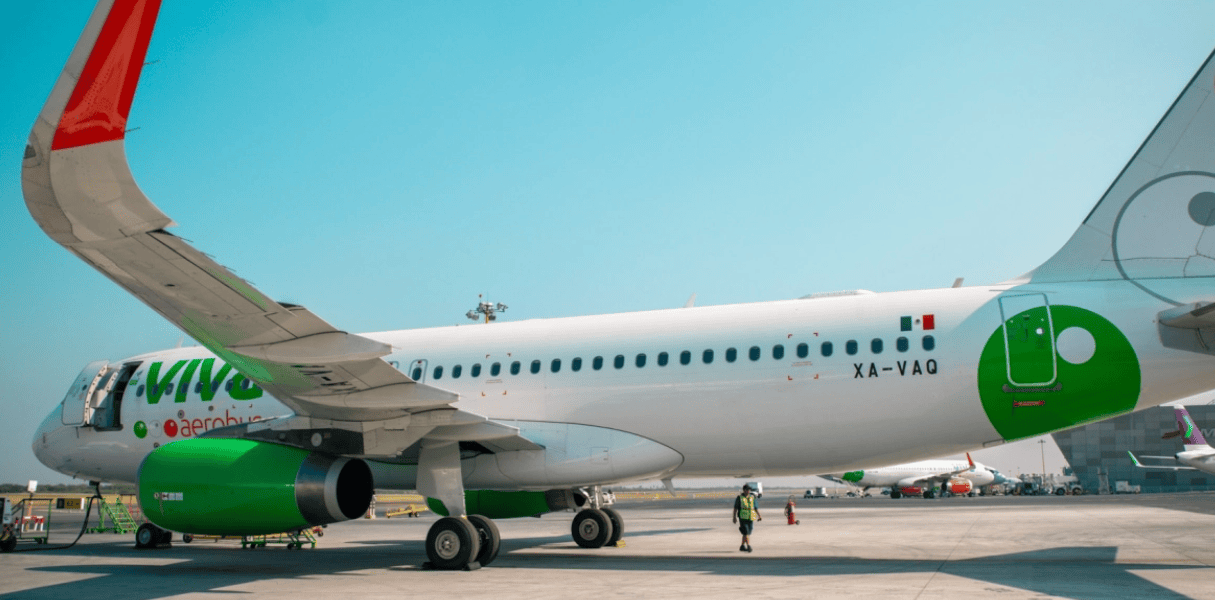
Demand for in-flight internet is rising in the Mexican and Latin American aviation markets. Low-cost carriers have historically prioritized ticket prices, route density, and fleet turnover efficiency, but passenger demand for online work, social communication, video content, instant messaging, and travel services is reshaping cabin experience standards. By introducing multi-orbit satellite broadband services, Viva can extend the user digital engagement chain within the cabin, while also helping the airline establish new operational gateways around memberships, paid services, advertising, e-commerce, and destination services. For aviation markets with broad coverage, routes crossing coastlines, mountainous regions, or areas with weak ground networks, satellite communication is better suited than relying solely on ground-based base stations to ensure continuous connectivity.
SES's footprint in the aviation connectivity market has thus further expanded. The company has integrated multi-orbit satellites and ground networks into connectivity solutions for aviation, maritime, government, enterprise, and telecom operators. This Viva project strengthens its customer base in the Americas' in-flight broadband market. As the Intelsat merger and integration progresses, SES's combined capabilities in satellite capacity, customer resources, aviation channels, and global coverage will be further enhanced. When airlines procure in-flight internet, their focus is no longer limited to single-point bandwidth but also includes antenna height, installation complexity, route coverage, service stability, passenger authentication, content platform access, and long-term operational support. The new low-profile electronically scanned array antenna reduces the impact of external aircraft equipment on aerodynamic design, facilitating broader adoption on narrow-body aircraft in the future.
Multi-orbit satellite connectivity is becoming a key pathway for aviation broadband upgrades. Geostationary orbit satellites offer wide-area coverage advantages, while medium and low Earth orbit resources provide complementary benefits in latency and capacity. By integrating different orbital resources into a unified service system, operators can schedule based on routes, regional regulations, network load, and service levels, mitigating the shortcomings of single-orbit networks in coverage, capacity, or latency. For airlines, the commercial value of such solutions manifests in two dimensions: first, enhancing passenger satisfaction and differentiated service capabilities; second, providing more stable data transmission channels for fleet operations, maintenance data, cabin systems, and real-time services.
Subsequent impacts will depend on the pace of fleet retrofitting, actual passenger experience, pricing models, and route coverage performance. Viva operates one of Latin America's youngest A320 and A321 fleets. If the service operates stably on domestic Mexican routes and regional international routes, it may drive more Latin American airlines to accelerate the adoption of multi-orbit in-flight satellite internet. The convergence of satellite communications, aviation digital services, and low-cost airline operations will also enable in-flight broadband to gradually expand from premium long-haul routes to the larger short- and medium-haul route market.
This article is compiled by Wedoany. All AI citations must indicate the source as "Wedoany". If there is any infringement or other issues, please notify us promptly, and we will modify or delete it accordingly. Email: news@wedoany.com
Related Products



Mine Explosion-proof and Intrinsically Safe Industrial Ethernet Ring Network (10 Gigabit/Gigabit)
Chongqing Mas Sci&Tech Co., Ltd.
One-Stop Steward Service for the Entire Logistics System Integration Chain
Zhongding Intelligent (Wuxi) Technology Co., Ltd.
Industrial and Commercial Point-Type Gas Detector
Jinan Benan Technology Development Co., Ltd.


Conveyor Belt Intelligent Monitoring System
LUO YANG WIRE ROPE INSPECTION TECHNOLOGY CO., LTD.