en.Wedoany.com Reported - As renewable energy projects, commercial and industrial storage, microgrids and standalone energy storage stations continue to expand, the role of the Energy Storage Inverter is becoming more important. It is not only a power conversion device between batteries and the grid, but also a core component that affects system efficiency, grid connection stability, safety protection and dispatching capability.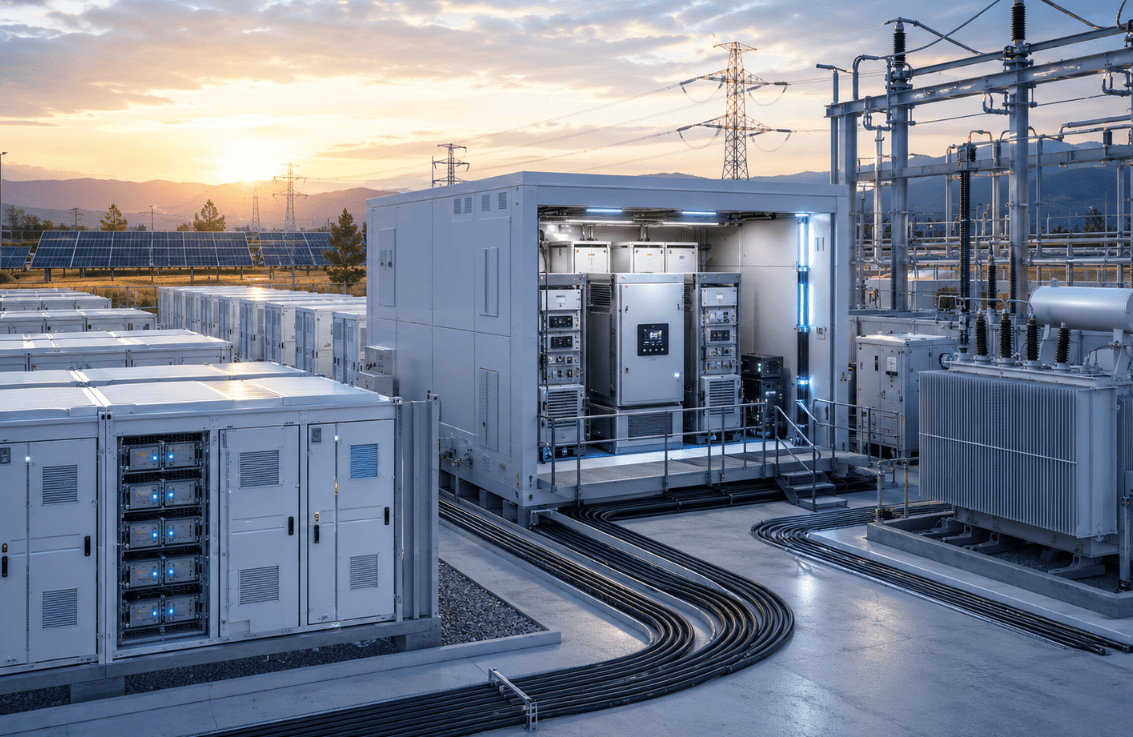
The basic function of an energy storage inverter is to enable bidirectional conversion between direct current on the battery side and alternating current on the grid side. When electricity prices are low or renewable power output is high, the inverter converts AC power into DC power to charge the battery. When load demand increases or grid support is required, it converts DC power from the battery back into AC power. Compared with conventional photovoltaic inverters, storage inverters place greater emphasis on bidirectional power flow, fast response, stable control and multi-scenario adaptability.
In commercial and industrial energy storage projects, storage inverters are often used for peak shaving, demand control, backup power and power quality improvement. When companies evaluate an energy storage system, they should not look only at battery capacity. Rated power, overload capability, conversion efficiency, protection functions, communication interfaces and grid adaptability are also important. If the inverter does not match the battery system, energy management system and on-site load profile, even a large battery capacity may not deliver the expected economic value or operational stability.
In grid-side storage and renewable-plus-storage projects, the importance of storage inverters becomes even more visible. Renewable power output is variable, and storage systems must respond quickly to grid dispatching instructions. They may help smooth power fluctuations, participate in frequency regulation and improve system flexibility. This requires storage inverters to have strong dynamic response capability, accurate power control and grid-friendly control strategies.
As grid-forming storage technologies develop, inverters may also take on stronger roles in voltage support, frequency support and weak-grid adaptation. This means the inverter is moving from a passive conversion device toward an active control unit in the power system. Its software algorithms, control strategy and communication capability will become as important as its electrical hardware.
From an industrial perspective, energy storage inverters are developing toward higher efficiency, higher power density, stronger intelligence and deeper system integration. Modular design improves system scalability. Intelligent monitoring helps operators identify abnormal conditions earlier. Optimized thermal management can improve long-term operating stability. At the same time, coordination between the inverter, battery management system, energy management system, fire protection system and cloud platform is becoming an important foundation for stable project operation.
For equipment manufacturers and system integrators, competition in the storage inverter market is no longer limited to single-machine parameters. It is increasingly about system adaptability, grid connection experience, software control capability and service support. As storage applications become more segmented, suppliers that can provide differentiated solutions for commercial and industrial storage, grid-side storage, renewable energy storage, microgrids and off-grid systems will be better positioned for future projects.
Overall, the energy storage inverter is evolving from a power conversion device into the control and grid-connection core of storage systems. The value of a future storage project will depend not only on battery capacity, but also on whether the inverter can help the system participate in power system operation more efficiently, safely and reliably.
This article is compiled by Wedoany. All AI citations must indicate the source as "Wedoany". If there is any infringement or other issues, please notify us promptly, and we will modify or delete it accordingly. Email: news@wedoany.com