en.Wedoany.com Reported - Residential developer Keylin has used ECOPact low-carbon ready-mix concrete supplied by Holcim Australia in two residential development projects in Queensland to reduce embodied carbon in building materials while maintaining structural integrity and project timelines.

The two projects are Oria Spring Hill in Brisbane and Lakeside Serenity 4212 in the Gold Coast, developed in partnership with Kinstone Group. The key objective of the projects was to reduce embodied carbon in building materials without compromising structural integrity, durability, or project schedules, with concrete identified as an area where quantifiable emission reductions could be achieved.
In the early stages of the Oria Spring Hill project, construction used standard concrete mix designs. During an early meeting involving Holcim, builder CoStruct, and the Keylin development team, the parties discussed the project's sustainability goals and options for matching concrete specifications. After review, the project switched to ECOPact, and subsequently over 80% of the concrete supplied to the development used this low-carbon alternative.
The experience from the Brisbane project directly influenced material selection for Lakeside Serenity 4212 in Helensvale, Gold Coast. This waterfront development, comprising 85 apartments and 4 villas within the Serenity 4212 master-planned community, specified ECOPact from the outset. Standard concrete mix designs were used only in limited cases where they were the most technically appropriate solution, while ECOPact accounted for nearly all concrete deliveries.
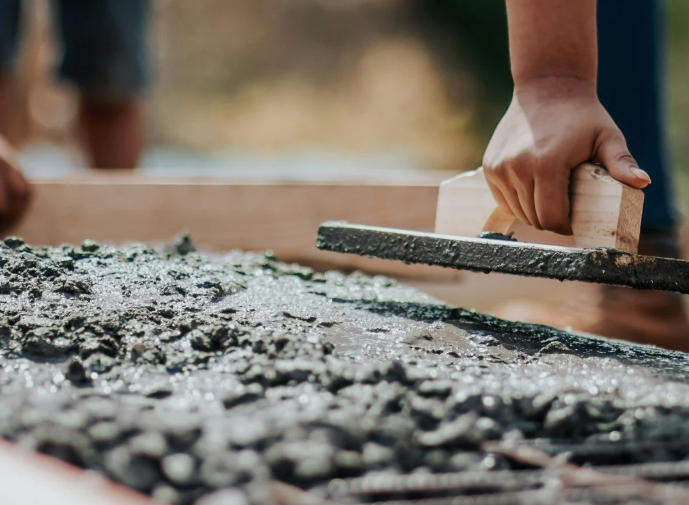
According to Holcim, ECOPach reduces embodied carbon by at least 30% compared to traditional ordinary Portland cement concrete. This reduction is supported by an Environmental Product Declaration (EPD) registered with EPD Australasia. In both developments, the material was used for foundations, slabs, columns, and walls without requiring modifications to construction schedules or installation methods.
Dylan Viviers, Specifications Manager at Holcim Australia, stated that the transition at Oria Spring Hill stemmed from discussions between Holcim, CoStruct, and Keylin regarding material performance and environmental characteristics. These two projects demonstrate how early collaboration between developers, contractors, and material suppliers can influence sustainable outcomes. By addressing carbon reduction targets during the planning and specification phase, project teams were able to incorporate low-carbon materials as part of the original project strategy.
This article is compiled by Wedoany. All AI citations must indicate the source as "Wedoany". If there is any infringement or other issues, please notify us promptly, and we will modify or delete it accordingly. Email: news@wedoany.com