en.Wedoany.com Reported - With the expansion of large wind turbines and offshore wind power, industrial competition around the Permanent Magnet Direct Drive Generator is shifting from product manufacturing alone to a broader competition in material control, precision manufacturing, system integration and lifecycle service. For wind turbine manufacturers, generator producers and core component suppliers, this equipment is not only a tool for improving turbine efficiency. It is also a key factor affecting reliability, maintenance cost and project returns.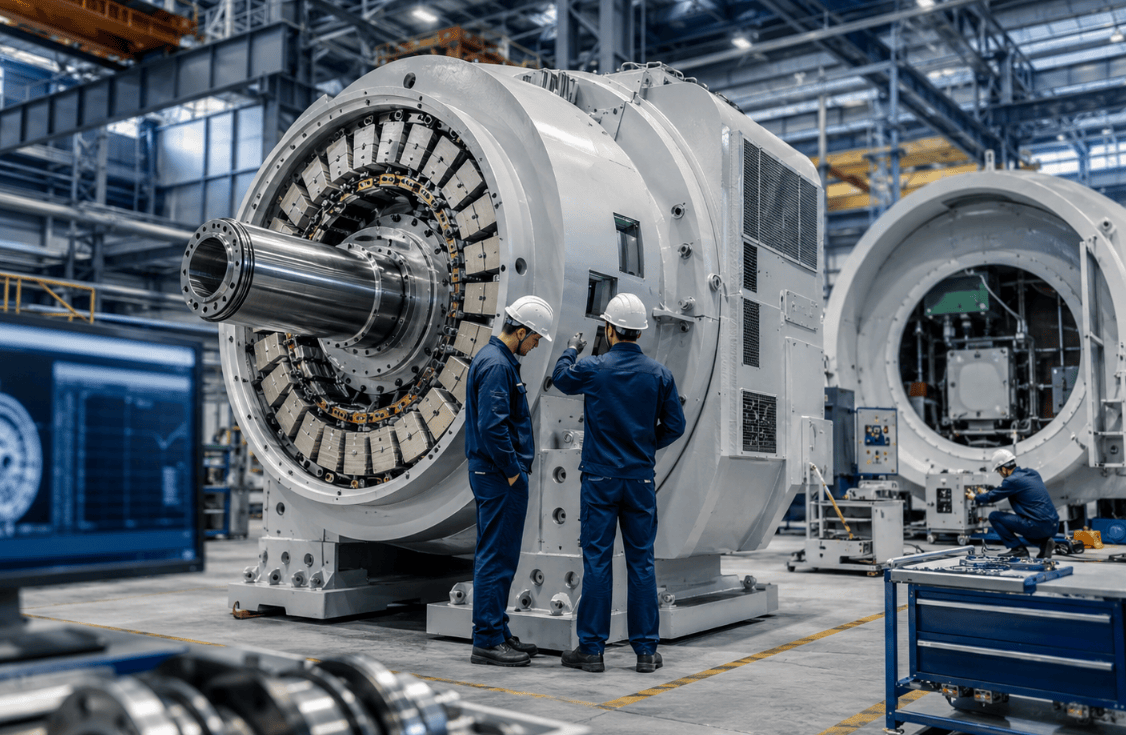
Permanent magnet direct drive generators place high requirements on material systems. Magnetic performance, temperature resistance, demagnetization resistance and supply stability of permanent magnet materials all affect long-term generator operation. As wind turbine capacity increases, requirements for high-performance magnets, insulation materials, structural components and cooling parts are also rising. Companies need to consider material performance, cost volatility, supply chain security and recycling potential together when choosing technology routes.
Manufacturing process is another core part of industrialization. Large-diameter, low-speed and high-torque generators require strong capability in stator and rotor structure, electromagnetic design, assembly precision, air gap control, insulation treatment and dynamic balancing. Any manufacturing deviation may affect operating efficiency, vibration level, temperature rise and long-term reliability. Therefore, companies need integrated capabilities in electromagnetic simulation, mechanical structural design, automated manufacturing, quality inspection and full-machine testing.
From the system application perspective, permanent magnet direct drive generators must coordinate closely with converters, main control systems, cooling systems and condition monitoring systems. Wind turbines operate under complex conditions. Wind speed variation, load fluctuation, temperature change and grid disturbance can all influence generator operation. If the generator and converter control strategy do not match well, power output stability and grid connection quality may be affected. If the cooling system is not properly designed, excessive temperature rise may reduce insulation life and affect magnet stability.
This means the competitiveness of the generator increasingly depends on system-level design. A technically advanced generator may not create real project value if it cannot integrate smoothly with the overall turbine platform. For large offshore turbines, the requirements are even higher because maintenance access is difficult and equipment reliability directly affects project availability.
Maintenance capability is becoming an important factor in supplier evaluation. For onshore wind bases and offshore wind projects, generator shutdown and repair affect not only equipment maintenance but also power generation revenue. Through monitoring of temperature, vibration, insulation condition, bearing status and cooling system data, operators can identify abnormal trends earlier and reduce sudden failures. Suppliers with remote diagnostics, predictive maintenance and spare parts support will be more competitive in long-term project cooperation.
In the global wind power market, permanent magnet direct drive generators also reflect the upgrading of the equipment supply chain. For Chinese wind power equipment companies, improving core generator design, key material application, manufacturing consistency and overseas service capability can strengthen international project delivery. In offshore wind and large wind base projects, suppliers need to provide not only products, but also system solutions adapted to different environments, standards and maintenance conditions.
Overall, the permanent magnet direct drive generator industry is entering a deeper engineering stage. Future competition will not be only about price and capacity. It will be a comprehensive competition in materials, process capability, system matching, reliability and service. Companies that can connect core component manufacturing with full turbine operation requirements will gain a stronger position in wind power equipment upgrading.
This article is compiled by Wedoany. All AI citations must indicate the source as "Wedoany". If there is any infringement or other issues, please notify us promptly, and we will modify or delete it accordingly. Email: news@wedoany.com