en.Wedoany.com Reported - The Mumbai-Ahmedabad High-Speed Rail project is progressing. This 508-kilometer high-speed rail corridor will connect Mumbai's Bandra Kurla Complex with Ahmedabad's Sabarmati, aiming to reduce the current travel time of over 6 hours to approximately 2 hours and 7 minutes. The project is being executed by the National High Speed Rail Corporation Limited (NHSRCL), established in 2016, with a shareholding structure where the central government holds 50%, and the governments of Gujarat and Maharashtra each hold 25%.
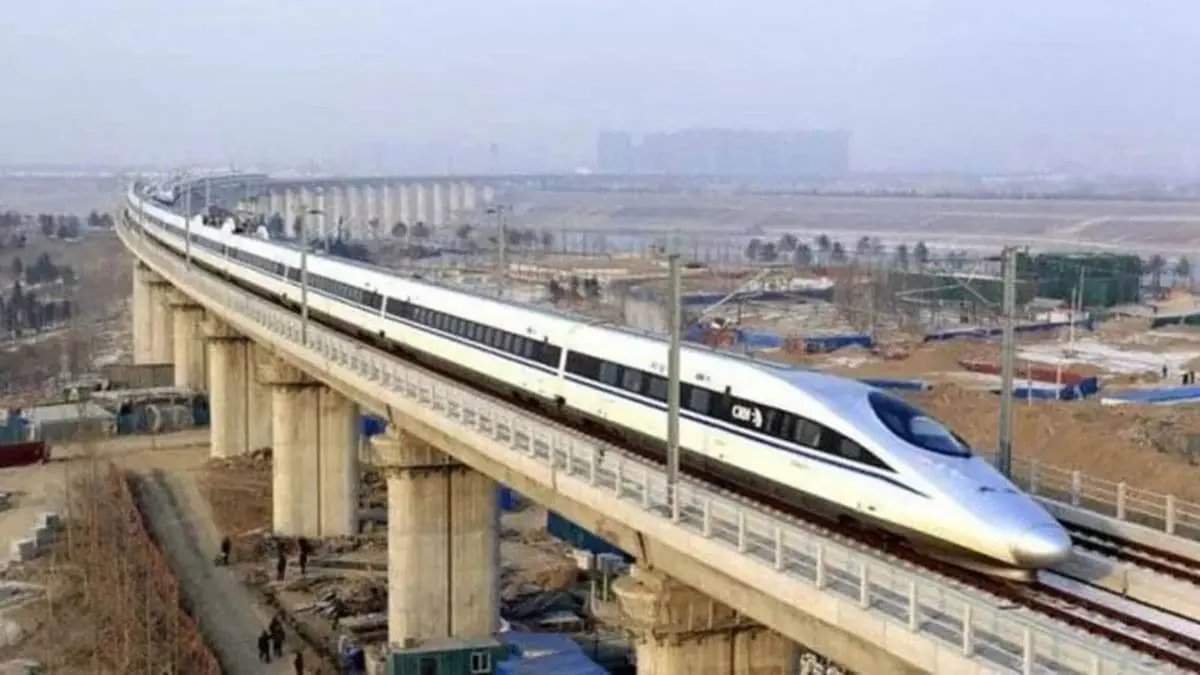
The corridor plans for 12 stations, including Thane, Virar, Boisar, Vapi, Bilimora, Surat, Bharuch, Vadodara, and Anand. Trains are planned to operate at a maximum speed of 320 km/h. With limited stops at Surat, Vadodara, and Ahmedabad, the entire journey is expected to take approximately 2 hours and 7 minutes. In contrast, the fastest conventional trains currently take over 6 hours. This significant difference in travel time is central to the corridor's role in improving long-distance rail travel in India. Furthermore, the corridor aims to serve industrial towns without airport connectivity, including Boisar, Vapi, Bharuch, and Anand. Boisar is expected to become the gateway to the upcoming Vadhvan Port.
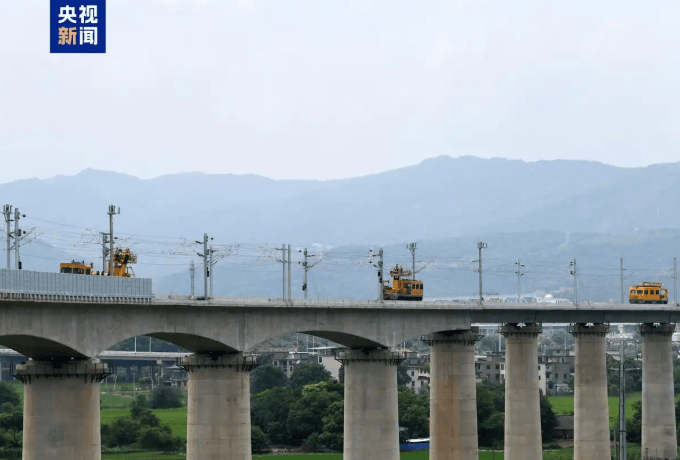
Ground construction is in full swing. A recent milestone was the successful installation of a 45-meter-long viaduct span over the Kalupur Flyover in Ahmedabad. Land acquisition for the entire 1,390 hectares has been completed. Approximately 90% of the alignment will be elevated, with the primary construction method being the Full Span Launching Method, used for the first time in India. The tracks will utilize the J-Slab ballastless system based on Japanese Shinkansen technology. The estimated project cost is 10.8 trillion Indian rupees (approximately $17 billion, excluding taxes), with about 81% of the funding coming as a soft loan from the Japan International Cooperation Agency (JICA), with a term of 50 years and a grace period of 15 years.
One of the most complex sections is a 21-kilometer tunnel starting near BKC, of which 7 kilometers will pass beneath Thane Creek, making it India's first undersea railway tunnel. The corridor also includes 8 mountain tunnels, with 7 built in Palghar district, Maharashtra, and 1 in Valsad district, Gujarat. The safety system is based on the Japanese Shinkansen system, including 28 seismometers for earthquake detection, 6 rain gauges for monitoring landslide risks, and 14 anemometers for strong wind monitoring.
Station designs will incorporate local characteristics: Surat station is inspired by diamond geometry, Sabarmati station references river wave patterns and the Ashoka Chakra, and Ahmedabad station reflects the jaali pattern of the Sidi Saiyyed Mosque. Four stations—Virar, Thane, Surat, and Sabarmati—are being developed as model stations with Japanese expertise, and all stations are planned according to green building standards. Currently, electrification is underway between Surat and Bilimora, depots are under construction at Sabarmati, Surat, and Thane, and over 20,000 pillars are planned for the overhead traction system. Details of the project's tunneling works have also been featured in Railway Supply's reports.
This article is compiled by Wedoany. All AI citations must indicate the source as "Wedoany". If there is any infringement or other issues, please notify us promptly, and we will modify or delete it accordingly. Email: news@wedoany.com