ExxonMobil Reduces Titanium Part Costs by 42% and Lead Time by 58.8 Hours Using Meltio Technology
en.Wedoany.com Reported - ExxonMobil has adopted Meltio's Laser Metal Deposition (LMD) technology to manufacture critical titanium alloy components at its Baton Rouge, Louisiana refinery, successfully reducing unit costs by 42% and dramatically shortening production lead times from 4 to 6 weeks to just 58.8 hours.
The oil and gas industry demands extremely high equipment reliability. At ExxonMobil's Baton Rouge refinery, protecting critical system panels from fluid contamination became a top priority. This case study details how the plant transitioned from traditional subtractive manufacturing to Meltio's Laser Metal Deposition (LMD) technology, specifically utilizing the Meltio M600 system, an industrial Directed Energy Deposition (DED) technology.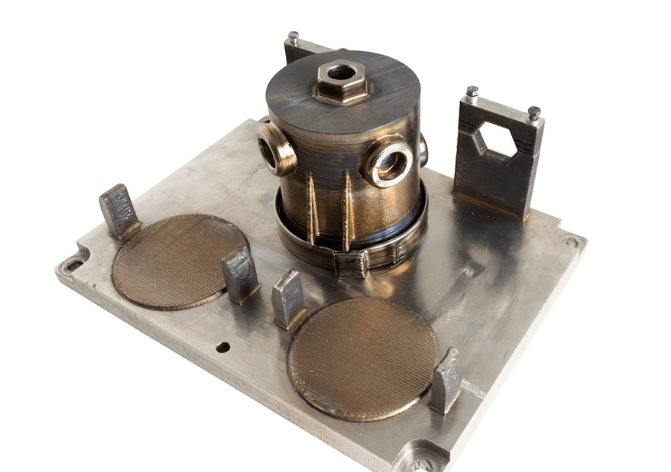
The case study also reveals that titanium was not initially considered by ExxonMobil for its manufacturing operations. However, with Meltio technology, the plant discovered that titanium not only became a viable solution but also proved cost-effective without compromising part quality and performance.
The final solution stemmed from a redesign of the protective mechanical anti-siphon device. This enabled the engineering team to achieve structural improvements and significant cost savings. The plant stated that before adopting wire DED technology, they had never considered using titanium parts due to their high cost; however, after switching to Meltio technology, they found the cost to be quite affordable.
During the bottleneck identification phase, the existing anti-siphon device was designed to prevent oil from siphoning along thermocouple wires into the instrument cabinet, but its design and operation had significant limitations. Subsequently, the engineering team decided to switch to Titanium 64 material to overcome metallurgical and thermal constraints. Compared to the original material, Titanium 64 is lighter and cheaper, and this material has been parameterized for Meltio technology. However, adapting these heavy components for additive manufacturing also presented challenges, including the stringent inert environment required for Titanium 64 (requiring approximately one and a half hours of machine time to remove oxygen), thermal constraints requiring at least 7 minutes of cooling time per layer to avoid overheating, as well as issues such as surface oxidation, excessive material buildup, and physical displacement during the deposition process.
In strategically adopting additive manufacturing, the engineering team utilized the Meltio M600 system to completely redesign the component for three-axis printing. By depositing SS-316Lsi onto an SS304 substrate, they fabricated custom fixtures, enabling simultaneous batch production of four parts. This increased inter-layer dwell time and eliminated surface oxidation issues. The main body was redesigned with a 75-degree overhang limit and printed using a non-planar method. Leveraging the M600's probing function, the machine performed Z-axis touch probing at the lowest substrate point, depositing features directly onto the curved surface. The cover was also redesigned to include a hollow perimeter specifically for accommodating silicone sealant. Through parameter optimization, laser power and printing speed were significantly reduced in specific localized areas, successfully mitigating material overgrowth. To prevent table displacement during non-extruding travel movements, robust mechanical clamping devices were added to both sides of the fixture.
Quantifying the impact, the transition to the Meltio LMD process yielded decisive operational advantages. The unit cost for the entire assembly was reduced by 42%, and the production lead time was drastically shortened from an estimated 4 to 6 weeks to a precise 58.8 hours.
This case validates LMD as a future direction for component manufacturing in the oil and gas industry. Replacing CNC machining with LMD technology for manufacturing Titanium 64 components achieved rigorous geometric optimization and tangible financial returns. By addressing specific thermal behaviors and employing intelligent batch fixturing, ExxonMobil's Baton Rouge refinery successfully modernized a critical protective device. The 42% reduction in unit cost validates LMD as a highly competitive manufacturing solution for the demanding environments of the oil and gas industry. The plant stated that moving away from traditional machining has fundamentally transformed production costs, proving that additive manufacturing delivers genuine financial value to the oil and gas sector.
This article is compiled by Wedoany. All AI citations must indicate the source as "Wedoany". If there is any infringement or other issues, please notify us promptly, and we will modify or delete it accordingly. Email: news@wedoany.com
Related Products
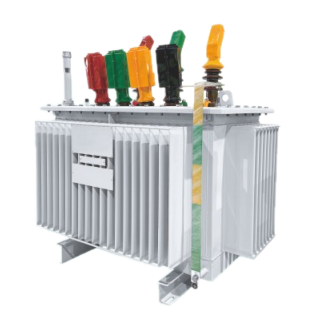

IS(B)□-M·RL Series Oil-immersed 3D Transformer (Planar / 3D Wound Core)
Guangdong Kehua Electric Power Technology Co., Ltd.
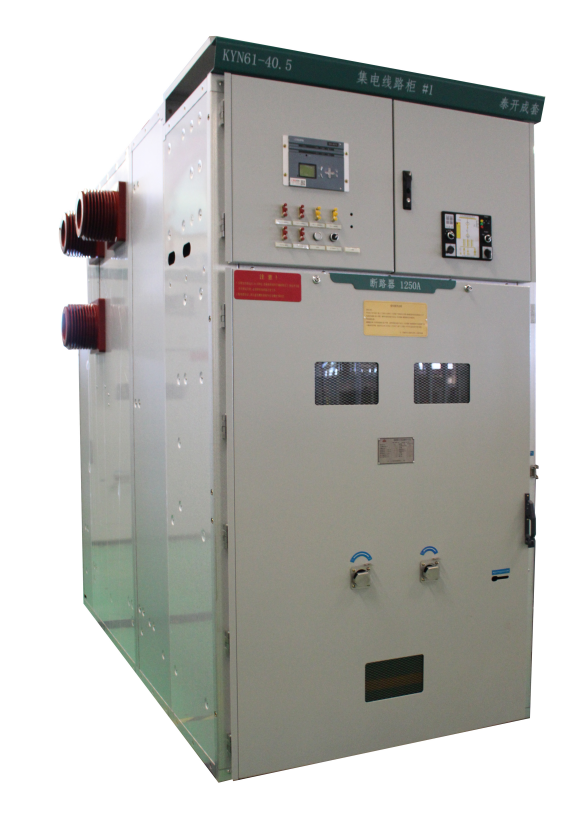
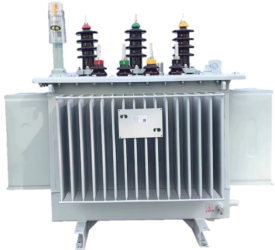
Oil-immersed Amorphous Alloy Core Distribution Transformer
Pinggao Group Smart Electric Co., Ltd.

Off-Grid Fuel Cell Supercharging Station (180kW Configuration)
Shanghai REFIRE Group Limited