en.Wedoany.com Reported - On June 3, Chinese embodied intelligence company Zhiyuan officially open-sourced the second phase of the AGIBOT WORLD 2026 dataset, themed "Rich Interaction." This dataset focuses on contact, collision, grasping, placement, and non-ideal interaction processes between robots and the real physical world. Targeting research directions such as world models, neural simulators, physical perception, and representation learning, it aims to supplement the long-standing shortage of real physical interaction data for embodied intelligence training.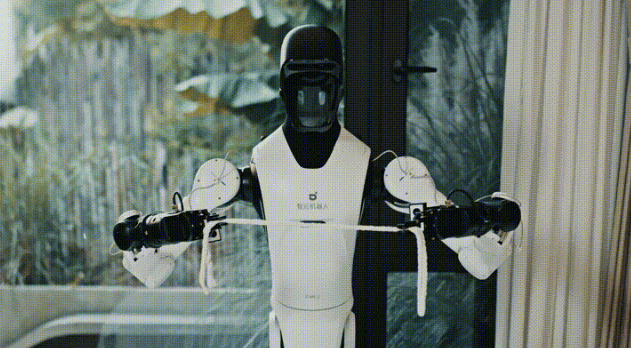
AGIBOT WORLD 2026 previously released its first-phase dataset under the theme "Imitation Learning," primarily supporting robots in learning task execution capabilities from expert demonstrations and successful trajectories. The shift in the second phase, "Rich Interaction," lies in extending the data collection logic from "how to complete a task" to "how actions change the real world." In robot training, successful demonstration data helps models learn standard operational paths. However, robots in real environments encounter numerous unstable states: varying object materials, different placement angles, inconsistent friction, failed grasps, collision offsets, reaction forces at the moment of contact, and even the same action producing different results in different scenarios. If traditional datasets overly retain clean, successful, and reproducible trajectories, models are prone to fitting only ideal actions, lacking understanding of failure processes, contact details, and physical evolution. By incorporating diverse, detailed, and contact-rich interaction processes into the open-source dataset, Zhiyuan effectively transforms what might have been filtered out as "noise" and "anomalies" into valuable data assets for training world models, neural simulators, and embodied intelligence systems.
Currently, the AGIBOT WORLD 2026 dataset is available on the Hugging Face platform. The platform page indicates that the dataset is designed for real-world embodied intelligence research, collected from real environments, and includes multimodal data with structured annotations.
For the embodied intelligence industry, the value of physical interaction data directly impacts the speed at which robots transition from demonstration to generalized application. After humanoid robots, dual-arm robots, and mobile manipulation robots enter commercial spaces, home environments, factory logistics, retail restocking, and service scenarios, the difficulty of tasks often lies not in single action recognition, but in predicting and correcting changes in object states during continuous actions. For example, tasks such as grasping bottled beverages, organizing shelves, pushing and pulling drawers, handling flexible objects, and clearing clutter all involve complex contact relationships. Robots need to understand the dynamic changes between hands, grippers, objects, support surfaces, and the surrounding environment. The second phase of AGIBOT WORLD 2026, centered on real physical interaction, helps researchers train prediction models that are closer to the real world. It also provides higher-density training material for subsequent simulation-to-reality transfer, reinforcement learning strategy optimization, multimodal perception, and robot foundation models. As the open-source dataset continues to expand, competition in embodied intelligence will gradually shift from simply comparing robot hardware and model parameters to comprehensive competition in data collection systems, real-world scenario coverage, annotation quality, and industrialization verification efficiency.
Zhiyuan's open-sourcing of the dataset also signifies that Chinese embodied intelligence companies are incorporating data assets into ecosystem competition. Open-source datasets can attract universities, laboratories, developers, and enterprises to jointly participate in model training, algorithm validation, and application testing, lowering the barrier for external research teams to enter the field of real robot data research. Subsequent variables will focus on data scale, scenario diversity, sensor coverage, annotation granularity, licensing boundaries, and the models and application outcomes developed based on this dataset. For the robot industry chain, the accumulation of real physical interaction data will influence hardware design, end effectors, sensor configurations, simulation platforms, and industrial application deployment. The data foundation for embodied intelligence is becoming a crucial infrastructure for the next stage of the industry.
This article is compiled by Wedoany. All AI citations must indicate the source as "Wedoany". If there is any infringement or other issues, please notify us promptly, and we will modify or delete it accordingly. Email: news@wedoany.com