Singapore's SynaXG Launches SynaSpark Rover, a Private 5G Network-in-a-Box Targeting Industrial Field-Level Deployments
en.Wedoany.com Reported - Recently, Singapore-based AI-native Radio Access Network (RAN) company SynaXG launched the SynaSpark Rover, a portable AI-RAN and distributed AI computing platform. It integrates private 5G connectivity, edge AI computing, and field deployment capabilities into a "network-in-a-box" form factor, targeting complex scenarios such as factories, warehouses, ports, utility sites, stadiums, and large event venues.
The engineering value of the SynaSpark Rover lies in "pushing both communication networks and computing power to the field." According to SynaXG, the platform is powered by the NVIDIA DGX Spark and the NVIDIA AI Aerial platform, integrating SynaXG's AI-RAN capabilities with GPU-accelerated AI computing into a complete network-in-a-box architecture. This enables enterprises, operators, and industrial customers to set up a private AI-native 5G network in a relatively short time. The platform's deployment stack includes the 5G core network, fronthaul, high-performance radio units, and integrated power supply, supporting Sub-6GHz and millimeter wave bands. A single DGX Spark can support up to 3 sectors, 1,000 active users, and 3,000 connected users, while providing dedicated computing power for vision AI, digital twins, model fine-tuning, inference, and edge applications. For scenarios requiring low latency, high throughput, and local AI processing, such all-in-one devices can reduce the complexity associated with the decentralized deployment of traditional base stations, edge servers, radio equipment, and power systems.
NH Institute will serve as the launch customer for the SynaSpark Rover. The two parties plan to deploy this equipment in property scenarios such as shopping malls, stadiums, and high-rise office buildings, providing building owners with AI-RAN connectivity and local distributed AI computing infrastructure.
Private 5G has historically served large factories, mining areas, ports, and energy facilities, with deployment typically requiring extensive network planning, equipment integration, on-site commissioning, and operational configuration. By packaging the radio access network, core network, radios, edge computing power, and power supply into a mobile platform, the SynaSpark Rover aims to shift private networks from "fixed engineering projects" to "rapidly deliverable field capabilities." If such products can maintain stability in actual deployments, they will facilitate local data processing for applications like robots, drones, automated equipment, 5G cameras, smart security, warehouse scheduling, and on-site digital twins, reducing reliance on remote clouds. They can also provide more flexible dedicated connectivity for temporary events, emergency communications, and high-density venues.
This launch also reflects that AI-RAN is transitioning from a carrier network architecture concept to enterprise on-site infrastructure. Radio access networks were primarily focused on solving connectivity coverage and capacity issues. As robots, automated systems, and vision AI enter industrial sites, networks need to simultaneously handle data transmission, edge inference, and low-latency control tasks. By showcasing the SynaSpark Rover during Computex/InnoVEX, SynaXG indicates that the form factor of communication equipment is evolving towards the convergence of "connectivity + computing + application hosting." Future competitive focus will center on equipment deployability, band adaptation, on-site stability, ecosystem partnerships, and actual industry orders.
Subsequent variables focus on three aspects: first, the actual delivery speed of the SynaSpark Rover in factories, ports, properties, and event venues; second, the coverage, throughput, and stability performance of Sub-6GHz and millimeter wave in different scenarios; and third, whether AI-RAN can transition from trade show demonstrations to routine enterprise procurement. If the launch customer project progresses smoothly, the private 5G network-in-a-box could emerge as a new equipment form factor for deploying edge connectivity and AI computing in industrial sites, public facilities, and high-density commercial spaces.
This article is compiled by Wedoany. All AI citations must indicate the source as "Wedoany". If there is any infringement or other issues, please notify us promptly, and we will modify or delete it accordingly. Email: news@wedoany.com
Related Products





Multi-function Marine Monitoring Low-altitude Detection Radar Sea-air Boundary Ocean Dynamic Environment Measurement
Chengdu Dixin Technology Co., Ltd.
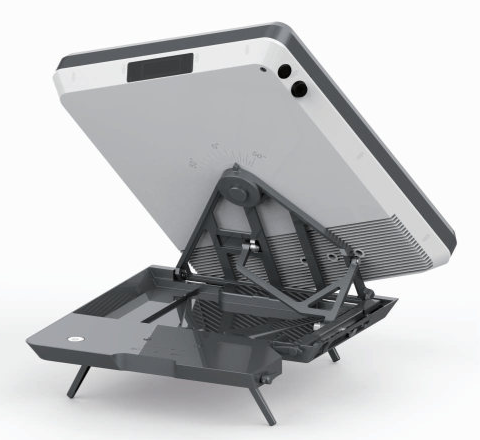
Flat Portable Satellite Terminal 0.35m Aperture Manual Portable Terminal
China Starwin Science & Technology Co., Ltd.
Mine Explosion-proof and Intrinsically Safe Industrial Ethernet Ring Network (10 Gigabit/Gigabit)
Chongqing Mas Sci&Tech Co., Ltd.
TWP16 P-Band Tropospheric Wind Profile Radar
China Huayun Meteorological Technology Group Co., Ltd.