US-based Aliro Appoints Fahri Diner as Executive Chairman of the Board, Quantum Network Software Moves Toward Commercial Deployment
en.Wedoany.com Reported - On June 2, Aliro, a US-based quantum network software company, announced the appointment of telecommunications industry entrepreneur and investor Fahri Diner as Executive Chairman of the Board. Aliro primarily develops carrier-grade quantum network operating systems. This personnel change signals the company's next phase of expansion in quantum-secure communications, quantum network orchestration, and commercial customer deployments.
Fahri Diner's addition brings to Aliro's board a composite experience spanning optical networking, smart home connectivity platforms, and early-stage technology investments. He founded Qtera, an optical networking company that improved the economics of long-haul fiber networks through ultra-long-haul optical transmission technology, later acquired by Nortel Networks for $3.25 billion. He also founded Plume, expanding smart home connectivity services to over 60 million households and more than 3 billion connected devices, and served as Managing Director at Sigma Partners, investing in early-stage networking technology companies. For Aliro, the value of such a background lies in helping the company transition quantum networks from research, testbeds, and proof-of-concept to an infrastructure software system that is operable, manageable, and deliverable to customers. The quantum network industry remains in an early commercialization stage, where hardware equipment, quantum-secure communications, network control, application services, and cross-vendor interoperability have yet to form fully mature engineering standards. Aliro aims to lower the barrier for telecommunications operators, financial institutions, utilities, defense, and enterprise customers to evaluate and deploy quantum networks through control planes, orchestration tools, simulation software, and hardware abstraction capabilities.
Aliro's existing software portfolio includes Aliro Simulator, Aliro Orchestrator, and AlirOS, covering quantum network planning, simulation, management, real-time control, and application services. The company states that its solutions have integrated over 50 types of devices and are being adapted with partners pursuing different hardware approaches.
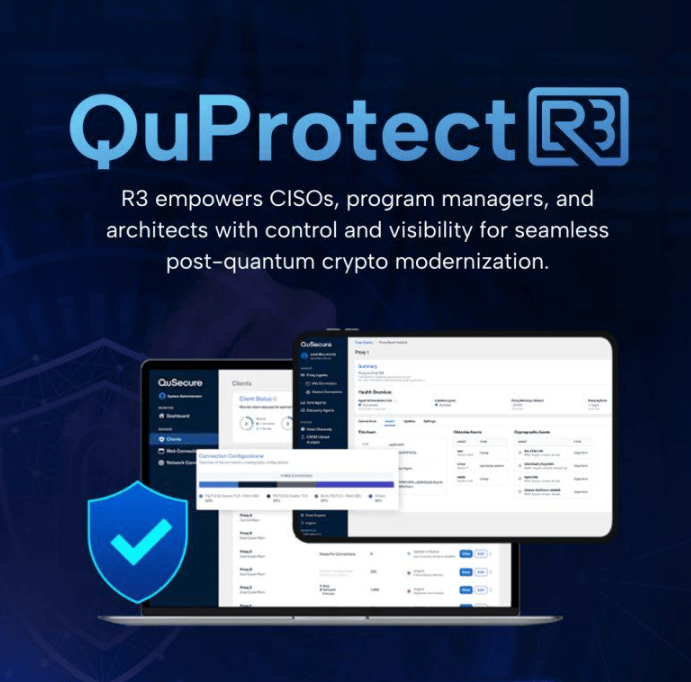
The focus of quantum network industrialization is shifting from "whether quantum communication capabilities can be generated" to "whether they can be operated like traditional communication networks." In real-world scenarios, customers require not only point quantum devices but also network topology planning, node management, hardware compatibility, key generation, application access, quality of service monitoring, and fault handling capabilities. Aliro positions itself as a software infrastructure provider for the quantum internet, aiming to establish a unified control layer across different quantum hardware, enabling quantum-secure communications, quantum processor interconnection, distributed quantum sensing, and quantum-enhanced security services to operate under conditions closer to engineering deployment. As critical infrastructure and high-value industries begin assessing long-term cryptographic risks such as "harvest now, decrypt later," quantum-secure communications and post-quantum cryptography migration are entering enterprise security roadmaps, expanding the role of quantum network software from experimental support tools to deployment and operational foundations.
This appointment also reflects quantum network companies strengthening their commercialization capabilities. Optical communications and smart home connectivity platforms have undergone a complete cycle from technological breakthroughs to large-scale network operations. Diner's accumulated experience in productization, financing, channels, and infrastructure markets during these phases may help Aliro establish clearer commercial pathways in customer pilots, partner ecosystems, and long-term deployment projects. For the quantum communications industry, future competition will not be limited to individual metrics like qubits, photonic devices, or key rates, but will also encompass network software, cross-vendor interoperability, operational reliability, and customer procurement comprehensibility.
Aliro must continue to validate the replicability of its software platform in telecommunications, finance, utilities, and public sector scenarios. If quantum networks gradually progress from pilot projects to multi-node, cross-regional, and multi-hardware deployment phases, companies capable of providing control planes, simulation, orchestration, and operational tools will be better positioned to occupy key positions in the industrial chain. The signal from this board adjustment is that quantum networks are approaching a turning point from research-led to engineering-delivery stages, and software layer capabilities will become a critical variable in determining whether quantum-secure communication infrastructure can achieve large-scale deployment.
This article is compiled by Wedoany. All AI citations must indicate the source as "Wedoany". If there is any infringement or other issues, please notify us promptly, and we will modify or delete it accordingly. Email: news@wedoany.com
Related Products


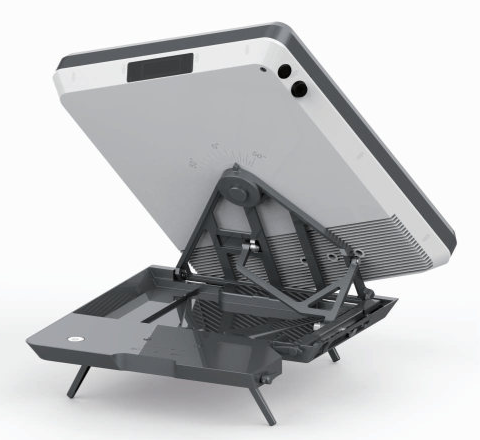
Flat Portable Satellite Terminal 0.35m Aperture Manual Portable Terminal
China Starwin Science & Technology Co., Ltd.

Industrial and Commercial Point-Type Gas Detector
Jinan Benan Technology Development Co., Ltd.

Conveyor Belt Intelligent Monitoring System
LUO YANG WIRE ROPE INSPECTION TECHNOLOGY CO., LTD.

Multi-function Marine Monitoring Low-altitude Detection Radar Sea-air Boundary Ocean Dynamic Environment Measurement
Chengdu Dixin Technology Co., Ltd.