Peking University Team Uses AI to Screen Electrolytes, Achieving Average Battery Cycle Life of 125 Cycles
en.Wedoany.com Reported - A research team led by Professor Pang Quanquan from the School of Materials Science and Engineering at Peking University, in collaboration with Tsinghua University, Lawrence Berkeley National Laboratory, Princeton University, and SESAICorp., has introduced a two-stage artificial intelligence framework integrating deep active learning and knowledge transfer in the development of lithium metal battery electrolytes. This approach enables rapid screening of high-performance electrolytes and cross-scenario transfer of design knowledge. The related research findings were published online in advance on March 27 in Nature Communications.
Lithium metal batteries are considered a core development direction for next-generation energy storage and power batteries due to their ultra-high theoretical energy density. However, issues such as low Coulombic efficiency and poor interfacial stability of the lithium metal anode have long hindered their large-scale application. The electrolyte is a key component that regulates the anode interface and determines battery cycle life. Its design faces a vast discrete chemical search space formed by combinations of lithium salts, solvents, additives, and concentrations. Traditional "trial-and-error" research and development models are costly and time-consuming, making them difficult to adapt to complex scenarios such as the introduction of new molecules and the expansion of high-dimensional formulations.
To address the challenges of "large search space, discontinuous performance relationships, and high experimental noise" in electrolyte design, the research team constructed a two-stage framework integrating Deep Active Learning (DAL) and Target Statistical Coding (TSC). The first stage focuses on an initial electrolyte formulation space of 720 combinations composed of lithium salts, solvents, additives, and concentrations. It employs deep kernel learning combined with the Thompson sampling algorithm to intelligently screen experimental samples, establishing a nonlinear correlation between electrolyte formulations and battery cycle life. The second stage uses Target Statistical Coding technology to explicitly encode the complex correlations between components into a reusable and transferable electrolyte design knowledge system, breaking through the limitations of a single formulation space.
Experimental results show that within the initial 720-formulation space, after only three iterations of deep active learning and a total of 128 battery sample tests, the average battery cycle life increased from 41.9 cycles in the random screening phase to 125.1 cycles. The proportion of short-life batteries decreased from 80.6% to 28.1%, while the proportion of long-life batteries increased from 9.7% to 40.6%. The top five selected high-quality electrolytes exhibited significantly better overall performance compared to similar high-performance formulations reported in the literature.
The electrolyte design knowledge achieved efficient cross-scenario transfer. When the initial 720 formulations were expanded to a higher-dimensional candidate space of 5,400 formulations, the average cycle life of the top five formulations under zero-shot conditions reached 200.6 cycles, a 1.6-fold improvement over the optimal level in the original space. In lithium metal/NCM811 full-cell systems, the transferred electrolytes achieved an average capacity retention rate of 84.0% after 100 cycles, far exceeding the 58.2% of the initial formulations. When facing a new formulation space of 5,760 combinations constructed by introducing new molecules, after just one round of experiments with 32 samples, the average capacity retention rate over 150 cycles increased from 24.4% to 56.5%, and the optimal formulation still maintained an 83% capacity retention rate after 250 cycles.
This research combines deep active learning with knowledge transfer, providing a new paradigm for intelligent electrolyte development that is sample-efficient, high-performance, and transferable. The research paper was jointly completed by Peking University, Tsinghua University, Lawrence Berkeley National Laboratory, Princeton University, and SESAICorp., with Peking University as the primary corresponding author institution. Professor Pang Quanquan from Peking University, Associate Professor Jiang Benben from Tsinghua University, and Xu Kang from SESAICorp. are the co-corresponding authors. Dr. Hong Xufeng, a 2025 graduate from Peking University, is the first author, and Wang Xizhe, a doctoral student at Tsinghua University, is the co-first author. The research was supported by multiple funds, including the National Key Research and Development Program of China, the National Natural Science Foundation of China, the Tsinghua-Toyota Joint Research Fund, the Beijing Natural Science Foundation, the Beijing National Research Center for Information Science and Technology, and the 111 International Cooperation Project.
This article is compiled by Wedoany. All AI citations must indicate the source as "Wedoany". If there is any infringement or other issues, please notify us promptly, and we will modify or delete it accordingly. Email: news@wedoany.com
Related Products

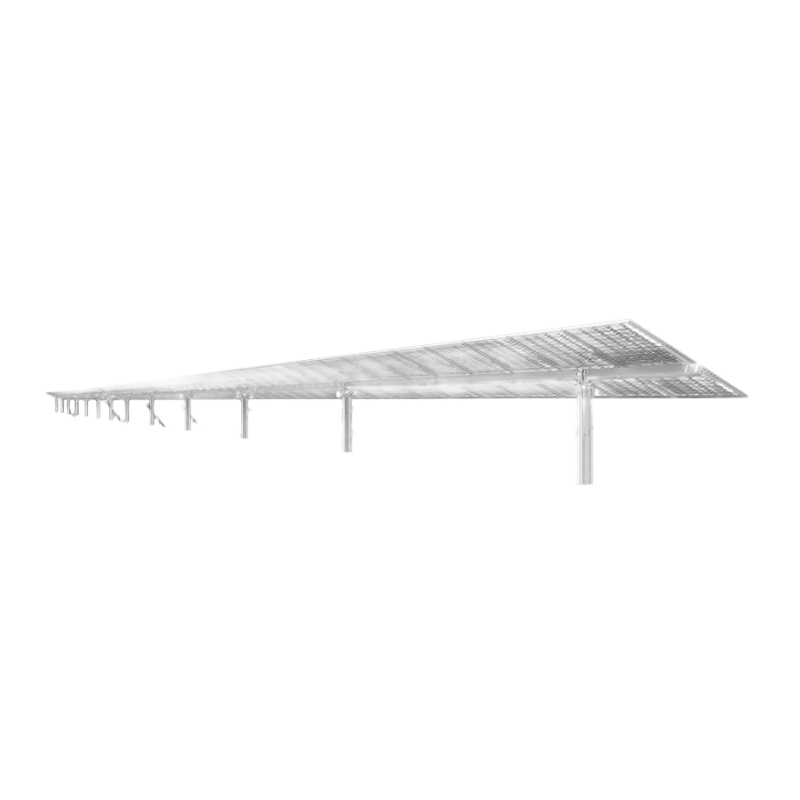
TAI Slew-drive Single-axis Independent 1P Tracking Bracket System
ANTAI TECHNOLOGY CO., LTD.
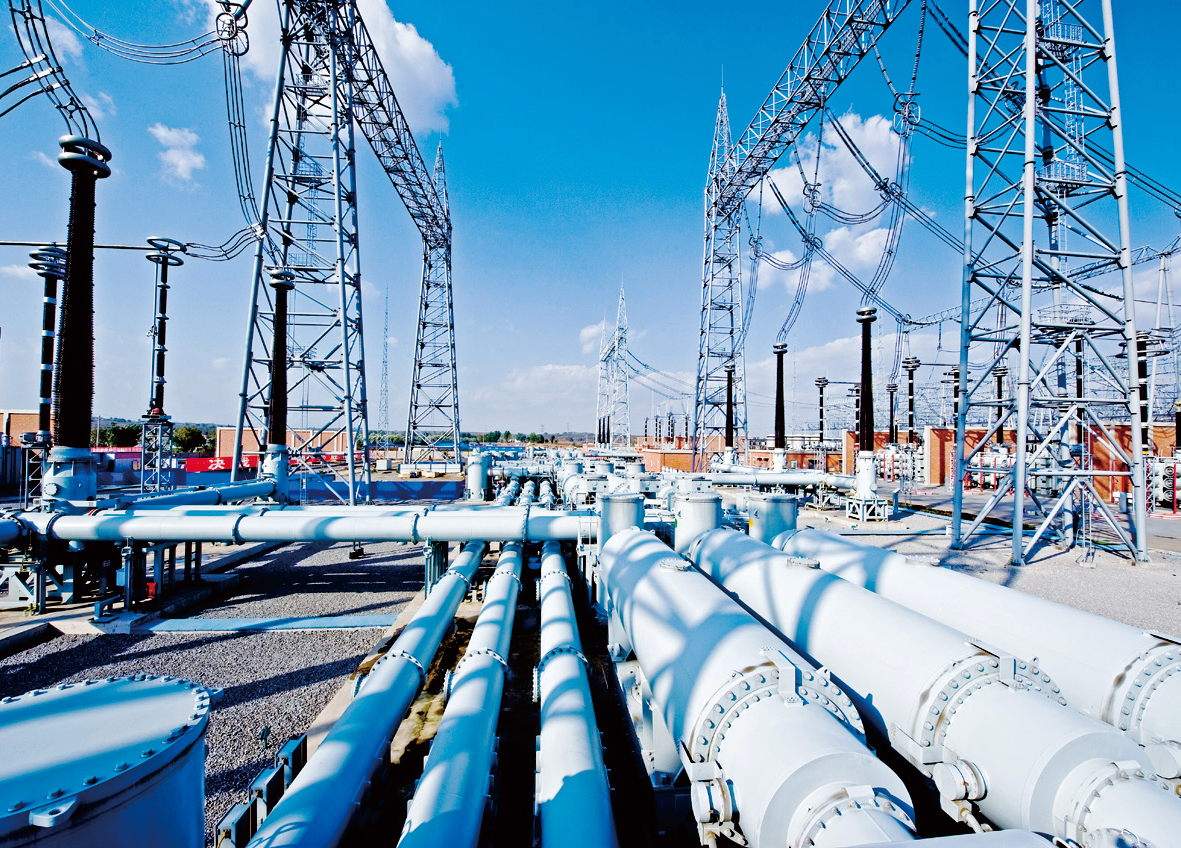
40.5kV-1100kV Gas Insulated Metal-Enclosed Switchgear (GIS)
Henan Pinggao Electric Co., Ltd.
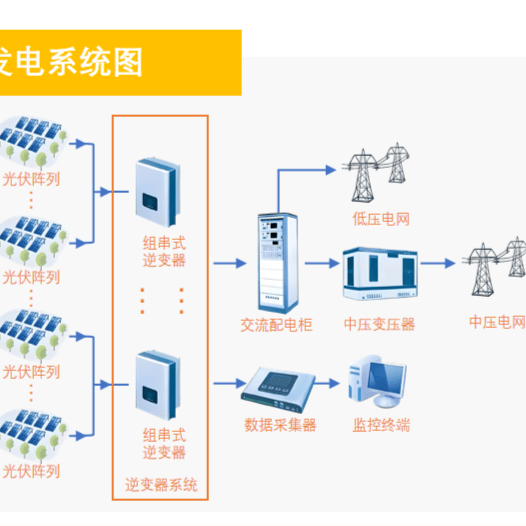
Photovoltaic and Wind Power Generation Technology
Beijing Boqi Electric Power SCI-TECH Co., Ltd.
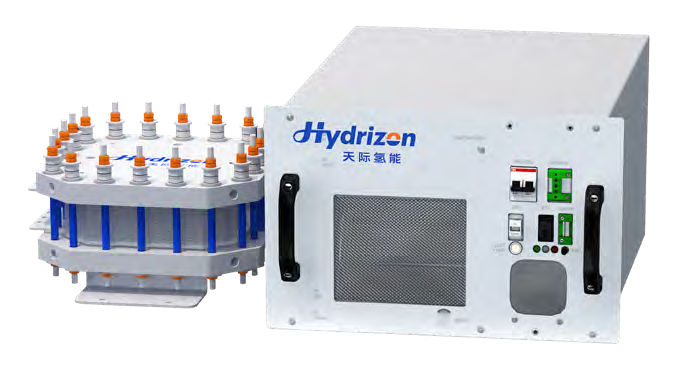
HI-Pro Green Hydrogen High-efficiency Production System-HI-PRO-AEM
Hydrizon Technology (Beijing) Co., Ltd.
Global Sulfur Hexafluoride Gas Supply and Cylinder Export
Foshan Yuexin Industrial Gas Co., Ltd.