Realtek's 20TOPS AI Accelerator Chip and PCIe Bridge Chip from Taiwan, China Win COMPUTEX Awards
en.Wedoany.com Reported - Recently, two chip products from Realtek Semiconductor in Taiwan, China won awards at the COMPUTEX 2026 Taipei International Computer Show Best Choice Award. Among them, the Edge AI Accelerator won the AI Computing & Tech category award, and the PCIe to Multi-IO Bridge Controller won the IC & Components category award.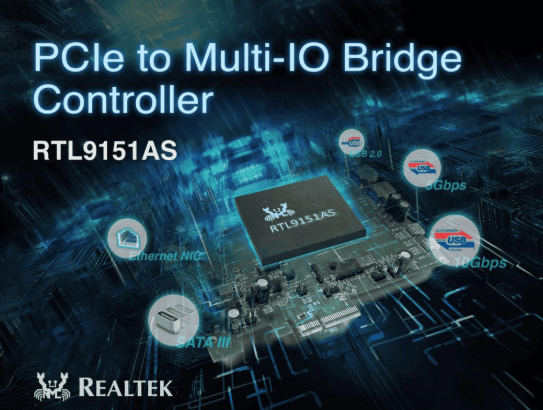
The award-winning Edge AI Accelerator focuses on local AI computing capabilities for edge devices. According to the COMPUTEX award page, this product is based on Realtek's MatriX Edge AI architecture, allowing dedicated AI accelerators to be integrated into SoC products for communications, multimedia, and more, enabling edge devices to perform more complex AI tasks without relying on the cloud. The product supports traditional CNN models and Transformer models, targeting edge applications such as real-time translation, large language models, AI agents, and multimodal generative AI. It features a built-in 20TOPS NPU and supports multiple data formats including INT4, INT8, INT16, FP8, FP16, and BF16. This indicates that Realtek is expanding AI acceleration capabilities from single dedicated chips to a broader portfolio of terminal, communication, and multimedia chips, providing a stronger hardware foundation for local inference, voice processing, real-time video and audio analysis, and low-power AI applications.
The PCIe to Multi-IO Bridge Controller focuses on I/O expansion issues for motherboards and compact systems. The corresponding model for this product is RTL9151AS, a configurable multi-interface bridge controller that integrates Ethernet, USB, and SATA functions within a single chip, reducing the cost and board-level complexity associated with using multiple bridge chips in traditional solutions.
From a product feature perspective, the value of the RTL9151AS lies in improving interface utilization efficiency in miniaturized systems and motherboard designs. The award page shows that this chip can support up to 1 Ethernet port, 7 USB ports, and 4 SATA ports, and supports up to 2.5GbE Ethernet via a PCIe Gen4 x1 interface; USB supports up to 10Gbps, SATA supports up to 6Gbps, and it also features capabilities such as link power management, SMART monitoring, remote wake-up, and hardware offload acceleration. For mini PCs, industrial computers, NAS systems, embedded systems, and compact motherboards, limited PCIe lanes are a common design constraint. By integrating multiple interfaces in a single chip, Realtek helps reduce system BOM costs, simplify layout, and enhance I/O expansion flexibility.
The awards for these two products also reflect Realtek's expansion from traditional connectivity chips towards AI edge computing and system-level interface integration. The AI accelerator chip serves edge generative AI, voice and video processing, and local agent applications, while the PCIe bridge chip serves the hardware expansion needs of motherboards, industrial equipment, and compact systems. As products like AI PCs, edge AI devices, industrial computers, and NAS systems simultaneously see rising demand for local computing power and high-speed interfaces, Realtek's chip combinations like these will increasingly participate in the underlying architecture competition of terminal hardware platforms.
This article is compiled by Wedoany. All AI citations must indicate the source as "Wedoany". If there is any infringement or other issues, please notify us promptly, and we will modify or delete it accordingly. Email: news@wedoany.com
Related Products


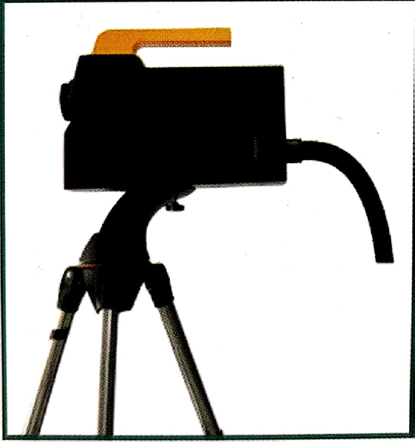
Automatic Aiming Laser Remote Obstacle Removal Robot
Pinggao Group Weihai High-Voltage Apparatus Co., Ltd.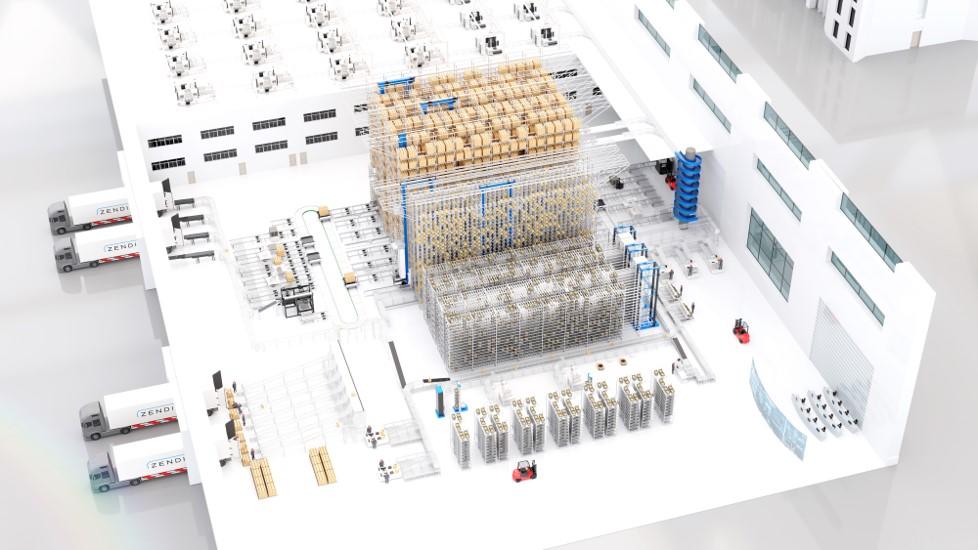
One-Stop Steward Service for the Entire Logistics System Integration Chain
Zhongding Intelligent (Wuxi) Technology Co., Ltd.

KJD127(A) Mining Explosion-Proof and Intrinsically Safe Computer
Taiyuan Xiangming Intelligent Control Technology Co., Ltd.
20 Inch 1600*900 Full HD 60Hz TFT LED Monitor with VGA and DP Interfaces for Desktop Computers-Business Use
Guangzhou Zanying Optoelectronics Technology Co., Ltd.