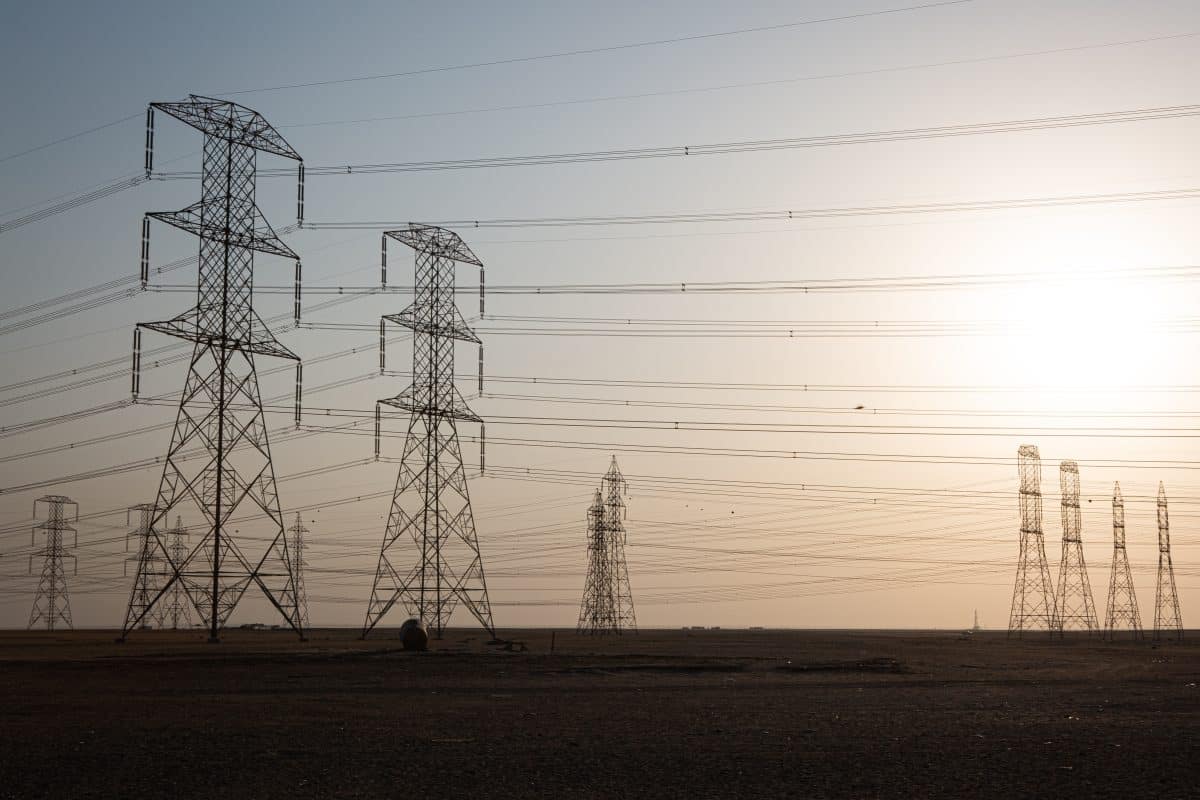
en.Wedoany.com Reported - Driven by artificial intelligence, data center construction is accelerating, with project layouts shifting from proximity to demand centers toward power generation sites. A reporter from Cailianshe recently interviewed several professionals in the data center infrastructure field and conducted a field survey of a data center in the Yangtze River Delta region, uncovering emerging trends and characteristics in the industry.
Zhu Min, Dean of the Consulting Institute at Huaxin Design Institute, stated that data center construction is still accelerating, but new trends are taking shape. Newly built data centers are increasingly favoring locations in regions like Inner Mongolia and Ningxia, where electricity prices are low and green power is abundant, reinforcing the logic of "computing-electricity synergy." Data center investors and users are strictly controlling costs, manifested in extreme compression of construction timelines and aggressive price negotiations for equipment procurement, squeezing profit margins for some upstream equipment suppliers. In terms of power acquisition, requirements for green power ratios and energy efficiency indicators such as PUE are rising, with stricter regulatory oversight, forcing companies to balance economic viability with carbon reduction targets. Future growth will be primarily driven by vertical large models, AI agent training, and AI inference, while demand for general-purpose large model training is stabilizing. Zhu Min noted that "computing-electricity synergy" is still in its early exploratory stages, with green power trading and direct green power connections facing numerous bottlenecks in industrial practice that need to be resolved.
The eight national hub nodes of the "East Data, West Computing" project have become the most densely concentrated areas for data centers. Among them, Ulanqab in Inner Mongolia and Zhongwei in Ningxia, known for their cool climates and abundant green power, have recently emerged, setting goals to become "Computing Power Capitals" or "Token Capitals." Taking Ulanqab as an example, companies such as Alibaba, Apple, Huawei, Kuaishou, UCloud, 21Vianet, CICC Data, China Telecom, China Unicom, Jinkai New Energy, and Envision Energy have established a presence there. Zhu Min analyzed that Ulanqab's rapid rise is due to multiple factors: its cool climate significantly reduces energy consumption, and its wind and solar resources provide ample green power; two dedicated point-to-point 144-core dual-circuit high-capacity optical cables have been operational between the city and Beijing, with an end-to-end latency of 4.2 milliseconds; it falls under the coverage of the Western Inner Mongolia power grid, which has implemented market-oriented reforms for new energy electricity prices; and the release of the "Ulanqab 'Token Capital' Construction Three-Year Action Plan (2026-2028)" has enhanced policy transparency. However, Zhu Min added that while many western regions possess green power resources, companies have very specific requirements regarding power grid and computing network infrastructure, as well as computing-electricity and computing-production synergy capabilities when selecting locations.
The pace of domestic data center construction has experienced cyclical ups and downs, with intelligent computing center construction accelerating once again amid the AI wave. Currently, investment entities are concentrated among the three major telecom operators, major internet companies, and leading third-party service providers. A survey of a data center in the Yangtze River Delta region found that major internet companies, whether building their own data centers or customizing leased ones, exhibit extreme cost sensitivity. For example, one major internet company implements a "whitelist" mechanism for equipment suppliers, with cost as the core consideration, resulting in relatively low gross profit margins for some winning bidders. The initial physical investment in a data center mainly includes power systems, cooling systems, network systems, and civil engineering for the facility. Professionals noted that in power supply and distribution systems, DC power technology, which improves efficiency, reduces conversion losses, and frees up rack space, is gaining favor. For cooling systems, aside from a few high-performance intelligent computing centers experimenting with immersion liquid cooling, in-row air conditioners and cold plate liquid cooling remain the more cost-effective mainstream options.
In March of this year, "computing-electricity synergy" was incorporated into the scope of national new infrastructure construction. Previously, the National Development and Reform Commission and other departments issued the "Special Action Plan for Green and Low-Carbon Development of Data Centers," setting a target for green power to account for over 80% of electricity used in newly built data centers at national hub nodes by the end of 2025. A report from Huaxin Design Institute indicates that mainstream models of "computing-electricity synergy" fall into two categories: one involves obtaining green power environmental attributes through market-based trading, including green power trading and green certificate trading; the other is based on the source-grid-load-storage technical architecture, giving rise to forms such as direct green power connections, smart microgrids, and virtual power plants. Zhu Min pointed out that green power trading faces issues of mismatch between market mechanisms and regional resource endowments, with limited cross-provincial trading channels and transmission rights allocation, leading to a coexistence of green power surplus and difficulty in exporting from western regions, while eastern regions face high transmission costs, inter-provincial barriers, and disputes over green power premium allocation when purchasing across provinces. Direct green power connections face three major challenges: in layout planning, uneven distribution of computing and power resources and differing construction cycles lead to rhythm mismatches; in technical routes, there is a contradiction between the high volatility of green power and the high reliability requirements of computing power; in business models, there are differing demands among multiple stakeholders and pressure to reduce electricity costs. Zhu Min stated that breaking through green power trading requires overcoming regional and institutional barriers, and the key to advancing direct green power connections lies in the layout principle of "computing following power, power built for computing" and cost reduction across the entire chain. (Cailianshe)
This article is compiled by Wedoany. All AI citations must indicate the source as "Wedoany". If there is any infringement or other issues, please notify us promptly, and we will modify or delete it accordingly. Email: news@wedoany.com