en.Wedoany.com Reported - Luminous Robotics is deploying synchronised heterogeneous fleet autonomy software in its Australian operational fleet, enabling remote control and communication between robots.
Based in Boston, USA, Luminous Robotics CEO Jay Wong stated that the fleet in Australia can now be monitored and controlled from anywhere in the world. With funding from the Australian Renewable Energy Agency (ARENA), the company has conducted trials in two completed solar projects and has just finished a third. It is now preparing for a new project with a scale "above 500 MW," though specific details have not yet been disclosed.
Luminous Robotics' Lumi device is responsible for picking up solar panels and installing them onto trackers. Once robots enter the construction site, they simultaneously map the site and build a shared "as-built" digital twin model, with each installed panel featuring front and rear images along with GPS geolocation. The map also includes terrain and geometric information such as trenches, piles, slopes, and gradients. The company deploys safety technicians to stand near the robots to comply with safety construction guidelines and job hazard analyses defined by each construction client.
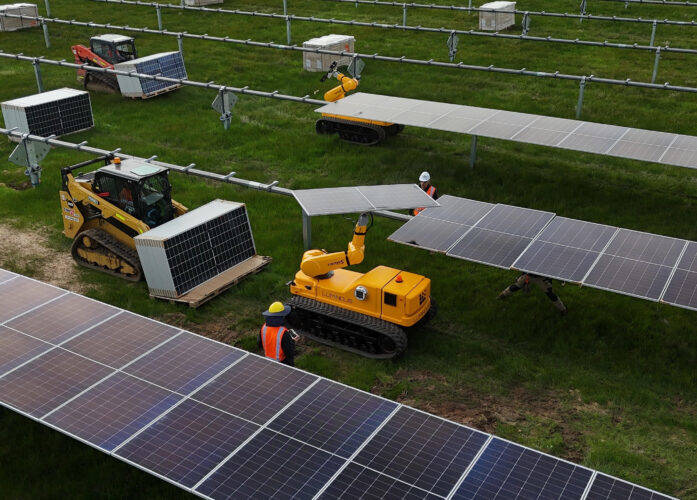
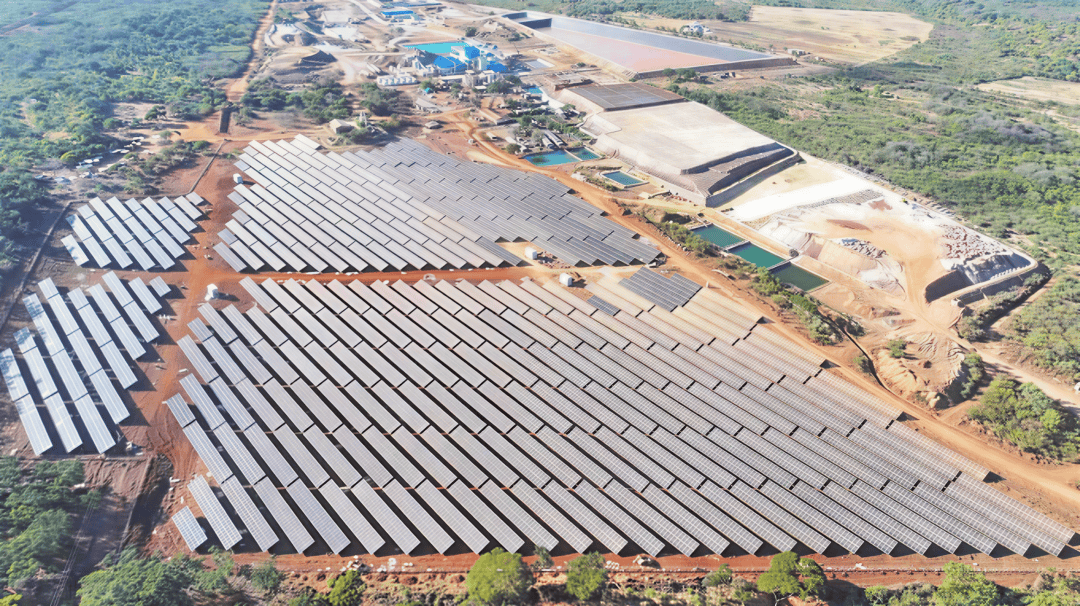
The company has received grants to pilot its "empathy-first" Lumi robotics technology at the 350 MW (MWac) Culcairn Solar Farm in New South Wales (NSW) and the 250 MW Goorambat East project in Victoria. Earlier this year, the company also completed panel installation at the 80 MW Lancaster Solar Project in Victoria.
In the field of solar farm construction, other entities exploring robotics include Australia's Commonwealth Scientific and Industrial Research Organisation (CSIRO) with its maintenance robot Bear, Chinese companies Trinasolar and Leapting, as well as Built Robotics and Nexttracker (the latter with piling technology). Leapting stated that its pick-and-place robot can perform the work of three to four people. Built Robotics has tested its equipment at a Fortescue project in the Pilbara, while Nexttracker plans to test a robotic piling machine in Australia.
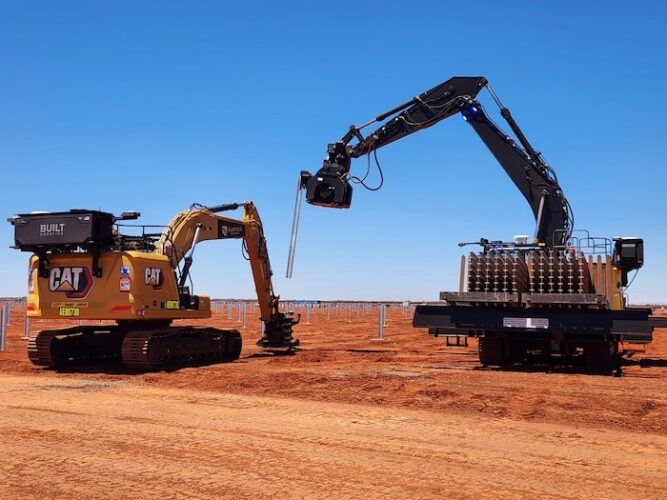
The selling points of this technology are labor scarcity and cost advantages—robots are cheaper, faster than human teams, and can work in harsh conditions. The Australian Renewable Energy Agency (ARENA) has set targets to reduce the cost of large-scale solar to below $20 per megawatt-hour (MWh) by 2030 and improve battery efficiency by 30%.
This article is compiled by Wedoany. All AI citations must indicate the source as "Wedoany". If there is any infringement or other issues, please notify us promptly, and we will modify or delete it accordingly. Email: news@wedoany.com