en.Wedoany.com Reported - The Great Exhibition Road Festival, in collaboration with the Museum of Architecture and architectural historian Neal Shasore, jointly organized an international competition for conceptual designs of the "Modern Crystal Palace." The nine winning entries will explore the possible forms and functions of the Crystal Palace in 2026. Applicants were required to submit a complete A2 design PDF, a separate 500-word text, and a series of images. The competition was free to enter, with no restrictions on background, qualifications, or discipline. The design scope was deliberately broad, drawing inspiration from Archigram's "Walking City" and Cedric Price's "Fun Palace," with organizers welcoming proposals that are "rigorous in thought and grand in vision."
The original Crystal Palace, built by Joseph Paxton for the Great Exhibition of 1851, was a 563-meter-long glass and steel structure erected in just 17 weeks, hailed as an iconic Victorian engineering achievement. However, its legacy is complicated by its role as a vast exhibition hall for colonial loot, often overlooking the communities that created these artifacts. The Great Exhibition Road Festival stated that all nine selected entries engage with the building's famous yet controversial heritage.
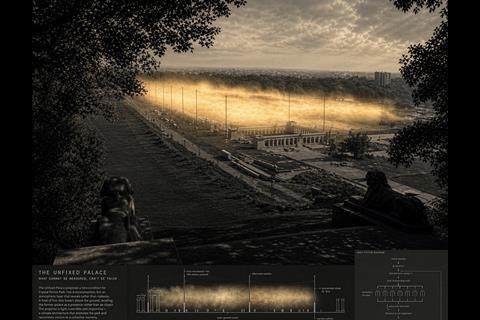
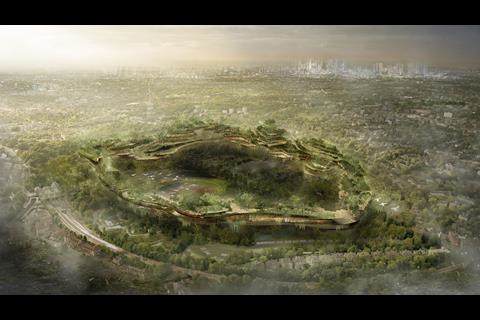
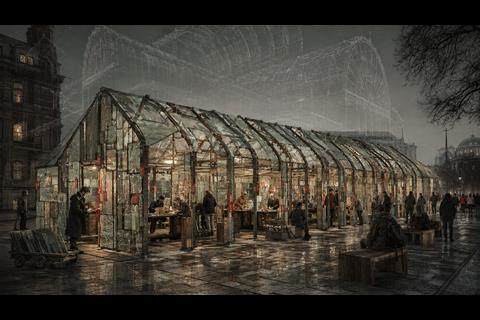
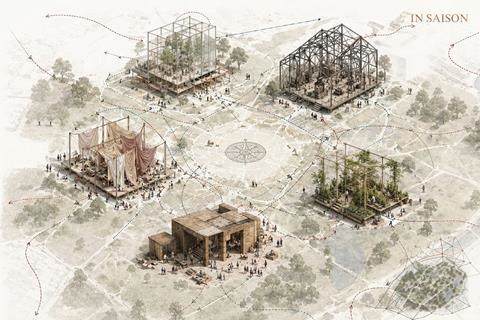
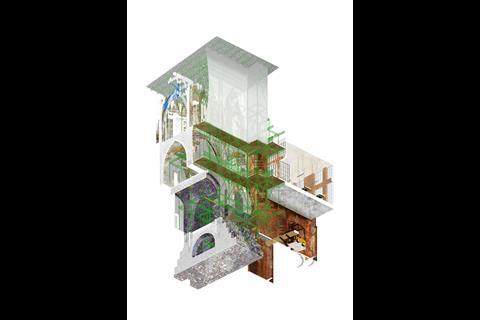
Among the winning proposals are a cloud of mist, a two-mile-long wooden ring, and a decomposable cemetery. Edward Norman's "The Unfixed Palace" is not a building but a field of mist suspended above the original palace site—located in Crystal Palace Park, which was destroyed by fire in 1936. This cloud will float at a height of three to eight meters, thickening in humid conditions, dissipating in the wind, and glowing at night. "UK Grand Crystal Palace" by Jenchieh Hung and Kulthida Songkittipakdee / HAS design and research is a continuous large wooden ring stretching 1.8 miles around Crystal Palace Park, encircling 210 acres of restored native British habitat. The proposal aims to redefine the building as a living ecosystem where plants and animals participate equally. "After the Palace: A Necropolis of Return" by Dr. Harriet Harriss, Naomi House, and Heidi Lu envisions a massive sarcophagus built from recycled rubble, composted fabric, and contaminated soil, designed to slowly decompose and transform into fertile soil during the exhibition.
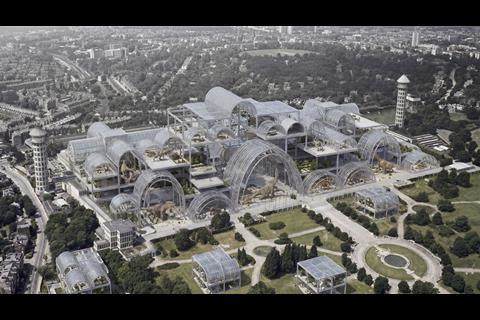
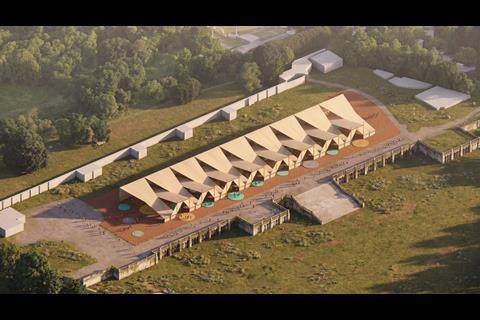
Some proposals explore diaspora cultures, while others use regenerated, recycled, or biodegradable materials. Many designs are intended to be eventually dismantled, redistributed, or returned to the earth. For example, Daniel van der Poll's "A Simulated Future Civic Framework" envisions a series of repeatable modular structures radiating from the footprint of the original Crystal Palace, with a central grand arched building made of glass and steel. The Great Exhibition Road Festival is a collaboration between Imperial College London and major UK museum institutions such as the Natural History Museum and the V&A, expecting weekend visitor numbers of up to 60,000.
This article is compiled by Wedoany. All AI citations must indicate the source as "Wedoany". If there is any infringement or other issues, please notify us promptly, and we will modify or delete it accordingly. Email: news@wedoany.com