U.S. Shrimp Imports Down 11% in Q1 2026, Vietnam Under Pressure
en.Wedoany.com Reported - The U.S. market's import policies for Vietnam's aquatic products are showing a divergent trend. On one hand, the U.S. recently granted an "equivalent effectiveness determination" to Vietnam's blue crab fishery, allowing the product to continue accessing the U.S. market and expanding its competitive space. On the other hand, shrimp, a major Vietnamese export, is facing dual pressures from anti-dumping duties and weak market demand, while tuna products remain strictly regulated under the Marine Mammal Protection Act.
Le Hang, Deputy Secretary General of the Vietnam Association of Seafood Exporters and Producers, stated that the U.S. granting equivalent effectiveness determination to Vietnam's blue crab fishery will bring relatively clear short-term opportunities for the product. For Vietnamese enterprises, now is a favorable time to fulfill orders for the second half of the year, while strengthening communication with U.S. customers to proactively explain the compliance of raw material sources and fishing records.
In stark contrast to blue crab products, shrimp products continue to face pressure in the U.S. market. In addition to tax pressures, demand for shrimp in the U.S. market remains weak. U.S. data shows that in the first quarter of 2026, U.S. shrimp imports fell 11% year-on-year, with a sharp 19% decline in March alone. This indicates that against a backdrop of rising price and cost pressures, market demand is unlikely to recover significantly in the short term, and U.S. importers remain cautious about shrimp procurement orders.
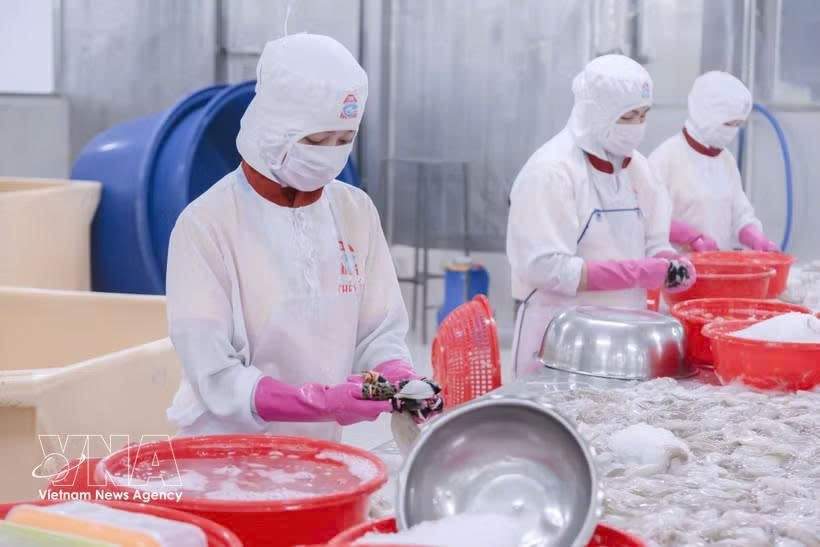
Meanwhile, due to regulations under the Marine Mammal Protection Act, exports of tuna and other seafood products to the U.S. remain strictly regulated. For Vietnamese tuna exporters, the biggest current challenge lies in meeting increasingly stringent compliance requirements. Only enterprises that manage product traceability, fishing records, and related documentation effectively can hope to secure orders, stabilize market share, and reduce operational risks.
Faced with rising market access barriers and intense competitive pressure, Vietnam's seafood industry should focus on developing products with higher added value, stable specifications, and less reliance on price competition to enhance resilience against risks.
Despite numerous challenges, the U.S. remains one of the most important markets for Vietnamese aquatic products. However, the U.S. market is no longer one where growth can be sustained through low-price advantages. Only enterprises that closely follow U.S. policy changes, select product categories with market potential, and ensure full compliance with all requirements can consolidate and expand their market share in the U.S. over the long term.
This article is compiled by Wedoany. All AI citations must indicate the source as "Wedoany". If there is any infringement or other issues, please notify us promptly, and we will modify or delete it accordingly. Email: news@wedoany.com
Related Products


714CD Series C-Band Weather Radar
Chengdu Zhongdian Jinjiang Information Industry Co., Ltd.


4HS-8 High-efficiency Peanut Inverted-laying Harvester
Hebei Yongfa Hongtian Agricultural Machinery Manufacturing Co., Ltd.


Industrial and Commercial Point-Type Gas Detector
Jinan Benan Technology Development Co., Ltd.