en.Wedoany.com Reported - U.S. SpaceX and Google recently reached a large-scale cloud service agreement. Under the agreement, Google will pay SpaceX $920 million per month from October 2026 to June 2029 to secure approximately 110,000 NVIDIA GPUs, along with supporting CPUs, memory, and related infrastructure resources, to support its AI platform, cloud services, and enterprise-level intelligent application needs.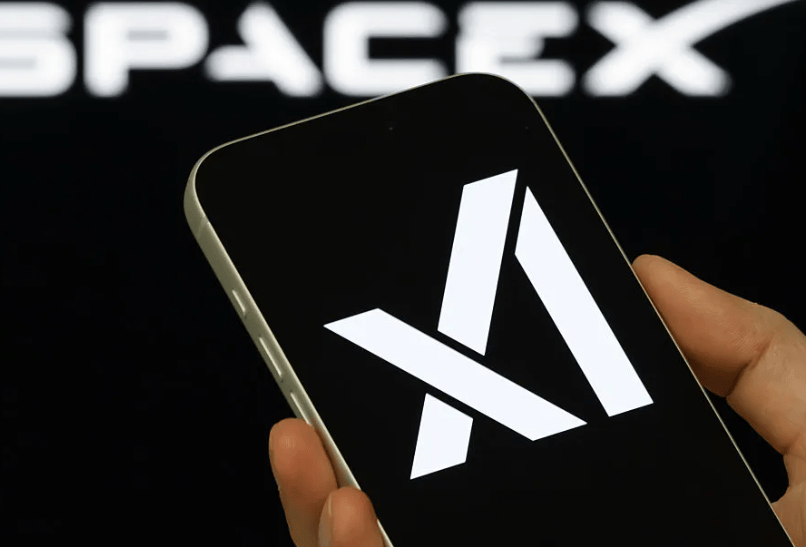
The scale and duration of this agreement make it a highly representative long-term computing power leasing case in the AI infrastructure market. According to disclosed information, the agreement covers a period from October 2026 to June 2029, lasting approximately 32 months. Calculated at $920 million per month, the total contract value will reach approximately $29.44 billion. For Google, this is not an ordinary server procurement but a strategic move to lock in external computing capacity ahead of its AI business growth over the coming years. Despite already possessing large-scale global data centers, self-developed AI chips, cloud computing platforms, and an enterprise customer base, Google still chose to sign such a high-value cloud service agreement with SpaceX. This indicates that as enterprise-level AI enters a phase of large-scale commercialization, computing power demand is exhibiting characteristics of higher peaks, longer cycles, and greater certainty. When delivering AI products like Gemini Enterprise to enterprise customers, it is necessary to simultaneously meet diverse workloads including model training, inference calls, multimodal data processing, code generation, office automation, agent orchestration, and deployment for industry-specific scenarios. Relying solely on existing cloud resource scheduling is no longer sufficient to cover all growth pressures. The capacity of approximately 110,000 GPUs provided by SpaceX will form a complete computing resource package alongside CPUs, memory, networking, storage, power supply, cooling, and data center operations, rather than being a single-chip-level supply. For SpaceX, this agreement also signifies a further expansion of its business boundaries: extending from rocket launches, satellite internet, and space transportation to leasable AI computing infrastructure, converting high-capital-expenditure assets into stable revenue streams through long-term contracts.
The agreement also sets relatively clear delivery constraints. SpaceX is required to deliver the agreed-upon GPU capacity by September 30, 2026. If it fails to do so on time, Google can terminate the agreement after a 30-day grace period. Starting from 2027, both parties can also exit early according to the agreed terms.
Such clauses reflect that the core challenge of AI computing power transactions has shifted from "procuring chips" to "forming usable computing capacity on schedule." Behind the 110,000 GPUs lies a massive engineering system: chip procurement is only the first step, followed by server integration, rack deployment, liquid or air cooling, power connection, backup power, network interconnection, cluster scheduling, data security, operational monitoring, and fault recovery. Google's willingness to pay high monthly fees in advance essentially purchases a guaranteed future computing power window to mitigate delivery risks arising from the growth of its enterprise AI customers. For cloud service providers, the resource usage patterns of AI customers differ significantly from those of traditional cloud customers. Traditional enterprise cloud adoption primarily revolves around storage, databases, office systems, website hosting, and business application migration, with relatively predictable resource growth. In contrast, AI service workloads can rapidly amplify with model scale, user invocation frequency, context length, multimodal inputs, and the complexity of agent tasks. After a large enterprise customer deploys AI for office work, R&D assistance, customer service automation, data analysis, and business process agents, it may generate sustained high-concurrency inference demands in a short period, directly increasing GPU cluster utilization. By locking in external resources through SpaceX, Google demonstrates that cloud computing giants are reconfiguring their computing power supply chain: part of the resources come from self-built data centers, part from self-developed chips, part from long-term leasing, and another part from partnerships with infrastructure companies possessing large-scale engineering capabilities. SpaceX's entry also introduces a new supply structure to the AI computing power market. In the past, ultra-large-scale computing power was primarily concentrated among cloud vendors, chip companies, data center operators, and a few AI labs. Now, companies with capabilities in energy management, engineering construction, network communications, capital financing, and global infrastructure deployment are also entering this chain as computing power service providers. The communication, ground station, satellite network, and large-scale system management capabilities SpaceX has accumulated from building and operating the Starlink network provide an extensible engineering foundation for its entry into the AI infrastructure market. Although aerospace and cloud computing are different business domains, both rely on high-reliability systems, complex supply chain management, continuous operational capabilities, and large-scale capital investment, enabling SpaceX to transfer some of its capabilities to the AI computing power supply scenario.
This transaction will also influence the future direction of the data center, energy, and GPU leasing markets. With the rapid growth in AI computing power demand, industry competition is no longer solely about model capabilities or application numbers. Whether underlying resources can be delivered on time, operate continuously, and support long-term use by major customers is becoming a key differentiator among tech companies. By securing SpaceX's computing power in advance through this agreement, Google can provide greater certainty for future enterprise customer contracts, AI product roadmaps, and platform expansion. Meanwhile, SpaceX, by leveraging a major customer like Google, can validate its AI infrastructure service capabilities, opening up opportunities for subsequent cloud services, AI training, and enterprise computing contracts. If this agreement is executed on schedule, it will reinforce a new market signal: AI infrastructure is transitioning from an internal capability of tech giants to a long-term resource reallocated across enterprises, industries, and infrastructure systems.
From an industry chain perspective, GPUs, data centers, electricity, networks, and cloud services are being reconnected by the same wave of AI demand. NVIDIA GPUs remain a crucial hardware foundation for large model training and high-performance inference, but chips alone cannot be directly converted into marketable cloud services; they must rely on a complete engineering system to form stable capacity. In the coming years, as enterprise AI applications penetrate deeper into business systems, cloud service providers' demand for external available computing power is likely to continue increasing, and long-term agreements similar to the one between SpaceX and Google will become more common. For industry observers, the most noteworthy aspect of this agreement is not the monthly fee itself, but what it reveals about the infrastructure pressure behind AI commercialization: those who can secure GPUs faster, deliver clusters more reliably, and control energy and operational costs more effectively will gain a stronger initiative in the next phase of cloud service competition.
This article is compiled by Wedoany. All AI citations must indicate the source as "Wedoany". If there is any infringement or other issues, please notify us promptly, and we will modify or delete it accordingly. Email: news@wedoany.com