en.Wedoany.com Reported - International oil prices closed lower on the 5th. Light crude oil futures for July delivery on the New York Mercantile Exchange fell $2.50 to settle at $90.54 per barrel, a decrease of 2.69%; Brent crude oil futures for August delivery on the London ICE Futures Exchange fell $1.94 to settle at $93.09 per barrel, a decrease of 2.04%. The simultaneous decline in the two major crude oil benchmarks indicates that the risk premium brought about by earlier geopolitical tensions cooled during the day's trading.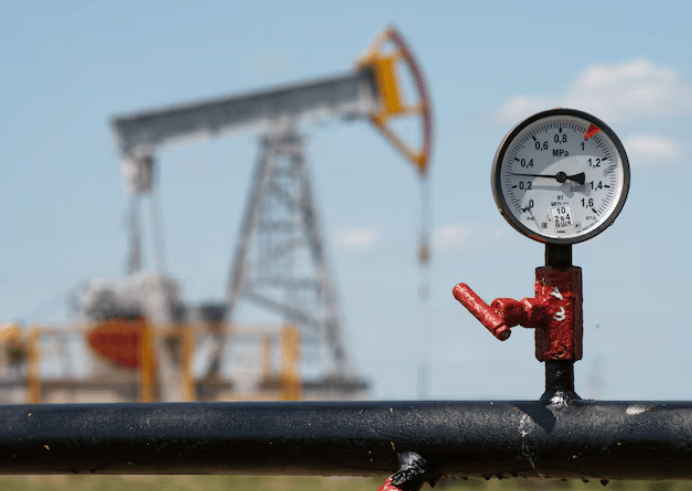
This decline was first reflected in the rapid retracement of prices. New York light crude fell nearly 3% in a single day, while Brent crude fell over 2%. Although both contracts remained above $90 per barrel, market sentiment shifted from the previous tension-driven rally to a reassessment of supply disruption risks.
The backdrop for short-term oil price fluctuations is a moderation in market concerns over further escalation of the Middle East situation. Previously, geopolitical risks had pushed oil prices higher, with traders worried that an expanded conflict could affect exports from key oil-producing regions, shipping safety, and energy transport routes. In particular, risk expectations related to crude oil transport in the Gulf region were once priced in. However, during trading on the 5th, the market's assessment of a de-escalation strengthened, causing the risk premium to recede, and both New York light crude and Brent crude saw significant declines. Crude oil futures prices are highly sensitive to geopolitical factors. When the market expects an increased risk of supply disruptions, trading capital pushes prices up in advance. When the likelihood of conflict spillover decreases and related transport or loading facilities do not experience sustained disruptions, early long positions trigger profit-taking or risk exposure adjustments. This price pullback does not mean that the global energy supply-demand relationship has completely turned loose; rather, it indicates that short-term trading focus has shifted from "potential supply shocks" to "whether actual disruptions occur." In this environment, oil prices are more directly influenced by real-time news, inventory changes, dollar movements, refinery demand, and policy expectations of major oil-producing countries, making daily price swings more prone to amplification.
In terms of contract performance, Brent crude still closed above $93 per barrel, and New York light crude remained above $90 per barrel. The price decline weakened the previous rally but did not push oil prices out of the high range.
The significance of this closing data for the energy market lies in "high-price volatility" rather than the single-day decline itself. New York light crude at $90.54 per barrel and Brent crude at $93.09 per barrel still represent international crude oil prices at relatively high levels. Refining companies, air transport, shipping, chemical raw materials, and end-user fuel consumption will continue to face cost pressures. For economies with high import dependence, sustained high oil prices affect trade balances, inflation expectations, and energy procurement pace. For oil-producing countries, high oil prices are linked to fiscal revenues, export settlements, and production policy choices. The market will continue to monitor three key clues: first, whether the situation in major oil-producing regions again disrupts exports and transport; second, whether U.S. commercial crude oil inventories, product inventories, and refinery utilization rates indicate weakening demand; and third, whether OPEC+ production policies continue to support the market amid high prices. If geopolitical risks continue to ease and demand-side data lacks strong support, oil prices may continue to fluctuate and correct. If uncertainties re-emerge in key transport routes, port loading, or supply from oil-producing countries, the risk premium could push prices higher again. The core contradiction in the current market is that crude oil fundamentals still have high-level support, but short-term prices are highly sensitive to risk news. Any changes in supply, inventories, or geopolitical conditions could quickly be reflected in futures trading.
For companies in the industrial chain, a single-day drop in oil prices cannot be simply interpreted as a relief from cost pressures. Energy procurement, long-term contracts, inventory management, and price hedging still need to be arranged around a high-volatility environment. When international oil prices operate above $90 per barrel, the profit distribution between upstream resource companies and downstream energy-consuming industries will continue to change. Transportation fuels, chemicals, oil and gas equipment, shipping, and electricity substitution demand will also be affected. The price decline on the 5th is more like a market correction of previous risk expectations rather than a clear signal that the energy cost cycle has entered a downward channel.
This article is compiled by Wedoany. All AI citations must indicate the source as "Wedoany". If there is any infringement or other issues, please notify us promptly, and we will modify or delete it accordingly. Email: news@wedoany.com