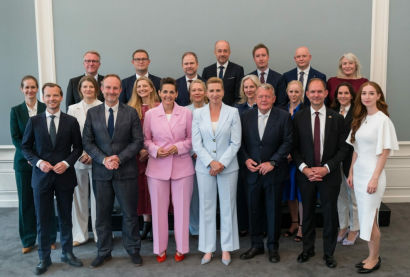
en.Wedoany.com Reported - Denmark's new coalition government has unveiled its energy and climate plan, setting targets to achieve climate neutrality by 2045 and a 110% reduction in emissions by 2050 compared to 1990 levels, with energy security placed at the core of policy. Social Democrat Mette Frederiksen, who won the general election on March 24, 2026, has formed a "Four-Leaf Clover Government" with the Green Left, the Radikale Venstre, and the Moderaterne.
The four-party coalition agreement covers multiple energy issues: achieving 100% biomethane to replace fossil natural gas by 2030; promoting railway network electrification; studying more efficient replacement of old onshore wind turbines; and advancing offshore wind expansion in the North Sea and the Baltic Sea. The agreement includes a dedicated chapter on "Green, Cheap, and Secure Energy," proposing special subsidies for low- and middle-income households to purchase electric vehicles, and accelerating the phase-out of gas and oil boilers, with the goal of fully decarbonizing household heating by 2035.
The government proposes allocating 2 billion Danish kroner (approximately 270 million euros) annually for electrification and the energy sector, with funds sourced from the reallocation of various funds and green initiatives. The framework document also includes plans for a new energy infrastructure plan by 2035, optimizing grid expansion and usage; updating the legal framework for the state-owned grid company Energinet to enable proactive planning based on policy goals; and studying the possibility of rejecting grid access and reallocating already allocated capacity. Additionally, the government plans to ultimately abolish the registration tax on electric vehicles as part of vehicle tax reform, while exploring accelerated electrification solutions for trucks and vans.
In the heating sector, the government will work with municipalities to follow up on heating plans, enabling consumers to assess the feasibility of investing in green district heating, geothermal heating, or heat pumps, and providing immediate subsidies for households with low property values. For natural gas customers in areas with existing district heating projects, the government will study the possibility of introducing a maximum price cap on natural gas before the projects become operational. The document also proposes taxing cruise ship and private jet passengers, and following up on analyses of new nuclear energy technologies.
The government will also enshrine in the Climate Act the targets of climate neutrality by 2045 and a 110% reduction in emissions by 2050, while paying attention to consumption-based climate footprint impacts. Other key points in the agreement include: striving to phase out the use of imported biomass as soon as possible and assessing the feasibility of geothermal energy; strengthening the protection of critical energy infrastructure against sabotage and hybrid threats; working to ensure that future aircraft use green PtX fuels produced in Denmark; and conducting an analysis of refining capacity. The government will establish a working group to make recommendations on how Denmark can promote proactive industrial policy.
This article is compiled by Wedoany. All AI citations must indicate the source as "Wedoany". If there is any infringement or other issues, please notify us promptly, and we will modify or delete it accordingly. Email: news@wedoany.com