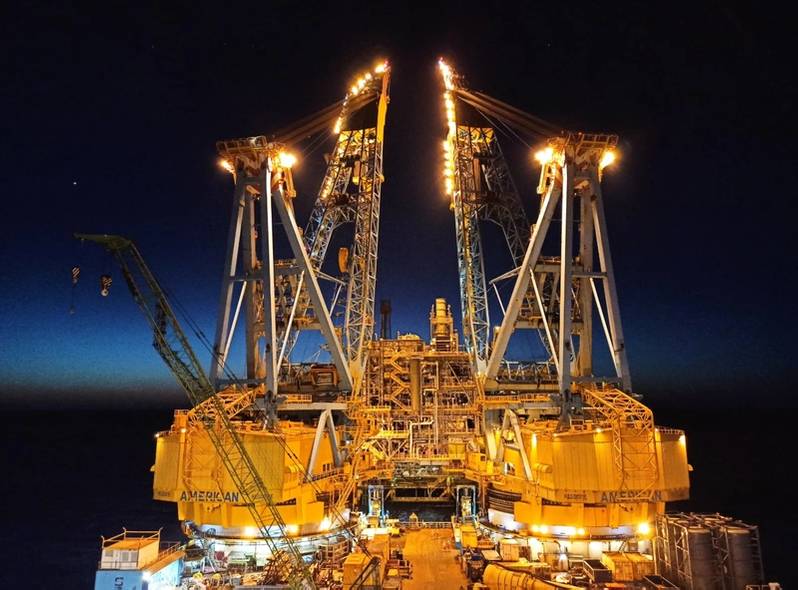
en.Wedoany.com Reported - Saipem, using its heavy-lift vessel Saipem 7000, has completed the lifting and installation of a gas recovery module for the Bouri Gas Utilization Project (BGUP) offshore Libya. Weighing over 5,200 tons, the module measures approximately 45 meters by 31 meters and stands about 45 meters tall. Built over a period of roughly two years, it integrates a gas treatment system and has now been installed on the existing offshore platform at the Bouri field as part of an upgrade to the field's infrastructure.
The module was constructed by Rosetti Marino on behalf of Saipem at its shipyard in Marina di Ravenna and was transported to the Bouri field, located approximately 170 kilometers off the Libyan coast, in early May. Saipem stated that this lifting operation was a key milestone in project execution, demonstrating its capabilities in heavy lifting and offshore installation.
Following the lift, Rosetti Marino will continue to be responsible for subsequent offshore activities, including integrating the module into the existing DP4 platform, as well as connection and commissioning work involving communication, safety, and control systems. Additionally, the engineering team plans to pre-commission the subsea pipelines (approximately 28 kilometers long) connecting the DP3, DP4, and Sabratha platforms, which are used to transport the recovered gas to the Mellitah processing complex.
The Bouri Gas Utilization Project is developed by Mellitah Oil and Gas (a joint venture between Eni and the Libyan National Oil Corporation) and aims to recover associated gas that is currently being flared, transporting it to the Mellitah complex for domestic use or export. According to project information, reducing flaring is expected to cut emissions by approximately 1.5 million tons of CO2 equivalent annually, while supporting a daily gas production increase of up to about 2 million cubic meters and improving the operational efficiency of existing infrastructure.
This article is compiled by Wedoany. All AI citations must indicate the source as "Wedoany". If there is any infringement or other issues, please notify us promptly, and we will modify or delete it accordingly. Email: news@wedoany.com