en.Wedoany.com Reported - Korea Electric Power Corporation (KEPCO) recently signed a contract with Saudi Aramco for the construction and operation of a combined cycle power plant for Phase 2 of the Jafurah Gas Field, valued at approximately $1.4 billion. Under the agreement, KEPCO will build a 331 MW combined cycle power generation facility, scheduled for completion by June 2029, and will supply electricity and steam to Saudi Aramco for the subsequent 17 years.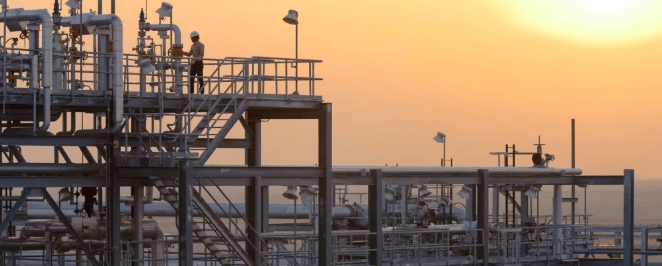
The core value of this contract lies in embedding the overseas power plant investment and operation capabilities of Korean power companies into Saudi Arabia's large-scale natural gas development project. The Jafurah Gas Field is a key unconventional natural gas project being advanced by Saudi Arabia, where electricity and steam supply are critical for gas field development, processing, auxiliary facility operation, and long-term production organization. KEPCO's responsibility in this project is not merely equipment supply; it involves providing construction, operation, and long-term energy supply services centered around the combined cycle power plant. The project has a long duration, involves numerous technical aspects, and is highly integrated with the owner's production system. The 331 MW installed capacity corresponds to the stable power support required for Phase 2 development, while the hourly steam production capacity of approximately 465 tons directly serves industrial process energy needs, giving the plant typical combined heat and power (CHP) characteristics. For Saudi Aramco, deploying stable and efficient combined cycle power facilities in large-scale natural gas projects helps ensure on-site energy supply, improve fuel utilization efficiency, and support the subsequent expansion pace of the Jafurah Gas Field. For KEPCO, this project signifies the company's continued expansion of its presence in the Middle East energy infrastructure market and secures a steady income stream through a 17-year long-term electricity and steam supply contract. Based on project revenue estimates, the contract is expected to generate approximately 2.1 trillion Korean Won, equivalent to about $1.4 billion, over the contract period. This long-term revenue structure is more stable than one-off engineering contracting and better reflects the transformation of power companies from builders to investment operators and comprehensive energy service providers.
The project is scheduled for completion by June 2029. After completion, the plant will supply electricity and steam to Saudi Aramco for 17 years.
From an engineering perspective, combined cycle power plants are well-suited for supporting large-scale oil and gas development projects. The basic logic involves first using a gas turbine to generate electricity, then recovering high-temperature waste heat to produce steam, which further releases energy value through a steam turbine or process steam system. For a natural gas project like Jafurah, combined cycle generation can balance fuel utilization efficiency, operational stability, and industrial steam supply. Although the installed capacity of the Phase 2 project is not an ultra-large power station, it is highly compatible with the gas field development scenario. Key requirements include continuous operation capability, system reliability, maintenance efficiency, and synergy with Aramco's production system. Natural gas development projects typically feature long construction periods, high equipment concentration, complex process systems, and stringent operational safety requirements. Any fluctuation in the power and steam systems could impact the operation of gas processing, compression, separation, transportation, and auxiliary facilities. Therefore, KEPCO needs to complete engineering organization, equipment integration, commissioning, validation, and reliability testing during the construction phase. In the operational phase, it must establish long-term service capabilities centered on power supply stability, steam quality, equipment maintenance, fuel management, and safety standards. The project also creates linkages with the Korean supply chain. KEPCO has signed a construction contract with Doosan Enerbility, suggesting that Korean power, equipment manufacturing, engineering construction, and financial support systems may form a combined overseas venture around the Saudi project. For Korean energy companies, the Middle East market is expanding from traditional oil and gas engineering contracting into areas such as power, renewable energy, combined heat and power, operational services, and long-term contract revenue.
The Jafurah Gas Field Phase 2 combined cycle power project also reflects the practical needs within Saudi Arabia's energy structure adjustment. While continuing to advance oil and gas resource development, Saudi Arabia is also increasing the share of natural gas in its domestic energy system to reduce reliance on direct crude oil combustion for power generation and industrial use. Equipping large-scale natural gas projects with efficient power facilities can ensure resource development while improving energy utilization efficiency and providing more stable infrastructure conditions for industrial expansion. Saudi Aramco's decision to bring in KEPCO for the Phase 2 CHP project indicates that international energy giants increasingly value the long-term service capabilities of external specialized operators in large-scale resource development. In the future, as the Jafurah project progresses, sustained demand will arise for power stations, steam systems, oil and gas processing facilities, pipelines, compression equipment, control systems, electrical equipment, and operation and maintenance services, creating supporting opportunities for related engineering and equipment companies.
For the global energy engineering market, this type of project demonstrates that overseas power cooperation is moving from "build and transfer" to "integrated construction and operation." By binding its 17-year electricity and steam supply arrangement to Saudi Aramco's gas field development cycle, KEPCO gains long-term cash flow and operational experience. Saudi Aramco, in turn, obtains a stable energy system aligned with the gas field's production rhythm. For energy engineering companies from China, South Korea, Japan, and Europe, the Middle East remains a highly competitive region for large-scale oil, gas, and new energy projects. Sole reliance on low-cost contracting capabilities is no longer sufficient to form an advantage; project financing, technology integration, long-term operation, supply chain coordination, and localized performance capabilities will become increasingly important. The signing of the Jafurah Phase 2 combined cycle power project shows that Saudi Arabia's large-scale energy projects continue to release engineering opportunities and highlights the strategic position of power infrastructure in oil and gas development.
This article is compiled by Wedoany. All AI citations must indicate the source as "Wedoany". If there is any infringement or other issues, please notify us promptly, and we will modify or delete it accordingly. Email: news@wedoany.com