en.Wedoany.com Reported - Emirates has launched a new business class product called S-Lounge on its Airbus A350-900 fleet. Featuring a 1-2-1 layout, fully flat seats, and the latest generation entertainment system, and designed in collaboration with Mercedes-Benz, this represents the airline's most significant business class upgrade in years.
Emirates has operated the Boeing 777 fleet for decades, with the business class cabin largely maintaining a 2-3-2 layout, lagging behind competitors in terms of privacy, direct aisle access, and cabin technology. Most of the 777's business class cabins use this configuration, where passengers in middle and window seats cannot directly access the aisle, and seats are mostly recliner-style rather than fully flat.
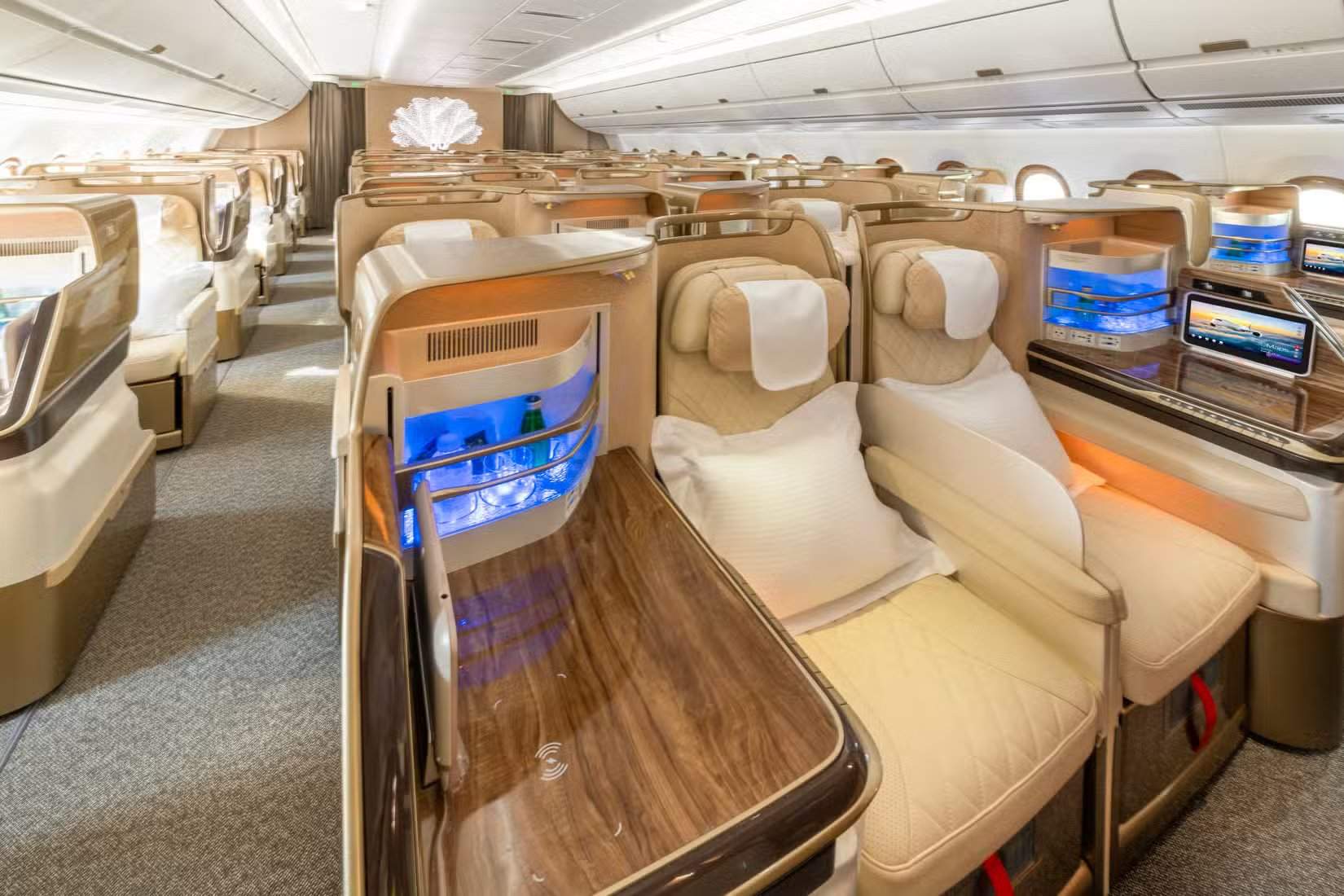
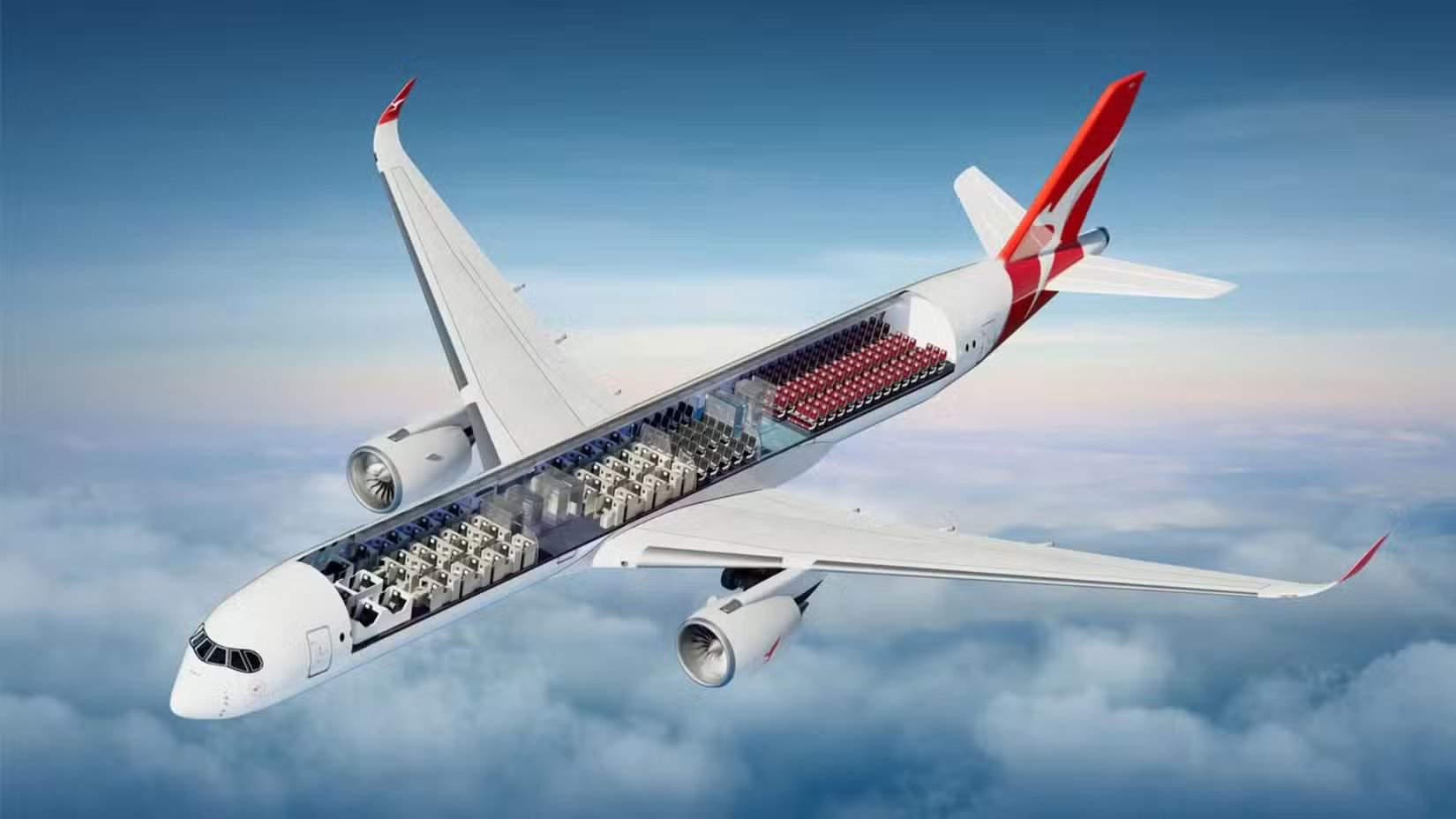
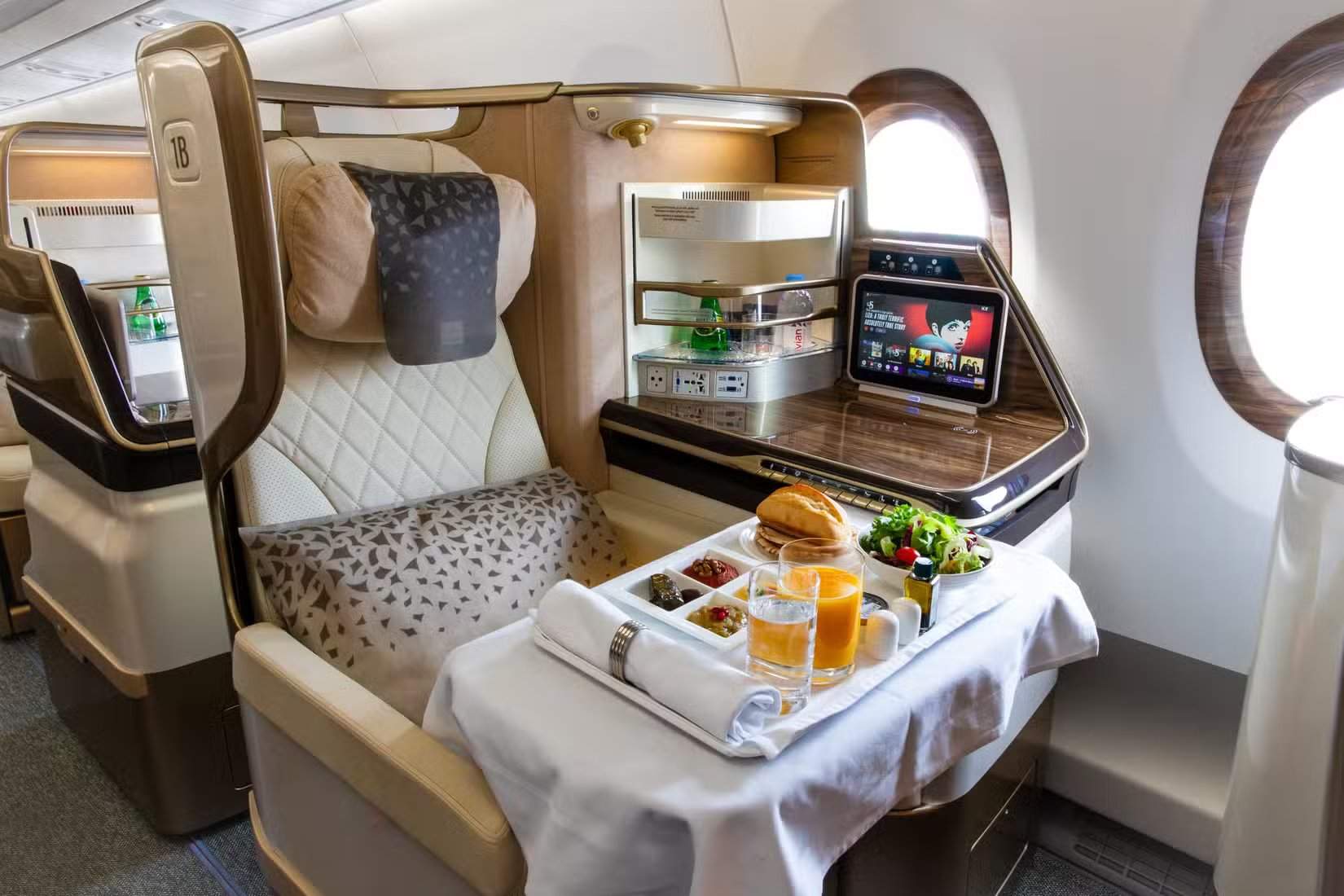
The A350-900 business class cabin features 32 seats, branded as S-Lounge, with a 1-2-1 layout ensuring direct aisle access for every passenger. The design language draws inspiration from the Mercedes-Benz S-Class, with soft cream leather surfaces, wood trim, and silver metal accents throughout the cabin. The seats are 21 inches (53 cm) wide with a pitch of 44 inches (111 cm) and convert into fully flat beds. Each seat is equipped with a 20-inch (50 cm) 4K high-definition entertainment screen, supports Bluetooth audio pairing, allowing passengers to connect their headphones wirelessly. A cocktail table at each seat incorporates a wireless charging pad, along with USB-C and USB-A ports for wired charging. The overall technology configuration is a generation ahead of Emirates' existing widebody fleet, with most 777 entertainment hardware now outdated in terms of screen resolution and connectivity standards.
The cabin's finishing standards align with Emirates' overall brand positioning, but the seats themselves are open suites without sliding privacy doors. The seat shell provides separation from adjacent passengers and the aisle, but the level of enclosure is lower than the latest business class products from several competing airlines. Emirates has not indicated plans to equip future A350 deliveries with a door-equipped version, suggesting that the delivered S-Lounge is the intended final product.
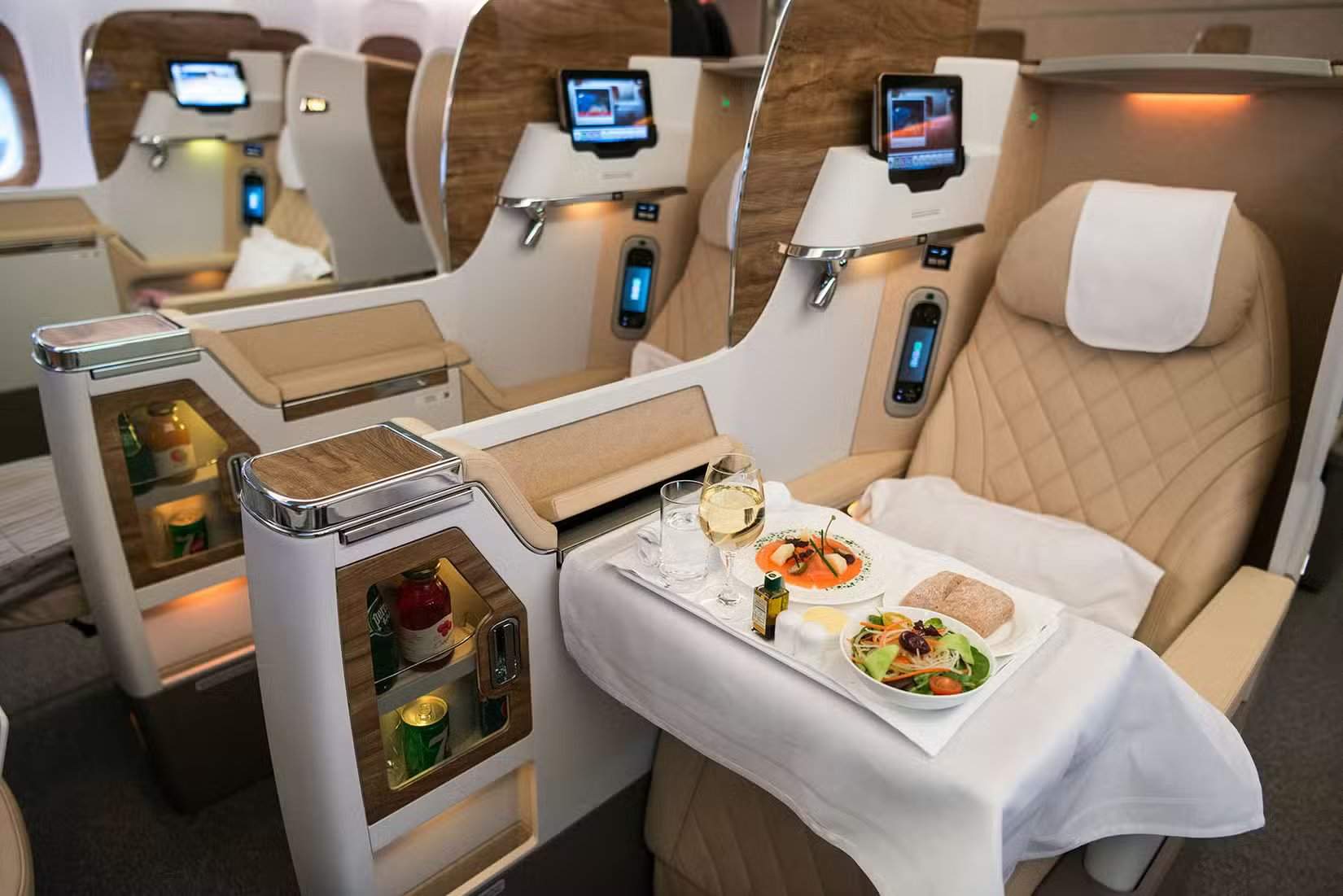
Emirates introduced the "Game Changer" first class suites on the 777-300ER in 2017, but the business class on the same aircraft did not receive an equivalent redesign. As a result, a small number of 777s in the fleet feature cutting-edge first class products, while the business class has failed to keep pace with competitors. Qatar Airways launched QSuites with closing doors in 2017, Singapore Airlines introduced its latest regional business class on the 787-10, and Cathay Pacific unveiled Aria suites on the A350, while Emirates' 777 business class remained largely unchanged during this period.
The 2-3-2 layout is the biggest difference between the 777 and A350 cabins. On long-haul overnight sectors, sitting in a three-seat middle section without aisle access is a fundamentally different experience from the 1-2-1 layout offered by the A350, which is the primary reason S-Lounge represents genuine progress. The technology gap is the second most significant difference; the A350's 20-inch (50 cm) 4K screen with Bluetooth pairing and wireless charging meets current expectations for a premium cabin, while the 777 fleet uses older entertainment hardware and lacks wireless charging.
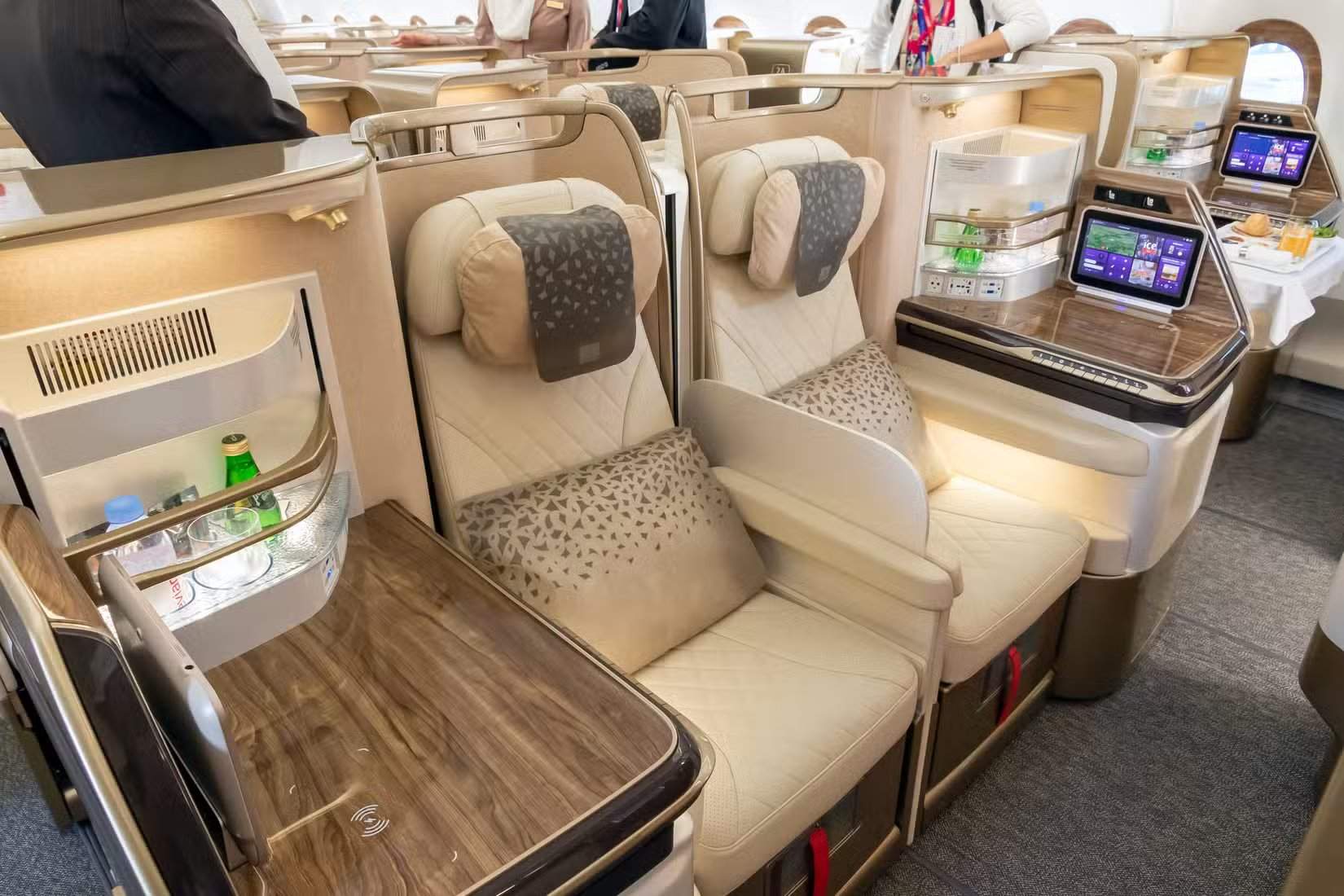
Improvements in seat dimensions are relatively modest; the width and pitch of the A350 are competitive within the 1-2-1 business class layout, but the raw measurements are not significantly larger than those of the 777. The difference in available personal space is more attributable to the layout change than to the seat dimensions themselves. Since the launch of S-Lounge, the most consistent criticism has been the lack of sliding privacy doors, which places S-Lounge behind products like Qatar Airways QSuites, Delta One suites, or the latest cabin offerings from Cathay Pacific and Japan Airlines.
Emirates has not publicly detailed the reason for the absence of doors. The airline may believe that on the routes the A350 is intended to serve, flight times are insufficient for privacy doors to be a decisive factor in booking decisions. If the A350 remains on medium- to short-haul routes, the open suite design is reasonable; if deployed on longer sectors, the lack of doors will be harder to justify.
Emirates has built its route network around the Airbus A380 and Boeing 777, the two largest widebody aircraft in commercial aviation. The A350-900 addresses the issue of excessive capacity, featuring 32 business class seats, 21 premium economy seats, and 259 economy seats, totaling 312 seats—significantly smaller than the 777-300ER and roughly half the size of the A380. This allows it to serve routes such as Edinburgh, Bahrain, Kuwait, Mumbai, and Ahmedabad, where premium demand exists but is insufficient to fill a 400-seat widebody. The order of 65 aircraft provides Emirates with enough A350 capacity to build a meaningful secondary route network.
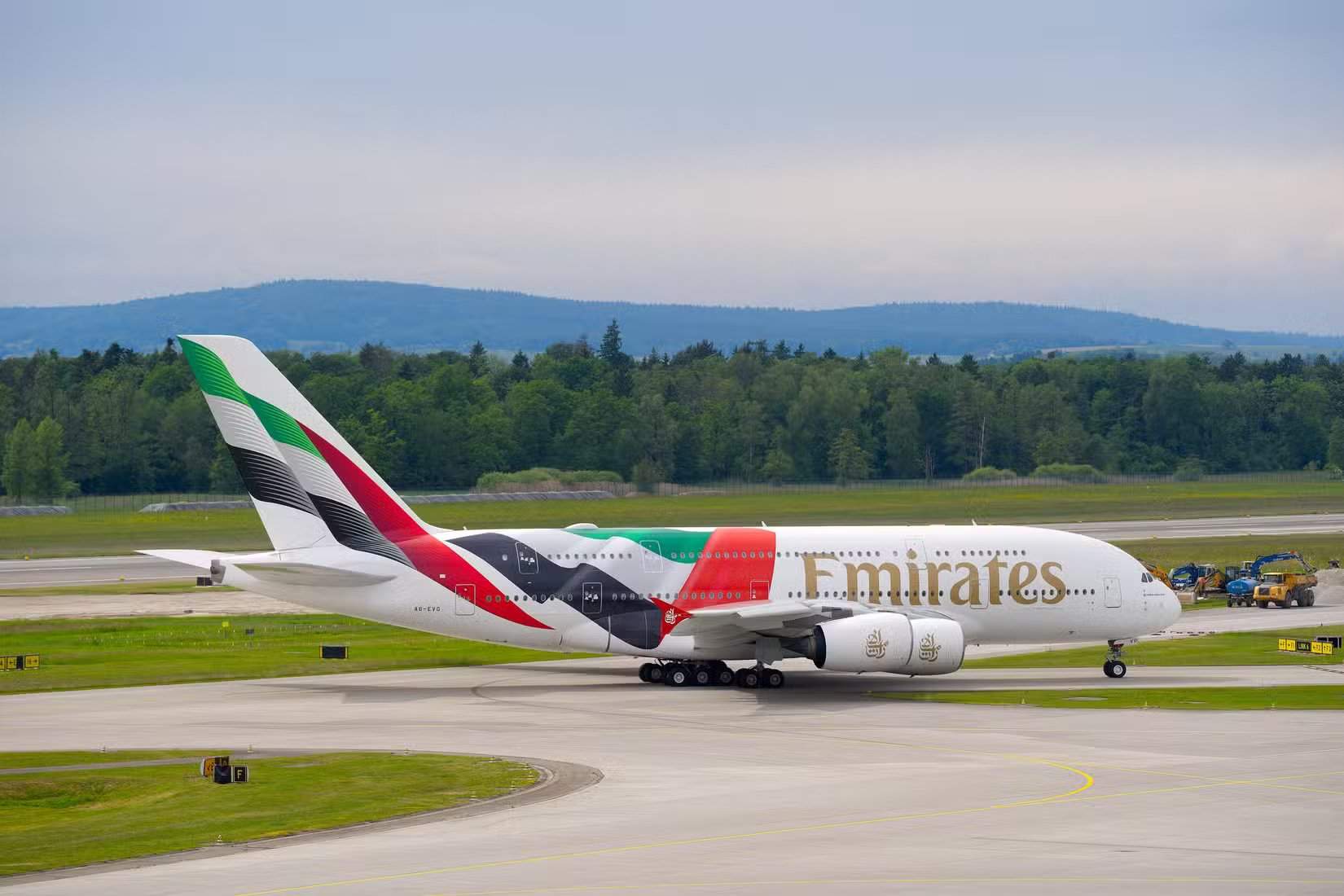
Before the A350, passengers on Emirates' less popular routes often experienced products inconsistent with its flagship A380 service. The A350 standardizes the experience across a wider network, allowing passengers on flights from Dubai to Edinburgh to enjoy the same generation of business class seats and technology that the airline now promotes as its current standard. For Emirates, the A350 is less about replacing existing aircraft and more about opening routes that were previously uneconomical, while ensuring the product on these routes does not fall below the brand's core standards.
This article is compiled by Wedoany. All AI citations must indicate the source as "Wedoany". If there is any infringement or other issues, please notify us promptly, and we will modify or delete it accordingly. Email: news@wedoany.com