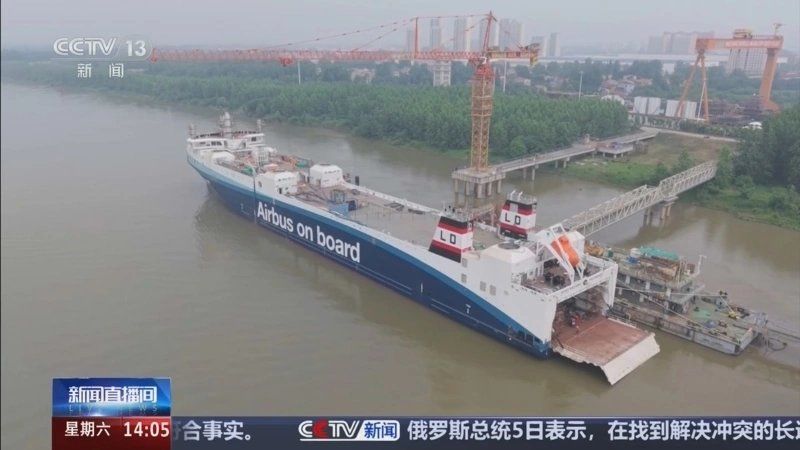
en.Wedoany.com Reported - A roll-on/roll-off (ro-ro) ship designed for transporting aircraft components, built by China State Shipbuilding Corporation's Wuchang Shipyard, was launched in Wuhan. This vessel is the first of a new generation of low-emission ro-ro ships for European aircraft manufacturer Airbus, named "Spirit of Toulouse" after the French city of Toulouse. The other two ships in the same series are named "Spirit of Mobile" and "Spirit of Mirabel," both currently under construction.
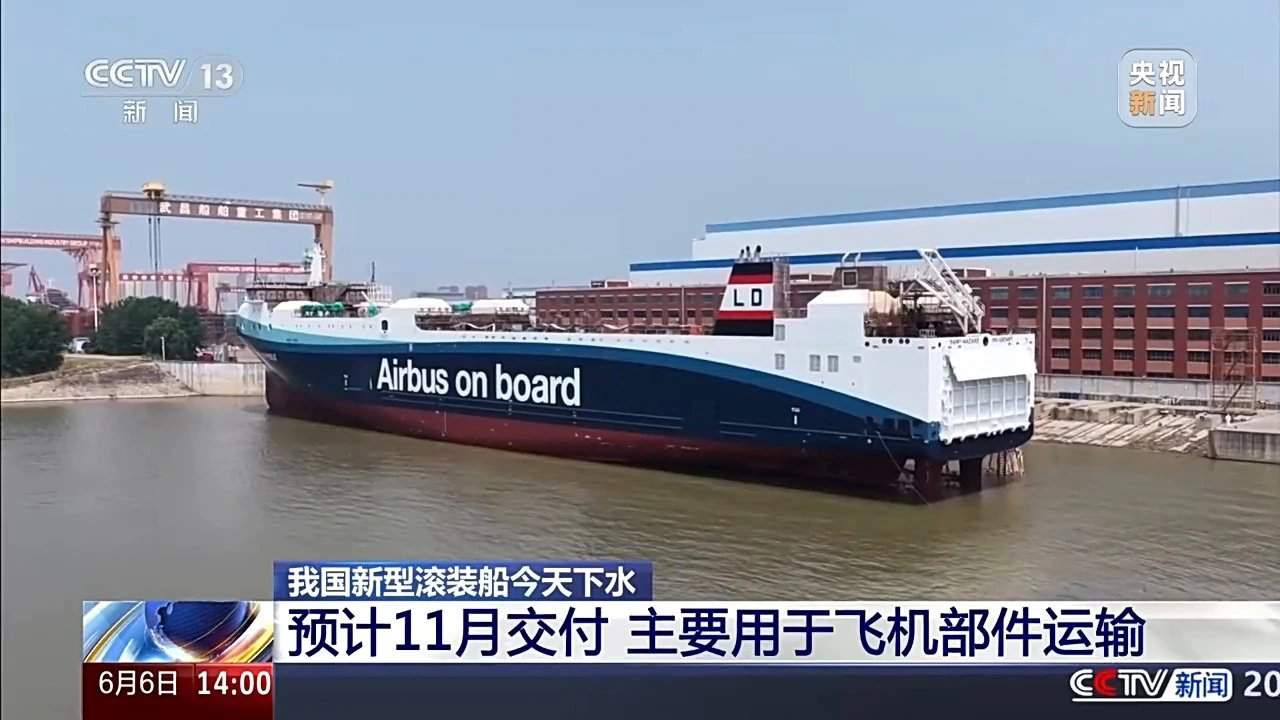
Upon delivery, the ship will primarily serve the Airbus aviation supply chain, transporting fuselages, wings, tail sections, and other aircraft components across the Atlantic between the production base in Saint-Nazaire, France, and the single-aisle aircraft final assembly line in Mobile, Alabama, USA. The new vessel has an overall length of approximately 169 meters, a width of 23.32 meters, a design draft of about 5.7 meters, and a service speed of 14 knots. The cargo hold features a straight-through design with an area exceeding 2,600 square meters and a headroom of 8 meters, providing a total cargo volume of over 20,000 cubic meters. To meet the special transport requirements of aircraft components, the stern is equipped with a full set of ro-ro systems, including a heavy-duty stern ramp and a large cargo elevator, enabling fast and safe loading and unloading of large-sized parts. The new ship can carry six single-aisle aircraft component sets at once, including wings, fuselages, engine pylons, horizontal and vertical tail sections—nearly double the capacity of older ro-ro ships—while also accommodating approximately 70 standard containers. The cargo hold is fitted with an environmental control system that can regulate temperature, humidity, and salinity in real time.
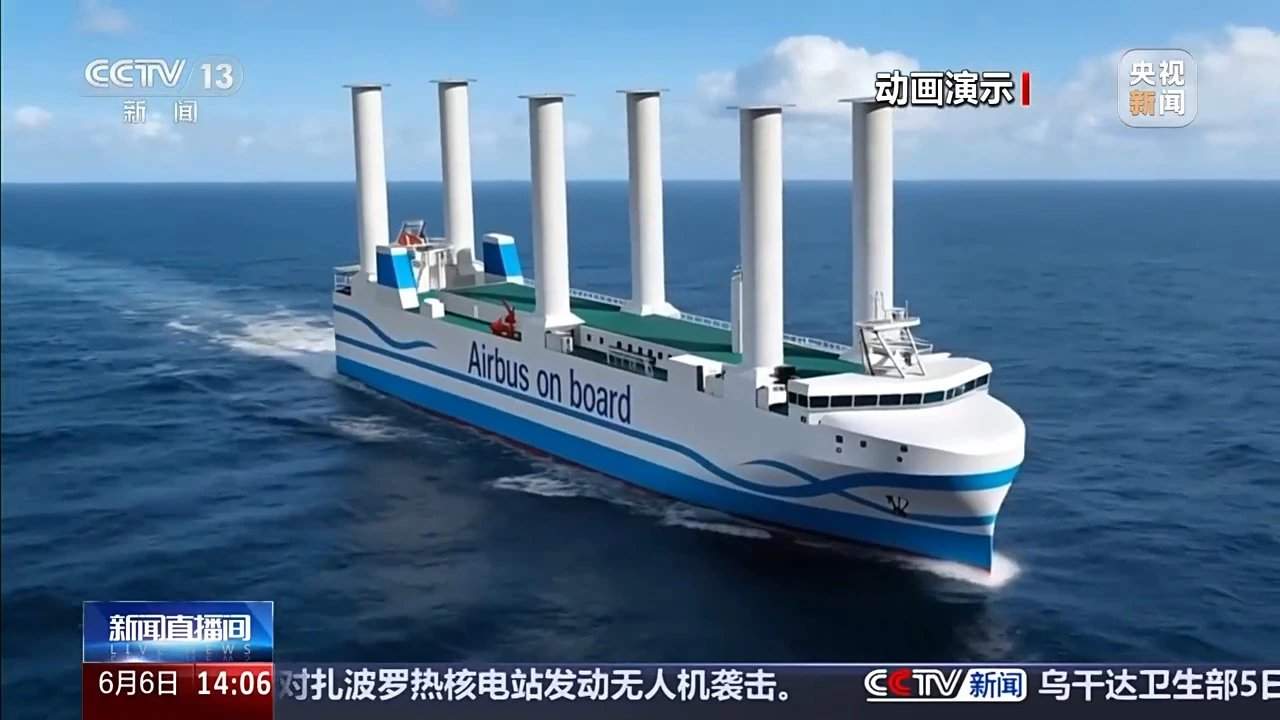
In terms of green propulsion, the ship is equipped with six rotor sails installed at the bow, stern, and midship, making it the ro-ro ship with the most wind-assisted propulsion systems globally. These sails, each 6 meters in diameter and 35 meters high, contain rotors made of aviation-grade lightweight materials. Operating on the Magnus effect, they are driven by electric motors to spin at high speed, generating thrust. Under ideal sea conditions, they can reduce main engine power consumption by 15% to 20%, theoretically cutting carbon emissions by about 1,000 tons annually. The ship also adopts methanol and diesel dual-fuel technology, featuring two methanol dual-fuel main engines and auxiliary engines. Methanol combustion achieves zero sulfur emissions, reduces nitrogen oxide emissions by over 80% compared to traditional fuels, and cuts carbon emissions by approximately 25%. The hybrid system, comprising six rotor sails and methanol dual-fuel main engines, can reduce overall carbon emissions by more than 17% compared to previous-generation ships. Additionally, the vessel is equipped with route optimization software that dynamically selects the most favorable wind-utilizing routes based on real-time wind fields and sea conditions, enhanced by an AI-driven control system for improved responsiveness.
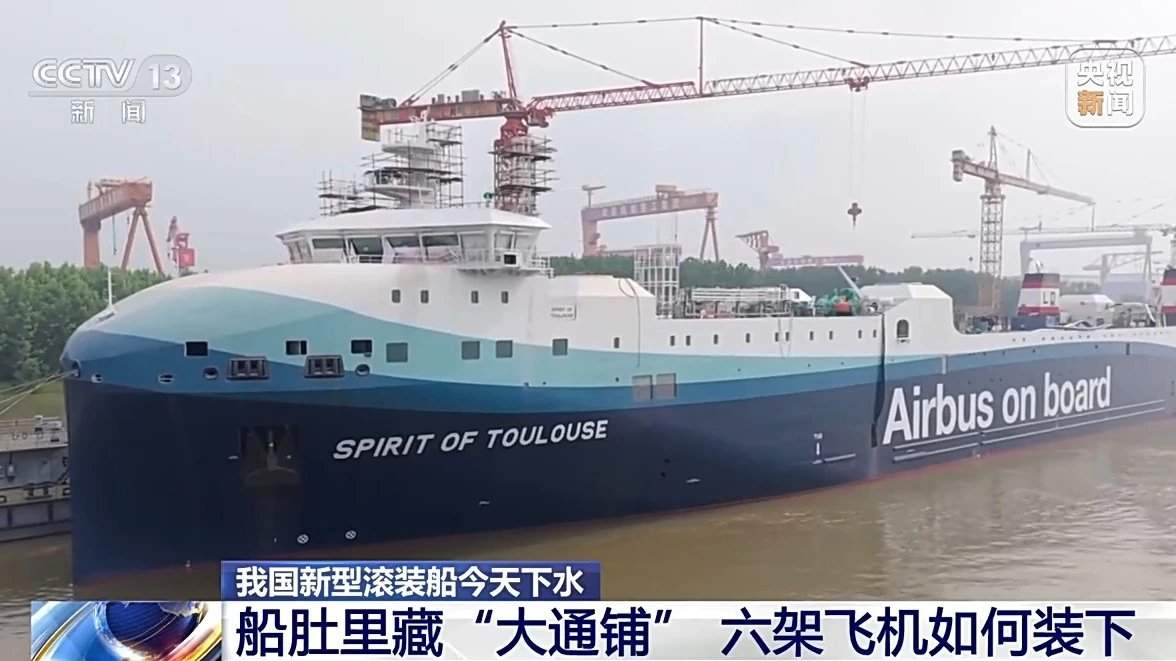
The ship was launched using an inclined slipway method, which requires less space compared to floating launch methods. After launching, the vessel will undergo functional tests for equipment such as engines, propellers, and electrical systems at the dock, with formal delivery scheduled for November 2026. Currently, there are three orders for this series of ships. As the global shipping industry increasingly emphasizes energy conservation and emission reduction, orders for such customized, environmentally friendly vessels are expected to grow in the future.
This article is compiled by Wedoany. All AI citations must indicate the source as "Wedoany". If there is any infringement or other issues, please notify us promptly, and we will modify or delete it accordingly. Email: news@wedoany.com