en.Wedoany.com Reported - The Phase IV project of the Huainan Luohe Power Plant, undertaken by China Energy Engineering Group Building Engineering Co., Ltd., is a million-kilowatt-level large-scale energy project. During the peak construction period, the site features dense personnel, frequent cross-disciplinary operations, and concentrated high-altitude hoisting. As the project fully enters the installation and commissioning phase, work surfaces are rapidly expanding, and the complexity of construction organization continues to increase, imposing higher requirements for real-time on-site supervision, risk warning, resource coordination, and whole-process penetrating management. Guided by the principle of lean management and centered on the concept of "smart construction site + penetrating supervision," the project department has systematically built a digital governance system covering personnel, safety, progress, environment, production organization, and comprehensive business management. This promotes the transformation of project management from experience-driven to data-driven, continuously enhancing the modernization level of project governance.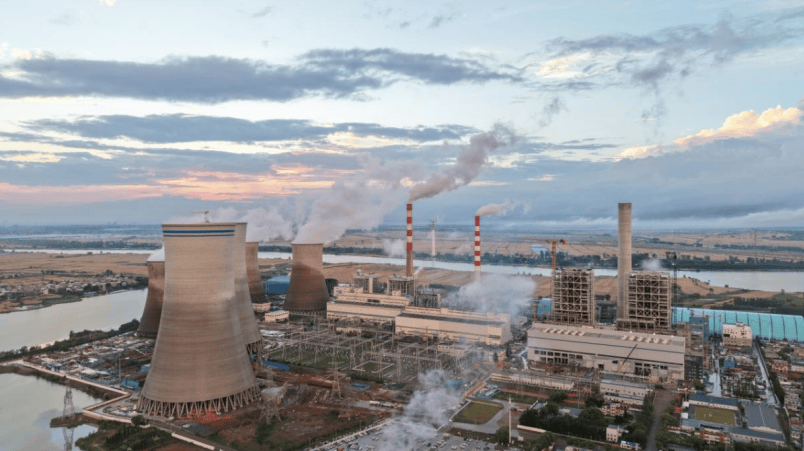
First, building a smart construction site platform to enhance project governance penetration capability. Leveraging technologies such as the Internet of Things (IoT), big data, and AI recognition, the project has established a comprehensive smart construction site management and control platform. This platform enables unified access and centralized display of information including personnel real-name registration, safety monitoring, construction progress, and environmental monitoring, forming a digital supervision system characterized by "visible site, traceable data, and controllable process." Through the platform, management personnel can monitor the construction status, personnel distribution, and production dynamics of key areas in real time, effectively improving on-site management response efficiency and resource coordination capabilities. Concurrently, the project continuously strengthens the on-site video surveillance system, achieving full video coverage of key areas such as the boiler, main powerhouse, and cooling tower. This shifts on-site construction management from traditional inspections to remote visual supervision, providing strong support for the whole-process penetrating management of the project.
Second, strengthening intelligent early warning applications to build a solid intrinsic safety defense line. Focusing on the goal of lean safety management, the project has deployed an AI intelligent recognition and video analysis system. This system conducts real-time monitoring and automatic early warning for behaviors such as not wearing safety helmets, illegal operations, smoke and fire detection, and area intrusion, transforming safety management from "post-incident rectification" to "pre-incident prevention." Meanwhile, the project integrates access control, facial recognition, real-name registration, and attendance systems to achieve dynamic management and trajectory tracing of on-site personnel, improving the standardization level of labor management. Relying on the smart platform, safety management personnel can conduct remote on-site inspections and risk control, further enhancing the efficiency of hazard identification and the intrinsic safety management level of the site.
Third, deepening digital dispatching to improve construction organization efficiency. Given the characteristics of numerous cross-operations and high difficulty in construction organization during the installation phase, the project has introduced drone inspection and 720-degree panoramic imaging technology, establishing a digital on-site inspection mechanism. This enables dynamic inspections of key areas such as boiler installation, cooling tower construction, and main powerhouse work surfaces. During production dispatching, on-site aerial images and real-time footage are directly retrieved to analyze construction status, accurately identify constraints and resource bottlenecks, and improve the timeliness and accuracy of construction organization decisions. Through digital dispatching and dynamic correction, the on-site organization efficiency and process interface capability are effectively enhanced.
Fourth, promoting in-depth BIM application to strengthen pre-construction planning. Focusing on key areas such as the chimney, cooling tower, boiler steel structure, and equipment installation, the project deepens the whole-process application of BIM technology. Through 3D modeling, construction simulation, and spatial clash detection, hoisting paths, construction techniques, and site layout are optimized in advance, achieving pre-construction planning and refined process management. By linking the BIM model with on-site construction data, the project effectively reduces spatial clashes and rework, improves the accuracy of construction plan preparation and on-site execution efficiency, providing reliable technical support for construction organization in complex areas.
Fifth, promoting comprehensive business collaboration to enhance office governance efficiency. In terms of comprehensive business management, the project simultaneously advances office digitalization and business collaborative management. A shared document system has been established to enable cloud-based sharing of incoming/outgoing documents, drawings, ledgers, meeting minutes, and thematic materials, further improving cross-departmental collaboration efficiency and data retrieval efficiency. Concurrently, relying on online approvals, electronic ledgers, and process-based management, the project standardizes comprehensive business processes such as seal usage, meetings, archives, and official vehicle management, achieving full-process traceability, accountability, and supervision of comprehensive office operations, further enhancing the standardization and lean level of project governance.
Through the integrated practice of "smart construction site + digital governance," the project's on-site safety, quality, progress, and comprehensive business management levels have been continuously improved. The AI intelligent recognition system effectively enhances the efficiency of identifying on-site hazards; drone inspections and digital dispatching significantly improve the response speed of production organization; BIM technology application effectively reduces rework risks and optimizes construction organization; and the shared document and online collaboration mechanisms greatly shorten document circulation cycles and data retrieval times.
The establishment of the project's digital governance system has further strengthened the whole-process penetrating supervision capability of the project, achieving coordinated control over safety, quality, progress, resources, and comprehensive business. This provides practical support for the lean management of large-scale energy projects and accumulates valuable experience for promoting the transformation of traditional construction management towards digitalization, intelligence, and lean management. (Yan Kailin, China Energy Engineering Group Building Engineering Co., Ltd.)
This article is compiled by Wedoany. All AI citations must indicate the source as "Wedoany". If there is any infringement or other issues, please notify us promptly, and we will modify or delete it accordingly. Email: news@wedoany.com