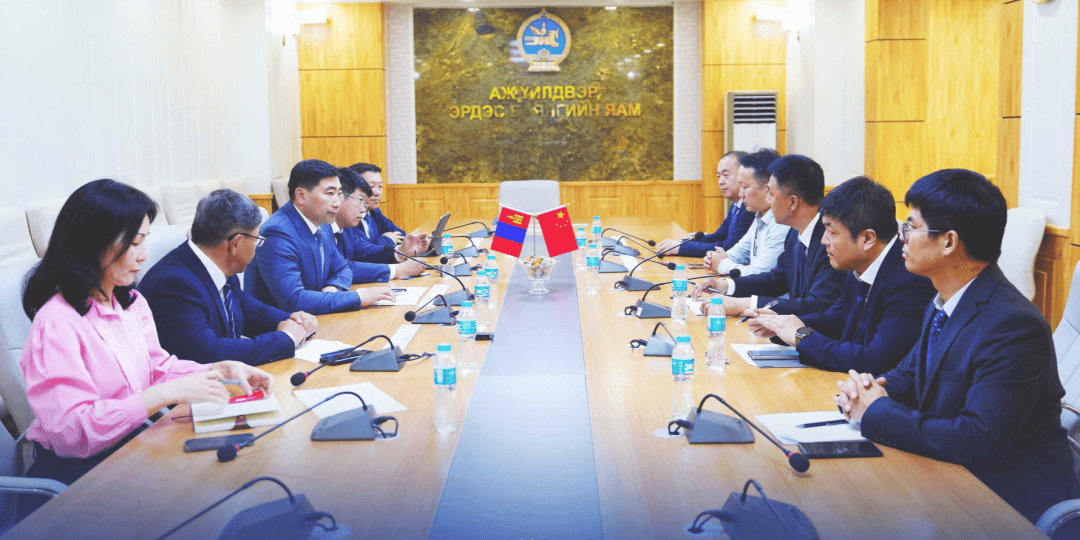
en.Wedoany.com Reported - The Coordinadora de Trabajadores de la Minería (CTMIN) held its first formal meeting with representatives of the new government at the Ministry of Labor to advance a strategic labor agenda for the mining sector. The ministerial delegation was led by Chief of Staff Pablo Bobic, accompanied by lawyers Carolina Infante and Joaquín Carmona from the Deputy Secretariat.
During the meeting, CTMIN presented the work carried out since December 2022 in the area of tripartite social dialogue, particularly the progress of the Mining Committee under the High-Level Labor Commission. This committee, with participation from government, employer, and worker representatives, has already addressed key issues such as occupational health and safety, employment, subcontracting, women's participation in mining operations, and training to meet new production challenges.
The National Mining Safety and Health Policy (PNSSM) was one of the core topics of the meeting. This policy, developed through a tripartite process, is currently in the administrative phase. CTMIN emphasized the need for its immediate publication and implementation, viewing it as a key tool to strengthen coordination among regulatory bodies, streamline institutional responsibilities, and improve prevention and protection conditions at mining sites. Bobic stated that the Ministry of Labor is willing to publish the PNSSM as soon as possible, with no intention of reviewing its content again, and aims to advance pending processes, noting that effective coordination among different regulatory agencies is one of the most relevant aspects of the policy.
CTMIN also expressed concerns about the state of subcontracting in mining, arguing for the need to restart the framework agreement to bridge the gap between contractor workers and direct employees. The organization stated that challenges such as employment, an aging workforce, labor reconversion, automation, digitalization, artificial intelligence, and the development of strategic minerals require joint efforts from the public and private sectors. CTMIN spokesperson and President of the Chilean Mining Federation, Marco García, indicated that the meeting conveyed the main concerns of the mining union sector, requesting continued progress on processes related to the Mining Committee, subcontracting, the framework agreement, women's integration, the Karin Law (Ley Karin), and employment stability.
Women's participation in mining was another important topic. CTMIN acknowledged progress in recent years while pointing out persistent issues such as wage gaps, coordination difficulties, barriers to holding positions of responsibility, and challenges in the proper implementation of the Karin Law. The organization stressed the need for specific institutional attention to promote truly inclusive mining operations. The Ministry of Labor expressed willingness to maintain a direct channel of dialogue with industry union organizations, recognizing the strategic importance of Chilean mining and the significance of high-level union organization in large-scale mining. CTMIN emphasized that this openness must translate into institutional continuity, concrete measures, and the effective participation of union organizations. The coordinating body reiterated its commitment to monitoring compliance with labor regulations and defending achievements that ensure decent, safe, and fair working conditions in mining, such as the reduction of the workweek to 40 hours, the Karin Law, and the PNSSM.
This article is compiled by Wedoany. All AI citations must indicate the source as "Wedoany". If there is any infringement or other issues, please notify us promptly, and we will modify or delete it accordingly. Email: news@wedoany.com