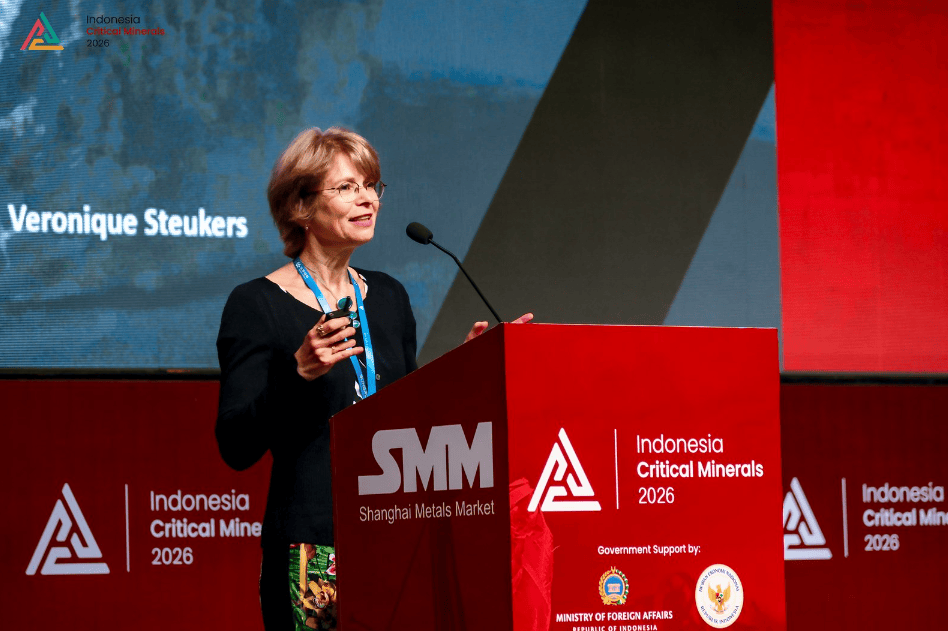
en.Wedoany.com Reported - At the 2026 Indonesia Mining Conference & Critical Metals Forum - Nickel Cobalt Forum, Dr. Veronique Steukers, President of the International Nickel Association, shared the global flow of nickel from mining to end-use applications, highlighting production growth, Indonesia's dominance, consumption in stainless steel and power batteries, and the regional distribution of different nickel products.
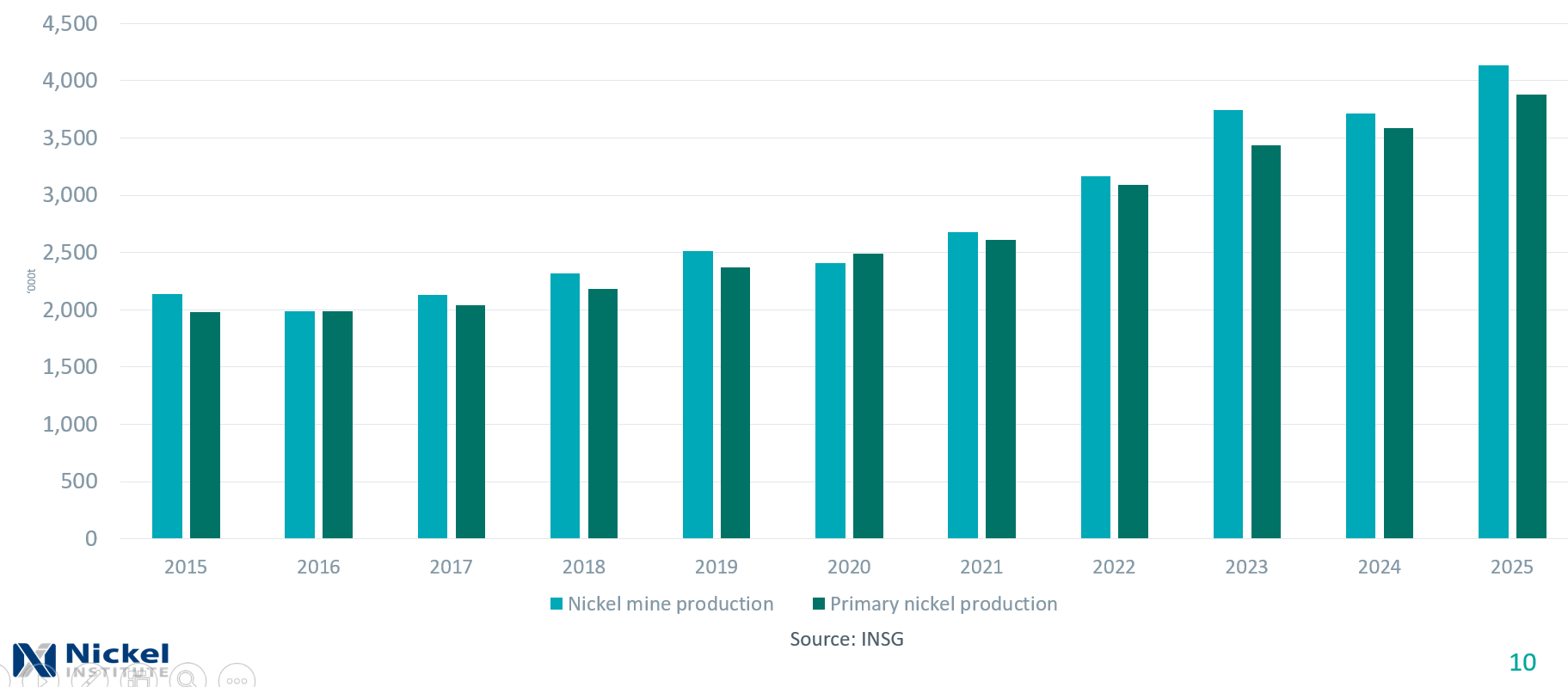
The nickel market flow shows that global nickel production has achieved strong growth over the past decade, with a compound annual growth rate of 8% for mine production and 9% for primary production. In 2025, Indonesia produced approximately 50% of the world's primary nickel, compared to just 6% a decade ago. Meanwhile, the share of primary nickel production from the rest of the world (excluding Indonesia and China) fell from 65% ten years ago to over 20% in 2025. Indonesia and China are the core drivers shaping the global nickel supply chain landscape. In terms of nickel product flow structure, nickel pig iron (NPI) remains the mainstream product, leveraging Indonesia's production capacity advantages. By grade, global nickel raw material supply is split into approximately 58% Class II nickel, less than 30% Class I nickel, and the remaining 13% nickel chemical products.
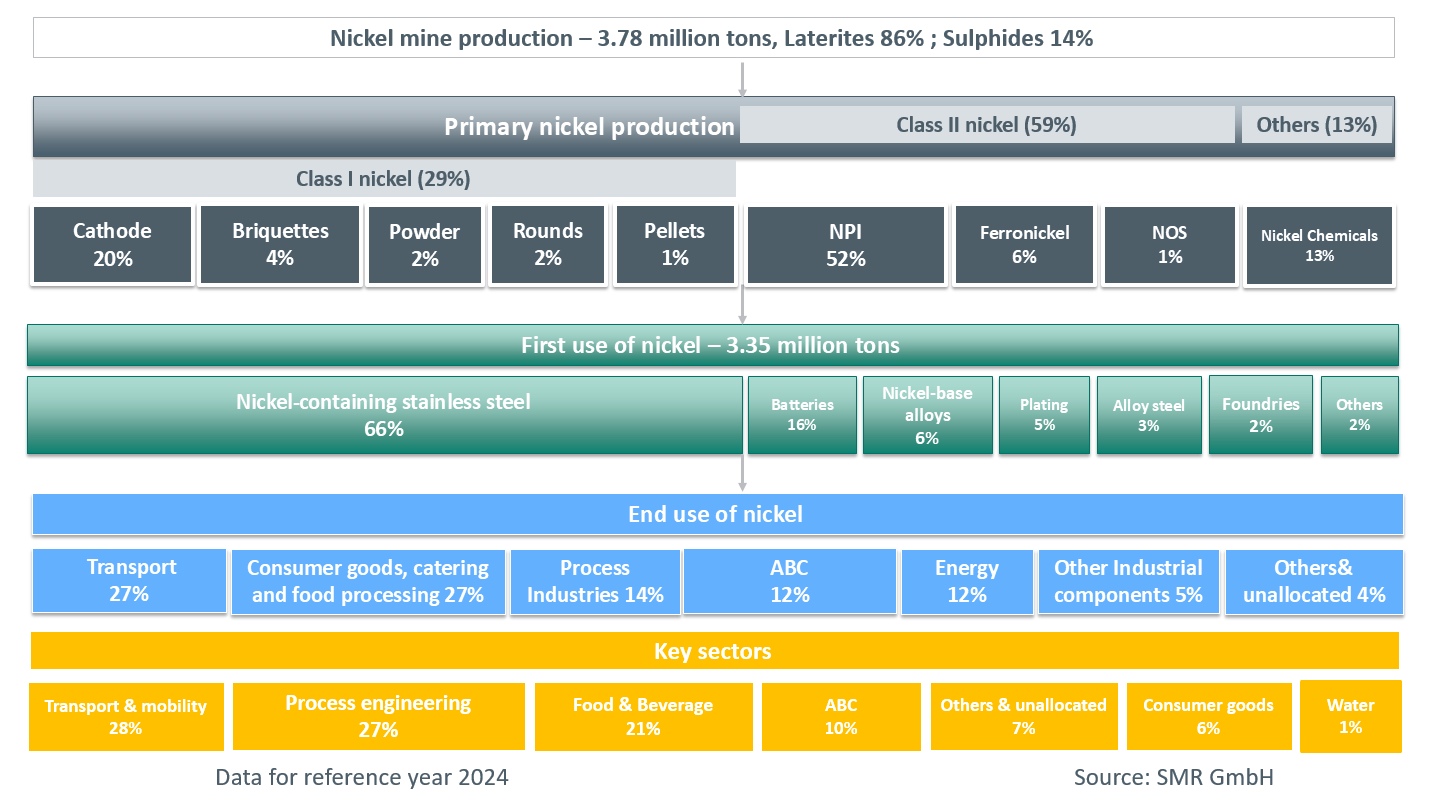
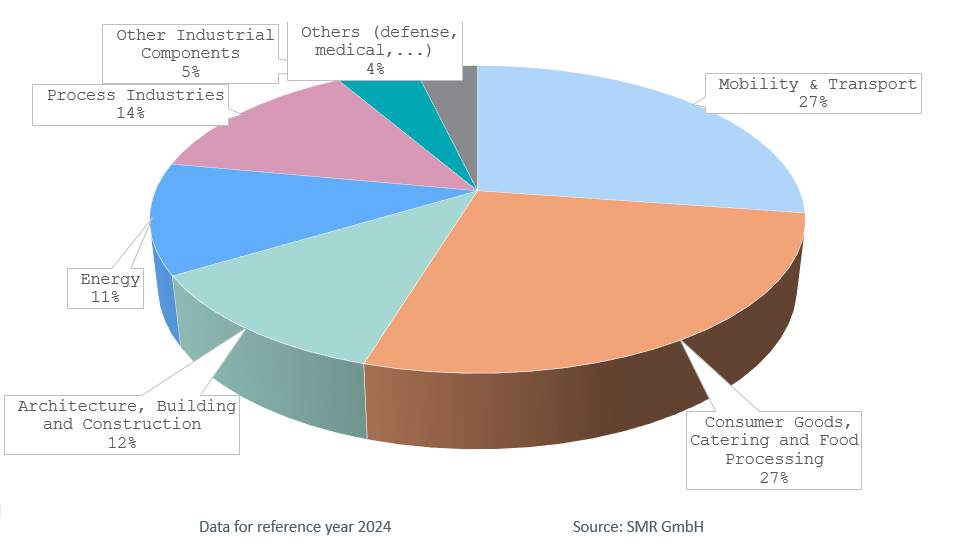
Stainless steel and power batteries are the primary end-use sectors for nickel. Stainless steel is the largest consumer of nickel, followed closely by power batteries, which have been the fastest-growing segment of nickel demand over the past decade. Nickel is widely embedded in various global end-use products, with an extensive application scope that penetrates nearly all industrial sectors.
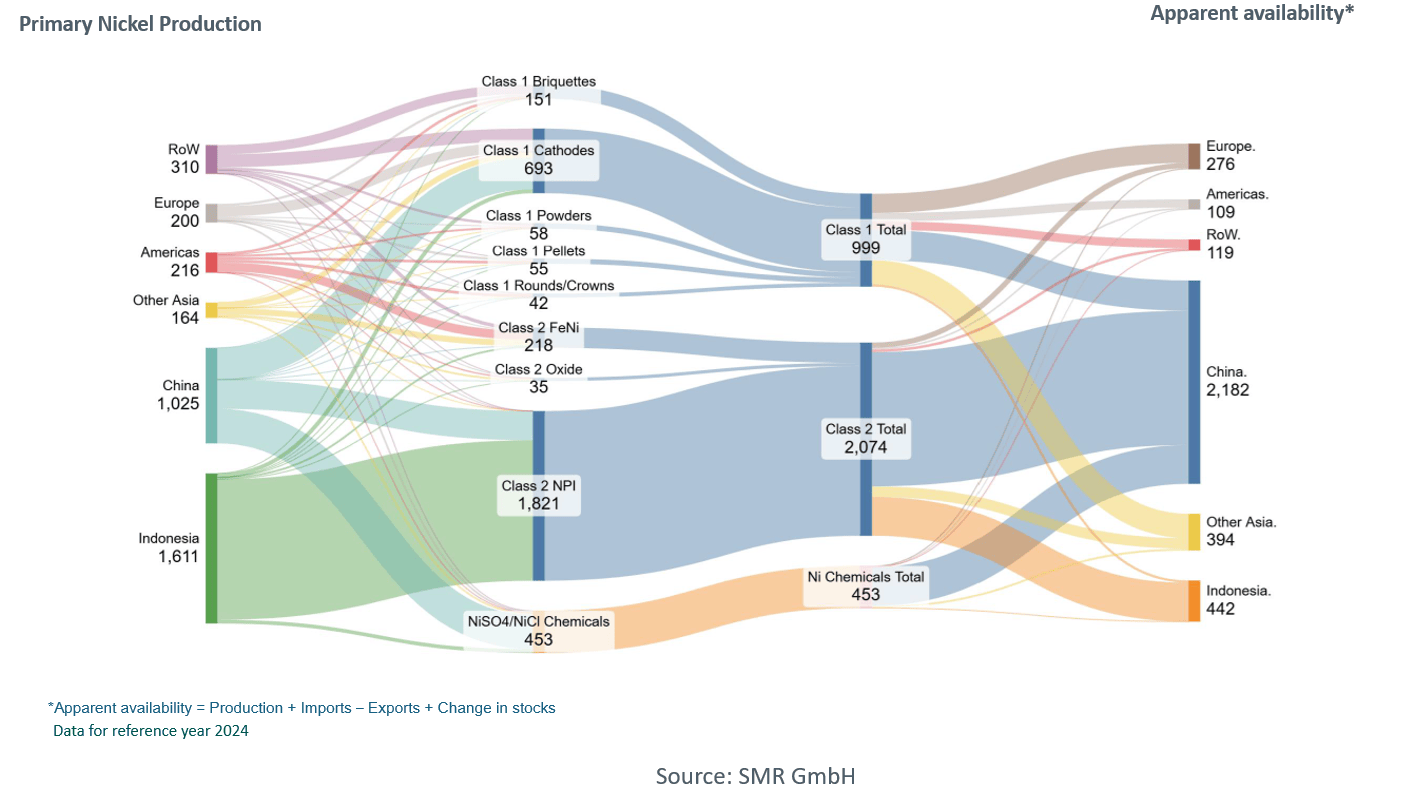
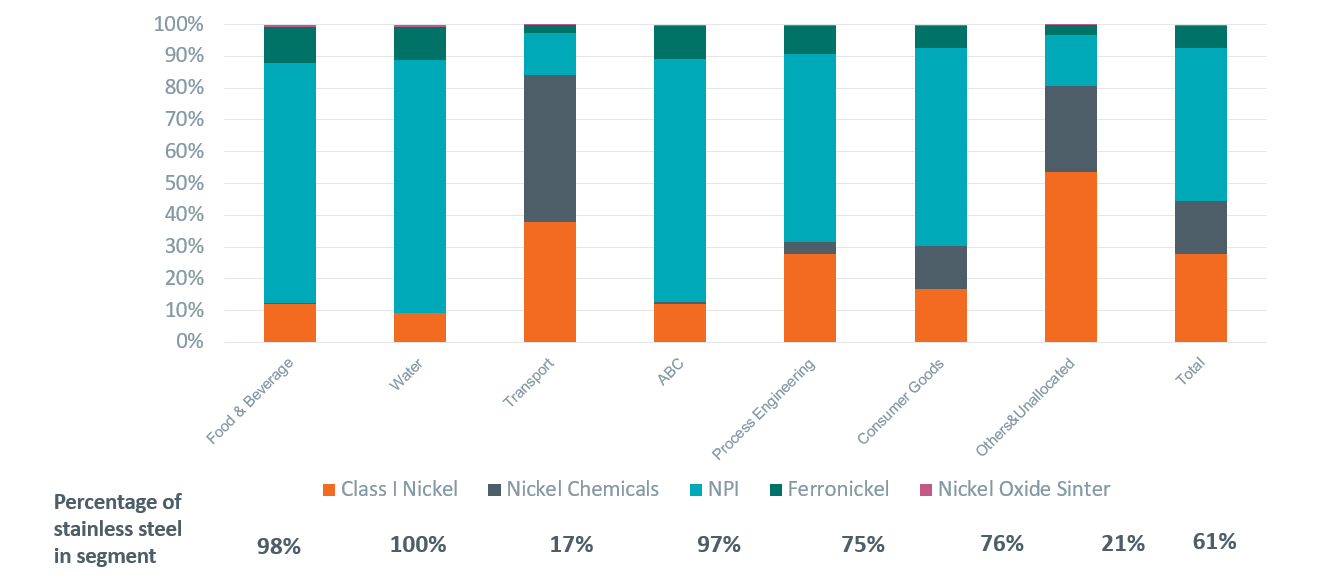
Stainless steel and batteries drive demand for different nickel products. Nickel pig iron has become the primary nickel raw material for global stainless steel production, meeting over 80% of the primary nickel demand for stainless steel. Class I nickel and nickel chemicals are widely used in primary application areas such as nickel alloys, alloy steel, casting, electroplating, and batteries. NPI and FeNi together account for over 90% of global primary nickel usage in stainless steel, while Class I nickel dominates all other primary application areas. Within Class I nickel, cathodes are the main product form, followed by nickel briquettes, which are widely used in nickel alloys, casting, and alloy steel; pellets, rods, and crowns are primarily used in high-performance alloys and electroplating. Nickel chemicals are indispensable as precursor materials in the battery sector and as electroplating solutions.
The distribution of different nickel products in global primary nickel usage shows that Class I nickel is the mainstream material in Europe and the Americas. Due to tightening supply of recycled nickel raw materials and reduced availability of NPI, European stainless steel companies have limited the share of NPI procurement to 6% of total primary nickel consumption. The Americas are also the only region globally that does not use NPI as a raw material in primary nickel production. Various nickel materials are processed and flow into downstream end-use manufacturing, with a large number of finished products ultimately sold to mature markets such as Europe and the Americas, which have stringent environmental and access standards.
Among these, the food and beverage, water treatment, and construction sectors almost exclusively use nickel-containing stainless steel, making NPI the core nickel raw material in this segment. In the transportation sector, nickel chemicals, driven by the expansion of power battery demand, continue to increase their consumption share in the new energy vehicle supply chain.
In summary, global nickel production is growing rapidly, primarily driven by Indonesia, which now accounts for nearly 50% of global primary nickel output. Stainless steel remains the largest nickel consumption sector, while batteries are the fastest-growing demand segment. Nickel products are widely used across numerous industries, including transportation, building and construction, food processing, energy, and consumer goods. NPI-based stainless steel products and nickel batteries are increasingly entering European and American markets through imports. The nickel market operates through a regulated, standards-driven ecosystem. Through its work in standard setting, market access, and downstream recognition, the Nickel Institute plays a significant role in shaping the future development of its members and the global nickel value chain.
This article is compiled by Wedoany. All AI citations must indicate the source as "Wedoany". If there is any infringement or other issues, please notify us promptly, and we will modify or delete it accordingly. Email: news@wedoany.com