en.Wedoany.com Reported - Oman's OQ Exploration and Production (OQEP) has signed an agreement with Libya to seek oil and gas opportunities, aiming to expand its operations beyond Oman and reduce its reliance on the Strait of Hormuz export route.
Ashraf Al Maamari, Chairman of the state-owned OQEP, told AGBI that the company has explored oil fields in Libya and will decide on production and investment matters before the third quarter of this year. Maamari stated that the company has clear screening criteria, which are currently being implemented in Libya.
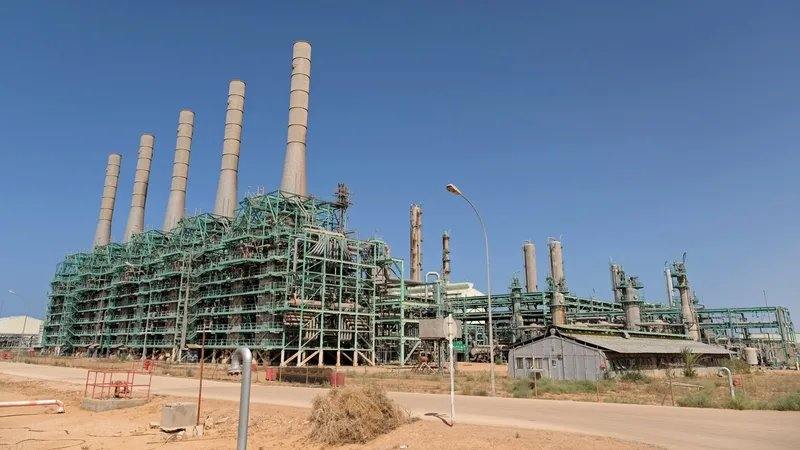
As of 2020, Libya's proven oil reserves stood at 48 billion barrels, the largest in Africa, accounting for nearly 3% of the global total. The country's crude oil production peaked at 3.4 million barrels per day (bpd) in 1970, averaged 1.6 million bpd between 2000 and 2010, and plummeted after the 2011 uprising that overthrew long-time leader Muammar Gaddafi.
Civil war has resulted in two governments in Libya: the United Nations-recognized Government of National Unity (GNU) in Tripoli, and the House of Representatives in Benghazi. Despite often tense relations, both governments have found common ground in maximizing energy revenues. According to OPEC data, production has averaged 1.3 million bpd since early 2025, after hitting a low of 423,000 bpd in 2020. Libya's long-term goal is to increase production to at least 2 million bpd.
The standoff in the Strait of Hormuz could help achieve this goal. Roughly one-fifth of the world's oil and liquefied natural gas supply typically passes through the strait. Christof Rühl, a global advisor at Crystol Energy, stated that before the Iran war, Libya struggled to sell exploration and production contracts due to a global oversupply of crude oil and limited investment interest. He believes the longer it takes for Gulf oil production to return to normal, the more Libya will benefit.
Several international oil companies have resumed operations in Libya after a long hiatus, including Italy's Eni, BP, France's TotalEnergies, Spain's Repsol, and Austria's OMV. For example, TotalEnergies resumed production at Libya's Mabruk oil field in March, which had been shut down since 2015.

In February, U.S. oil giant Chevron was among the companies awarded oil and gas exploration licenses by the state-owned National Oil Corporation (NOC), marking Libya's first round of new license bidding since the mid-2000s. According to the NOC, exploration had been suspended for 17 years. The NOC and Repsol announced a new oil discovery in April, while Chevron has signed further preliminary agreements related to shale oil and gas.
Dyna Faid, a Libya expert at risk consultancy Crisis24 based in Paris, noted that Libya's distance from the Strait, proximity to Europe, shorter shipping routes to North America, and its high-quality crude oil make it attractive to international oil companies. She believes Libya, though divided, is functional, prompting international firms to seek a return, but the difficulty lies in double the paperwork and security risks.
Faid explained that the GNU controls the NOC and the Central Bank, but approximately four-fifths of Libya's oil production comes from eastern fields. Two rival governments vie for control over oil, and oil officials can only sell through the NOC. Before tensions eased in 2022, disputes between the two governments over crude oil revenues led to intermittent production disruptions.
In 2023, Libya's first private oil company, Arkenu, was established, ultimately controlled by the family of Khalifa Haftar, the de facto ruler of Libya's eastern government. According to a UN report, from May to September 2024, Arkenu exported approximately 6 million barrels of oil, worth about $463 million. Faid stated that the arrangement between the NOC and Arkenu "illustrates how a divided political system can create new economic structures."
According to an unpublished UN report leaked in March and reported by Middle East Eye, Arkenu generated approximately $3 billion in oil revenue between October 2024 and February 2026. As reported by the Libya Herald, after the leak, GNU leader Abdel Hamid Aldabaiba instructed the Central Bank to terminate the agreement between Arkenu and the NOC. Faid believes this is more likely a pressure tactic aimed at pressuring Haftar and the Benghazi government, while protecting Aldabaiba from blame for Libya's deteriorating economic situation. Faid added that with renewed interest from U.S. oil companies and others in resuming operations in Libya, Aldabaiba also wants to appear more reliable, but in reality, Arkenu is likely to continue exporting Libyan oil.
This article is compiled by Wedoany. All AI citations must indicate the source as "Wedoany". If there is any infringement or other issues, please notify us promptly, and we will modify or delete it accordingly. Email: news@wedoany.com